IN Brief:
- PNS/M Hangor engaged a designated long-range target with an anti-ship cruise missile during its first live weapon firing.
- The submarine is the lead boat in an eight-vessel class split between Chinese construction and Pakistani production under technology transfer.
- Air-independent propulsion and new combat systems increase the testing, sustainment, and industrial demands facing the programme.
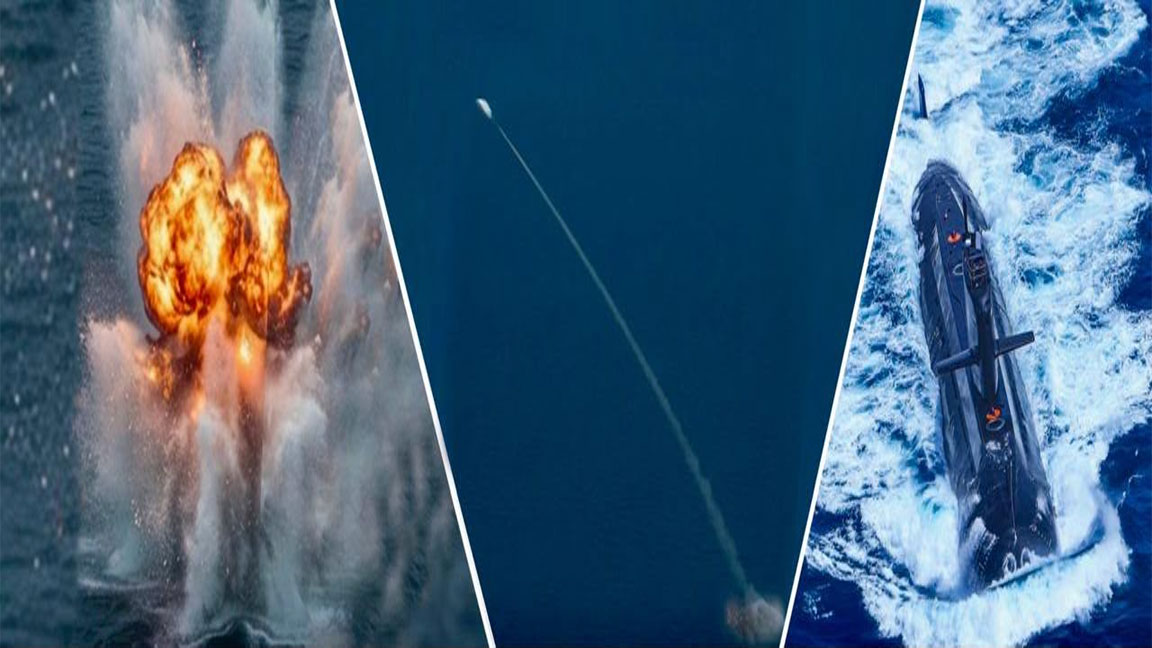
Pakistan Navy’s newly inducted PNS/M Hangor has completed its maiden live weapon firing in the North Arabian Sea, engaging a designated long-range target with an anti-ship cruise missile. The firing is the first public weapons milestone for the lead boat of an eight-submarine programme combining Chinese construction with domestic production under technology transfer.
Chief of the Naval Staff Admiral Naveed Ashraf witnessed the firing, which followed the submarine’s commissioning in China on 30 April and arrival in Karachi in June. Pakistani authorities said the missile accurately engaged the designated target. The missile type, firing distance, target profile, and detailed test data have not been disclosed, leaving the event as a confirmed programme milestone rather than a basis for broader claims about weapon performance.
PNS/M Hangor is the first of eight submarines being acquired under the programme. Four are being built in China, while four are being constructed by Karachi Shipyard & Engineering Works under a technology transfer arrangement. The split places submarine construction capability alongside fleet expansion, requiring Pakistan to establish the workforce, production control, integration, testing, and support capacity needed to complete later boats domestically.
The class is derived from China’s S26 export design and is associated with the Type 039A/B Yuan family. Pakistan Navy has said the submarines incorporate modern sensors, weapons, and air-independent propulsion, allowing longer submerged operation than conventional diesel-electric boats dependent on batteries and regular snorkelling for recharge. The detailed Pakistani configuration remains only partly public, but extended submerged endurance forms a central part of the class’s intended operating capability.
A live firing brings several systems into the same acceptance chain. Sensors must detect and classify contacts, the combat management system must build and maintain tracks, navigation data must remain sufficiently accurate, and the weapon interface must transfer targeting information without introducing unacceptable error. Mechanical launch equipment, crew procedures, communications, and platform control must then function together while the submarine remains safely within its operating envelope.
The first firing also provides a reference point for later hulls. Building one class across two countries places additional weight on configuration records because locally completed structures, machinery, cabling, software, sensors, and weapon interfaces need to match the approved production baseline. Technology transfer creates the route into domestic construction, but repeatability still depends on controlled drawings, qualified processes, inspection, specialist tooling, and access to the design authority when deviations occur.
Karachi Shipyard consequently carries a different burden from the yards completing the first boats in China. Pressure hull fabrication, outfitting, machinery installation, electrical systems, combat system integration, harbour trials, and sea trials must all be reproduced while maintaining quality controls appropriate to submarine construction. Faults can become difficult to reach once compartments are closed, while machinery, pumps, electrical equipment, and hull structures must meet demanding reliability, acoustic, and safety requirements.
The same requirement extends beyond construction. A domestically supported submarine class needs shore training, pressure hull expertise, propulsion maintenance, battery and electrical support, sonar and combat system technicians, weapons handling infrastructure, and a supply route for specialist components. Building the hull locally creates little strategic depth if major maintenance subsequently depends on external intervention for every complex defect.
The anti-ship cruise missile firing begins to connect that industrial programme with the intended operational role of the class. A conventionally powered submarine with greater submerged endurance can complicate surface-force planning, but availability will depend on crew training, maintenance, sonar performance, weapon stocks, communications, and fleet integration as much as on published platform specifications.
Hangor’s maiden firing moves the programme beyond commissioning and into evidence generated by the lead boat at sea. Further weapons activity, training, acceptance of the remaining Chinese-built submarines, and progress on the four Pakistani-built hulls will provide the next measures of whether the technology transfer programme is producing a sustainable submarine fleet rather than a sequence of imported platforms.