IN Brief:
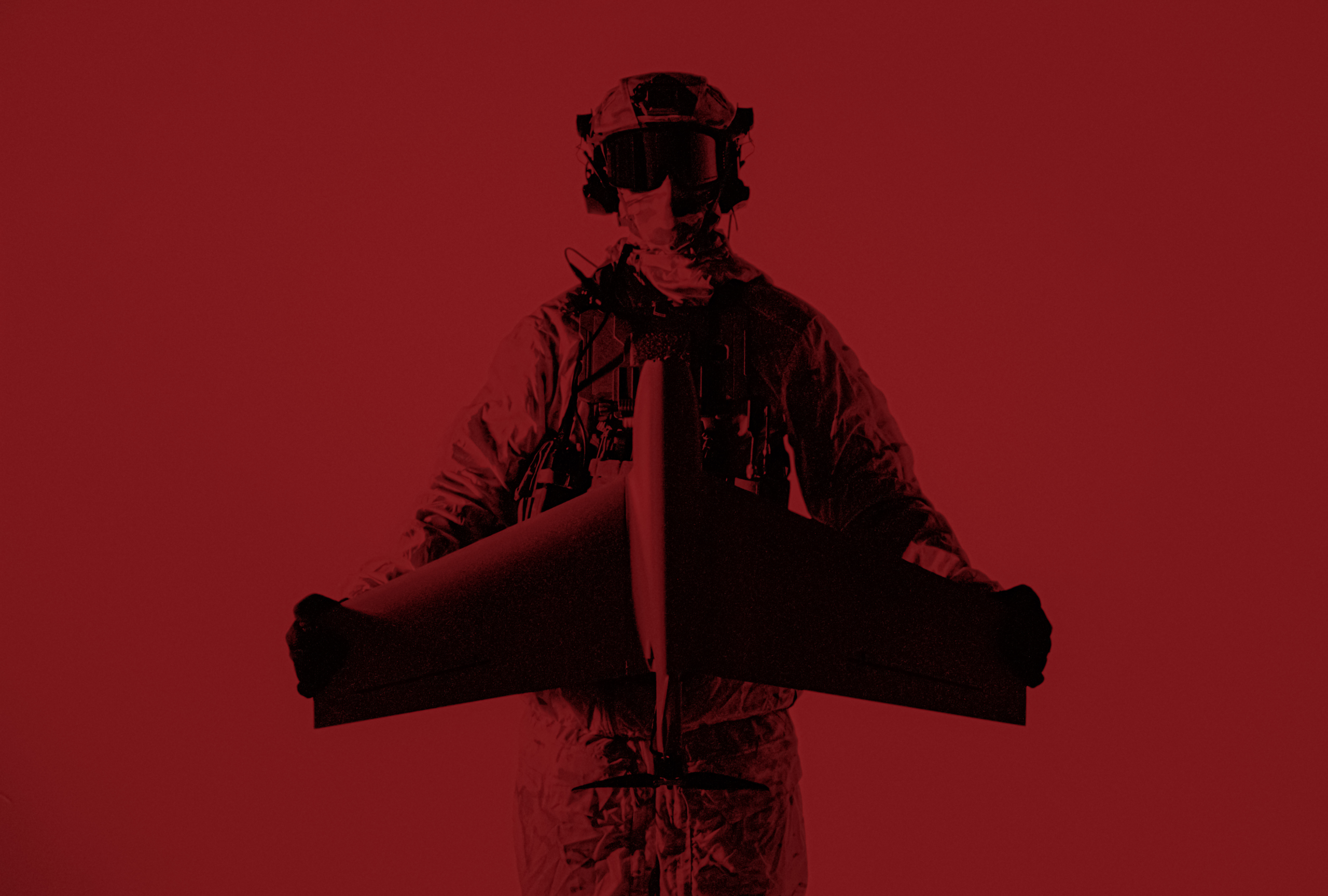
- Heaviside has introduced TYR, a fixed-wing munition weighing just over five pounds, with the complete portable system weighing approximately 15 pounds.
- The company offers four Nammo warhead variants and quotes endurance above one hour, range beyond 25 miles and speed above 150mph.
- Live-fire testing is complete and US defence contracts are reported, but detailed test outcomes, quantities and delivery dates remain undisclosed.
Heaviside Industries has introduced TYR, a miniature fixed-wing loitering munition offered with four Nammo warhead configurations and designed for use by small military units. Unveiled at the Association of the United States Army exhibition in Washington on 12 October, the system has completed live-fire trials and is under contract with US defence customers. The company has not named those customers or disclosed the quantities, values or delivery arrangements involved.
Heaviside puts the mass of the aircraft itself at just over five pounds, approximately 2.3 kilograms, while the complete portable system weighs about 15 pounds, or 6.8 kilograms. The larger figure encompasses the equipment associated with deploying and operating the air vehicle, rather than the weight it carries in flight. The difference between aircraft and complete-system mass becomes material when equipment has to be carried, prepared and maintained by small teams.
The company quotes more than 60 minutes of flight time, a range exceeding 25 miles and a speed above 150 miles per hour. It has not disclosed the test conditions or detailed how those figures change with the installed payload. Maximum speed, range and endurance should not be assumed to apply simultaneously to every mission or warhead configuration, particularly when added mass changes the aircraft’s aerodynamic and energy requirements.
TYR’s small airframe leaves limited space for the guidance, communications, flight-control and power equipment needed alongside its munition payload. Changing a warhead can alter mass distribution or drag, requiring evidence that the aircraft remains controllable throughout its flight envelope. The trade-off becomes more demanding when one baseline vehicle must accommodate several payload configurations rather than a dedicated airframe for each.
TYR’s four announced warhead options are a shaped-charge anti-tank variant, an anti-structure munition, an explosively formed penetrator and an anti-personnel fragmentation variant. All are identified with Heaviside’s Norwegian partner, Nammo. The variants are intended for different target effects, but the release does not specify comparative testing results or establish that every configuration has completed identical qualification work. The manufacturer’s statements about potential effects are not independently verified performance outcomes.
Using one aircraft design with several announced payload configurations creates a common manufacturing starting point while retaining configuration-specific engineering demands. Changes in component mass, size and electrical interfaces may affect the aircraft’s balance, handling and operating limits. Each configuration also requires traceable parts, controlled assembly and acceptance evidence. Heaviside has not published the mass limits, integration procedures or complete test record associated with its four announced variants.
Heaviside describes TYR as designed for environments in which satellite navigation and communications may be disrupted. The announcement provides no measured results for its navigation system, communications resilience or operation following loss of a link. Those are separate capabilities that have to be assessed under defined conditions; the stated design objective cannot be taken as evidence that every aspect of a mission has been validated without GPS or external communications.
Among the applications identified by Heaviside are protection of military positions, counter-drone operations and carriage by larger uncrewed platforms. Defending a fixed position and releasing TYR from a host aircraft would need different targeting interfaces and safety arrangements. The company has not identified an operational customer that has approved every proposed role.
The completed live-fire programme confirms that TYR has progressed beyond a design announcement to tests involving munition effects. Public information does not give the number of firings, the target conditions or the results across all four payload configurations. Heaviside also reports existing US defence contracts, although their scope and procurement stage are undisclosed. Contracted development or evaluation activity would not, by itself, demonstrate that the product has entered widespread military service.
Nammo provides a defined transatlantic industrial relationship for TYR, linking Heaviside’s American platform development with Norwegian munitions expertise. Common airframe structures and electronics could support repeatable assembly across variants, subject to control of the configuration used in each build. No factory throughput, unit cost or production contract quantity has been reported, and the industrial benefits of modularity will depend on the extent to which approved components and test processes can actually be shared.
Founded in Los Angeles in 2024, Heaviside had announced its partnership with Norway’s Nammo before unveiling TYR. The next measurable programme milestones will be qualification results for individual warhead configurations, consistent manufacturing arrangements and the extent of deliveries under its existing US defence contracts.