IN Brief:
- Leonardo DRS has launched cxMHR and begun initial production of its fully digital, C-band AESA radar.
- Four radar panels, identification equipment and command functions form a single ISO-containerised system for intended 360-degree hemispheric surveillance.
- Leonardo DRS quotes detection beyond 90 kilometres for unmanned aircraft and 330 kilometres for transport aircraft, without announcing firm customer quantities.
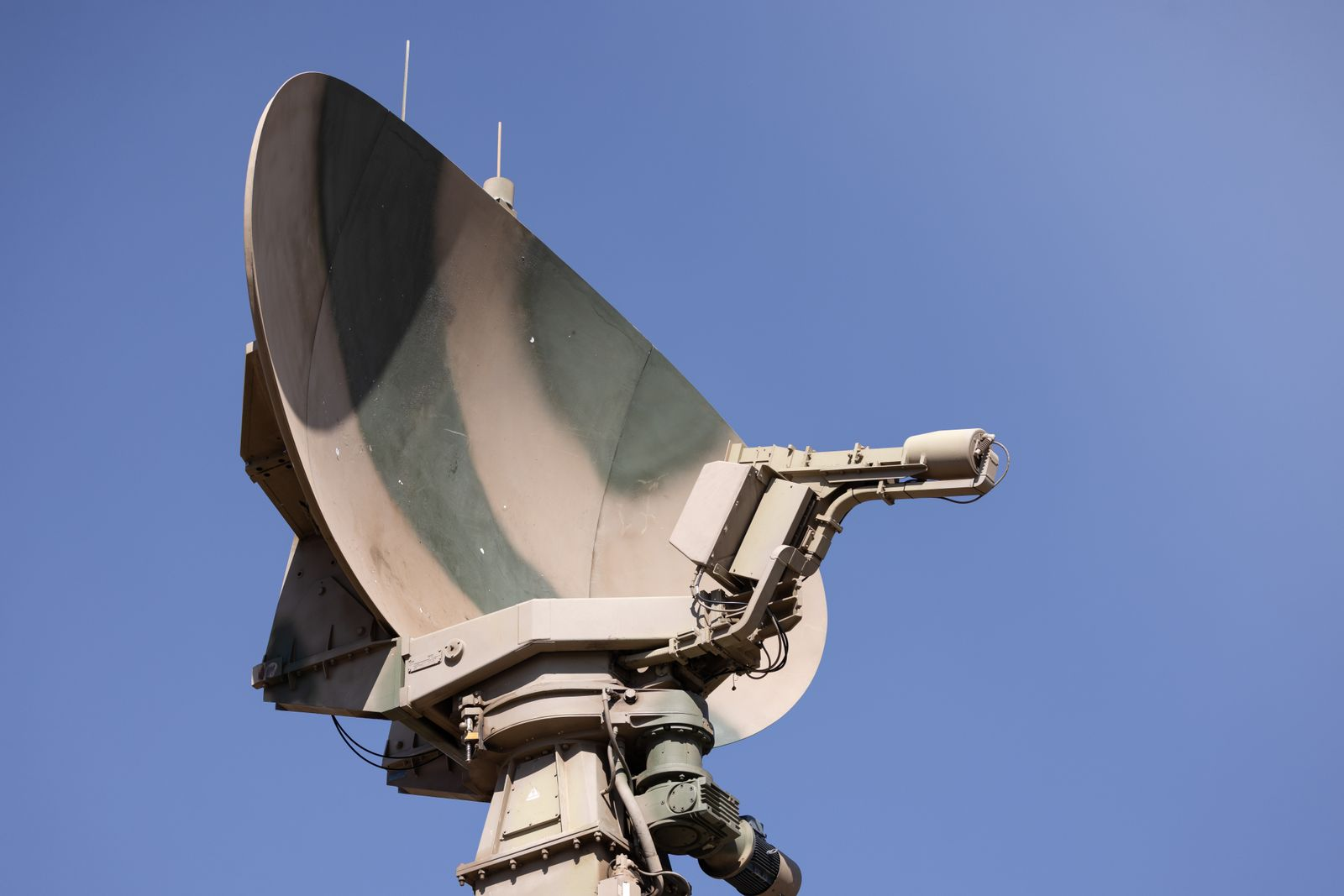
Leonardo DRS has launched its cxMHR C-band radar and confirmed the start of initial production, adding a transportable sensor system to its integrated air and missile defence portfolio. Unveiled at the Association of the United States Army exhibition in Washington on 12 October, the equipment combines four electronically scanned antenna panels, identification equipment, command functions and associated hardware within a single ISO-containerised package that can be transported and operated from one vehicle.
The C-Band Extended Multi-Mission Hemispheric Radar is designed to maintain 360-degree coverage while detecting and tracking several airborne threats. Leonardo DRS identifies unmanned aircraft, loitering munitions, rockets, cruise missiles and tactical ballistic missiles among its intended targets. Beginning initial production establishes an industrial milestone, although the company has not disclosed an initial customer, contracted quantity, programme value or delivery timetable.
In an active electronically scanned array, transmitting and receiving elements allow radar beams to be steered electronically rather than by turning the antenna mechanically. The sensor can revisit a developing track while continuing to search other parts of the surrounding airspace, subject to the available processing resources and the radar’s configured operating modes. The arrangement gives designers scope to allocate attention among targets with different speeds and behaviours, although the manufacturer has not released cxMHR’s scan rates or simultaneous-track capacity.
Four panels provide coverage around the installation, and measurements from their respective sectors must be brought together as objects cross the boundaries between them. Track continuity depends on accurate timing, calibration and processing, particularly when targets present different signatures from different viewing angles. Hemispheric coverage describes an intended search volume rather than an assurance of uninterrupted visibility: terrain, buildings, antenna position and the target’s altitude can still restrict the radar’s line of sight.
C-band operation separates cxMHR from earlier S-band members of the Leonardo DRS Multi-Mission Hemispheric Radar family. Frequency affects antenna dimensions, atmospheric behaviour and the engineering trade-offs between resolution and coverage, but the choice of band alone does not establish superiority against every threat. The company has not published comparative measurements of sensitivity, clutter rejection or processing load for cxMHR and its existing radar variants, so those differences cannot yet be quantified.
Leonardo DRS quotes detection ranges exceeding 90 kilometres for unmanned aircraft and loitering munitions, and 330 kilometres for transport aircraft. Those are company-stated detection claims, with performance dependent on target characteristics, line of sight and operating conditions. Detecting an object at distance is also different from generating a sufficiently accurate and continuous track to support a particular weapon engagement. The latter requires compatible command functions, appropriate track quality and further system-level acceptance.
Digital signal processing supports the radar’s tracking and classification functions, which Leonardo DRS describes as AI-enabled. Returns from an aircraft must be distinguished from ground clutter, weather and interference before successive observations can be associated with the same track. Misclassification and false alarms can place additional demands on an air-defence command system, particularly where it is already managing many contacts. The manufacturer has not released independent performance figures for classification accuracy or false-alarm rates.
Identification Friend or Foe equipment is incorporated with the radar, allowing cooperating aircraft carrying compatible equipment to respond to identification interrogations. A missing response cannot, by itself, determine the identity or intent of a contact. Wider command arrangements must therefore reconcile sensor information and identification evidence while retaining the rules and authorisations applicable to defensive action. Those requirements become more demanding when tracks are exchanged between several sensors and command systems.
Housing major components in one ISO container can simplify transport and the assembly of a field installation, while leaving important dependencies on power, cooling, communications and a suitable operating position. The electronics and antennas must function within the enclosure’s available electrical and thermal limits. Leonardo DRS has not disclosed cxMHR’s setup time, crew requirement or power consumption, so a direct comparison of deployment burden with other mobile radars would be premature.
The company says cxMHR follows Modular Open Systems Approach principles and supports interfaces including FAAD, Medusa, SAPIENT, Lattice, ASTERIX, MICAD and RAFT. These offer possible routes into different air-defence command architectures, but accepting radar tracks requires compatible data structures, timing, security controls and system behaviour. Support for an interface is not equivalent to demonstrated integration or acceptance by every programme using it.
Initial cxMHR production builds on Leonardo DRS’s wider tactical radar business. Earlier in October the company separately announced the creation of DRS UK and local radar manufacturing capacity. That announcement did not establish that cxMHR would be manufactured in Britain. Customer orders, programme-specific integration, equipment acceptance and delivered quantities will determine how the newly announced production activity develops.