IN Brief:
- Helsing has selected West Virginia for its first manufacturing operation in the United States.
- The proposed factory is intended to produce more than 2,000 HX-2 strike drones monthly.
- Output will depend on electronics, motors, batteries, energetic payloads, software control, and automated testing.
Helsing has selected West Virginia for its first US manufacturing facility, establishing a domestic production base intended to manufacture more than 2,000 HX-2 strike drones each month at full rate.
The investment carries the European company’s software-led autonomy model into the American defence industrial base, while placing HX-2 on a production target more closely associated with munitions than conventional aircraft.
HX-2 is an electrically powered loitering strike system designed around comparatively low-cost manufacture, autonomous navigation, coordinated operation, and resistance to electronic interference. The aircraft can operate without continuous control or uninterrupted satellite navigation once a mission has been assigned.
Thousands of systems have already been committed for Ukrainian use, giving Helsing a route through accelerated manufacture and operational feedback. Participation in US Army testing in Lithuania has also exposed the platform to American evaluation and acquisition processes.
Domestic production should simplify access to US contracts and funding while satisfying political demand for a larger share of defence equipment to be manufactured within the country. West Virginia also offers an industrial workforce linked to chemicals, metals, aerospace, and advanced manufacturing.
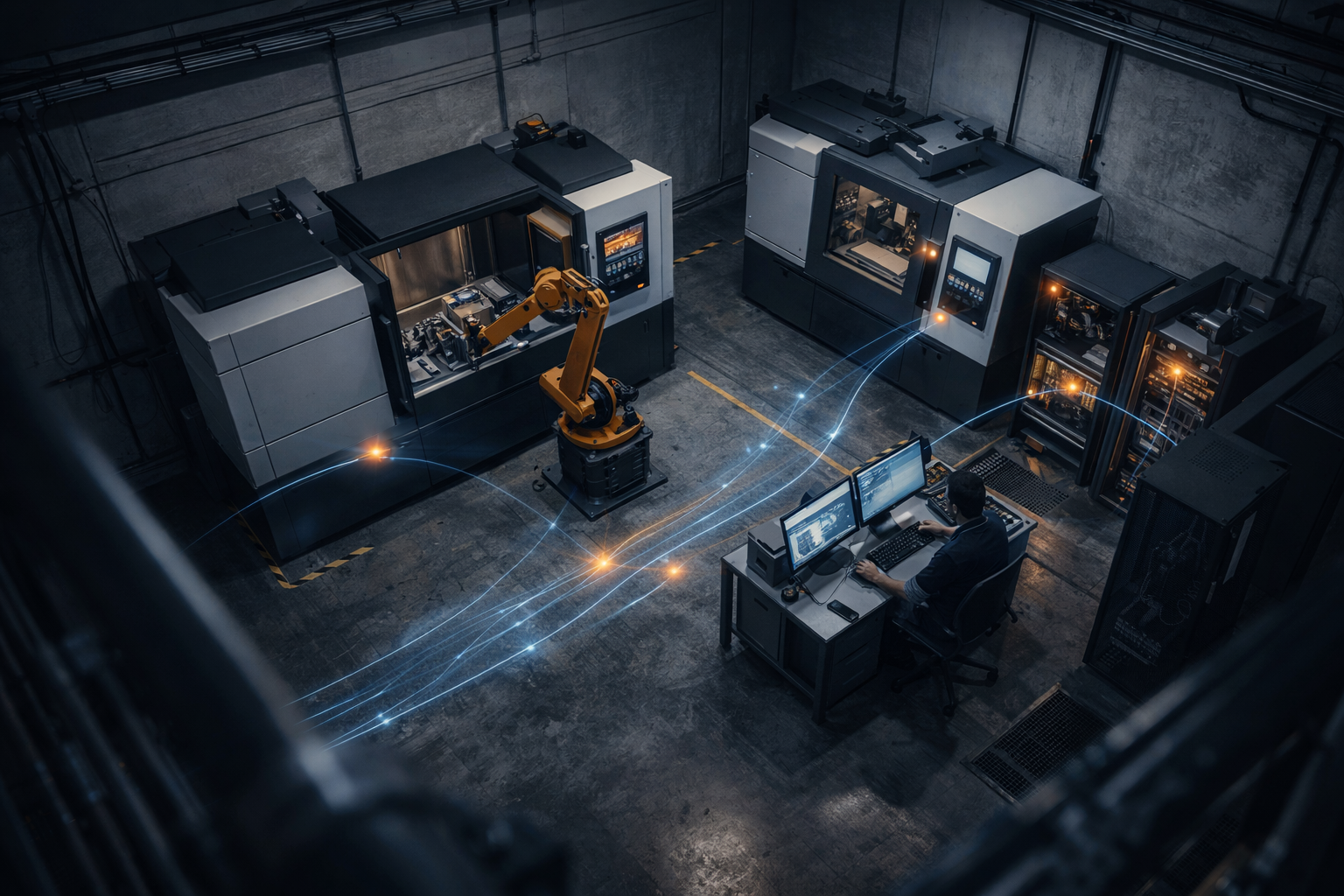
A monthly target exceeding 2,000 systems requires a production structure far removed from a small drone workshop. Assembly must be organised around takt time, standardised work, controlled software loading, modular subassemblies, and rapid inspection.
Airframes represent only one portion of the material flow. Motors, batteries, flight computers, cameras, inertial sensors, antennas, circuit boards, datalinks, actuators, connectors, and fasteners must arrive in matched quantities.
A shortage of an inexpensive electronic component can halt the line as effectively as the loss of a major airframe supplier. Manufacturers therefore need second sources, controlled substitutions, and enough visibility into lower tiers to identify problems before inventory is exhausted.
Energetic payloads and fuzing add another production environment. Explosive assembly requires licensed buildings, separation distances, secure storage, specialist transport, and additional quality controls that cannot be placed casually alongside ordinary electronics work.
The aircraft and payload may be manufactured separately before final integration, allowing each process to operate under suitable safety conditions. That arrangement increases logistics and configuration demands because every completed vehicle must remain matched with approved software, payload, and safety status.
Software configuration requires the same discipline as physical assembly. Autonomy systems can receive frequent updates as electronic countermeasures, target behaviour, and operational tactics change, yet factory records must identify exactly which software and cryptographic material sit on each unit.
Rapid change can produce undocumented variants when production and development teams are not tightly connected. A modification that appears minor within software may alter power demand, sensor behaviour, communication, or acceptance testing.
End-of-line inspection will become a major determinant of throughput. Every vehicle needs checks covering propulsion, flight controls, sensors, communications, navigation, power, software, and payload interfaces.
Flying every completed system through a full operational profile would consume time, airspace, and vehicles. Automated test rigs, built-in diagnostics, sample flight testing, and statistical process control will have to provide confidence without slowing output excessively.
Design-for-manufacture will influence whether the target rate is achievable. Parts requiring hand fitting, lengthy adhesive curing, complex calibration, or repeated access to internal wiring can become expensive bottlenecks when multiplied across thousands of units.
Helsing must also accommodate continuing design change without destabilising production. Conventional defence configuration management limits variation, while uncrewed systems operating against fast-changing countermeasures need shorter upgrade cycles.
A controlled modular architecture offers one route, allowing communications, navigation, sensors, or payload elements to change while the core airframe and assembly process remain stable. Excessive national customisation would weaken the efficiency gained from volume.
The West Virginia operation must build a US supplier base without creating a substantially separate HX-2. American components, cybersecurity requirements, energetic-material rules, and communications standards may differ from the European configuration.
Maintaining common drawings, software, and test methods across both regions would preserve purchasing scale and operational learning. Divergent versions would require parallel qualification, support, and spare inventories.
The wider US market is investing heavily in lower-cost autonomous aircraft and precision weapons, including jet-powered systems designed around cheaper mass. HX-2 sits within the same attempt to increase magazine depth without applying traditional missile costs to every engagement.
Workforce development will govern the pace of the factory launch. Electronics technicians, quality engineers, production planners, software specialists, explosive-safety staff, and supervisors must be recruited and trained while the product continues to evolve.
Demand stability will determine whether those people remain. A line sized above 24,000 systems annually requires substantial multi-year purchases or export orders; short surge contracts cannot sustain equipment, buildings, and specialist labour indefinitely.
Operational consumption may support that volume, particularly when drones are treated as expendable munitions rather than recoverable aircraft. Customers will still expect predictable cost, storage life, transport safety, and reliability after months or years in inventory.
Supply resilience will receive close attention as the product localises. Batteries, processors, imaging devices, and radio components have extensive commercial markets but can be vulnerable to geopolitical controls or abrupt product changes.
Helsing’s selection of West Virginia establishes a physical route into US production. The stronger measure will be accepted monthly output, stable cost, software relevance, and the ability to continue manufacturing when individual components or threat requirements change.