IN Brief:
- A low five-figure quantity of RH1412 projectiles is being supplied from Rheinmetall’s new Lower Saxony plant.
- More than half of the order has been delivered, with completion expected before the end of 2026.
- Output depends on shell bodies, explosive filling, propellant, fuzes, inspection, and cross-border logistics.
Rheinmetall has started delivering 155mm artillery projectiles manufactured at its new Werk Niedersachsen factory in Unterlüß to Ukraine, bringing one of Europe’s largest recent ammunition investments into active supply.
The first order covers a low five-figure quantity of RH1412 projectiles, supported by propellant charges manufactured elsewhere within Rheinmetall’s network. More than half of the order has already been delivered, with the remaining rounds scheduled to follow before the end of 2026.
Designed for use across several NATO-standard artillery systems, the RH1412 supports a Ukrainian fleet assembled from multiple national donations. Compatibility across guns, charges, fuzes, and fire-control data remains essential when ammunition moves between different howitzer types.
The delivery follows the September 2025 opening of the Lower Saxony factory after approximately 15 months of construction. Rheinmetall invested close to €500 million in the 30,000-square-metre site, which is intended to reach annual capacity of as many as 350,000 artillery projectiles.
Initial output was planned at 25,000 rounds during the plant’s first operating year, rising towards 140,000 in 2026 before reaching full rate in 2027. Rocket-motor manufacturing is also due to be added, broadening the site beyond conventional artillery ammunition.
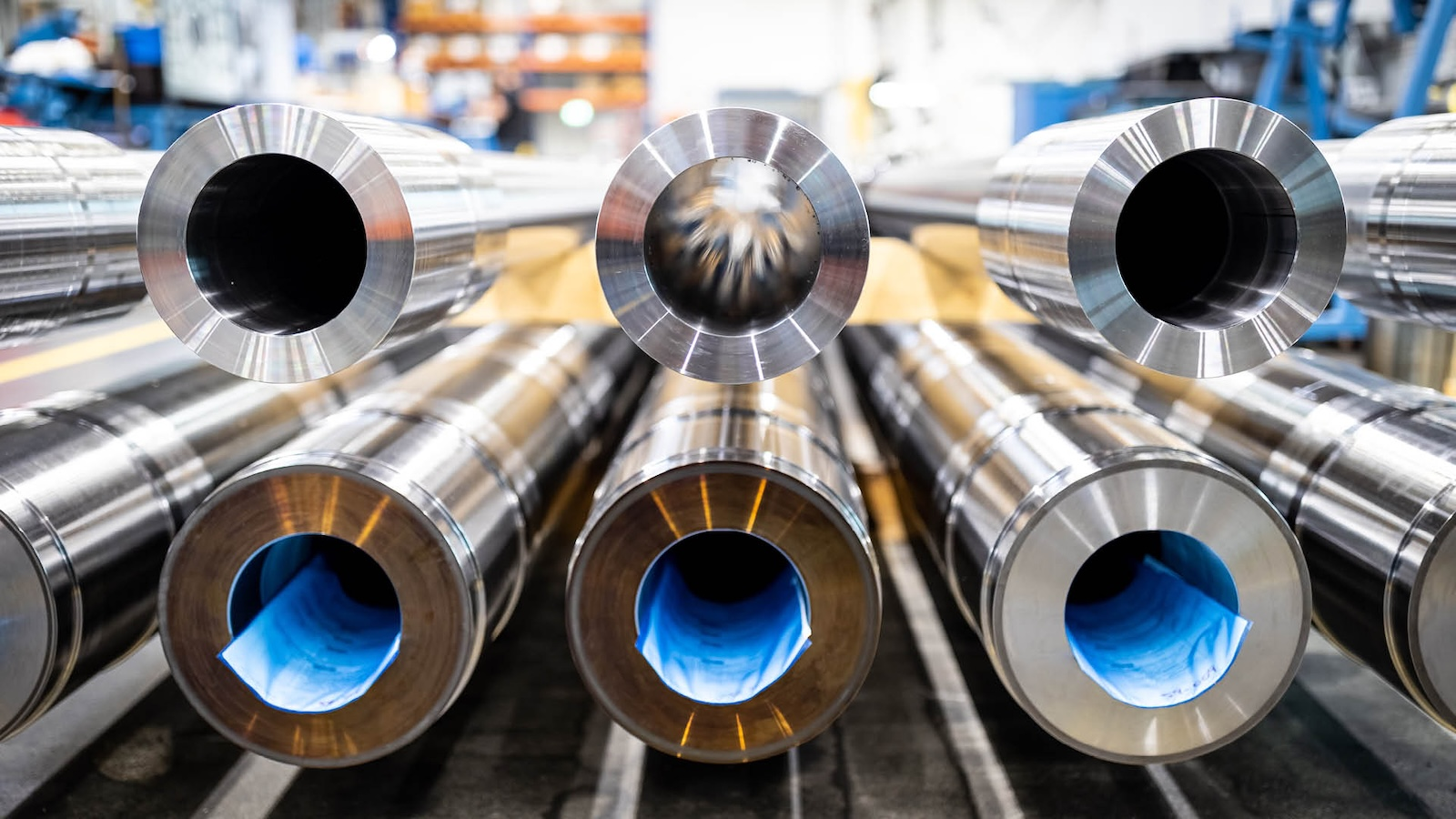
Producing a 155mm projectile at volume requires several industrial stages to remain aligned. Steel bodies must be forged or formed, machined, heat-treated, inspected, filled with explosive, painted, assembled, marked, and packaged before entering a complete round.
Although its shape appears simple, the shell body is a high-volume precision component. Dimensional variation affects chamber fit, ballistic performance, pressure, accuracy, and barrel wear, while material defects can become dangerous under firing loads.
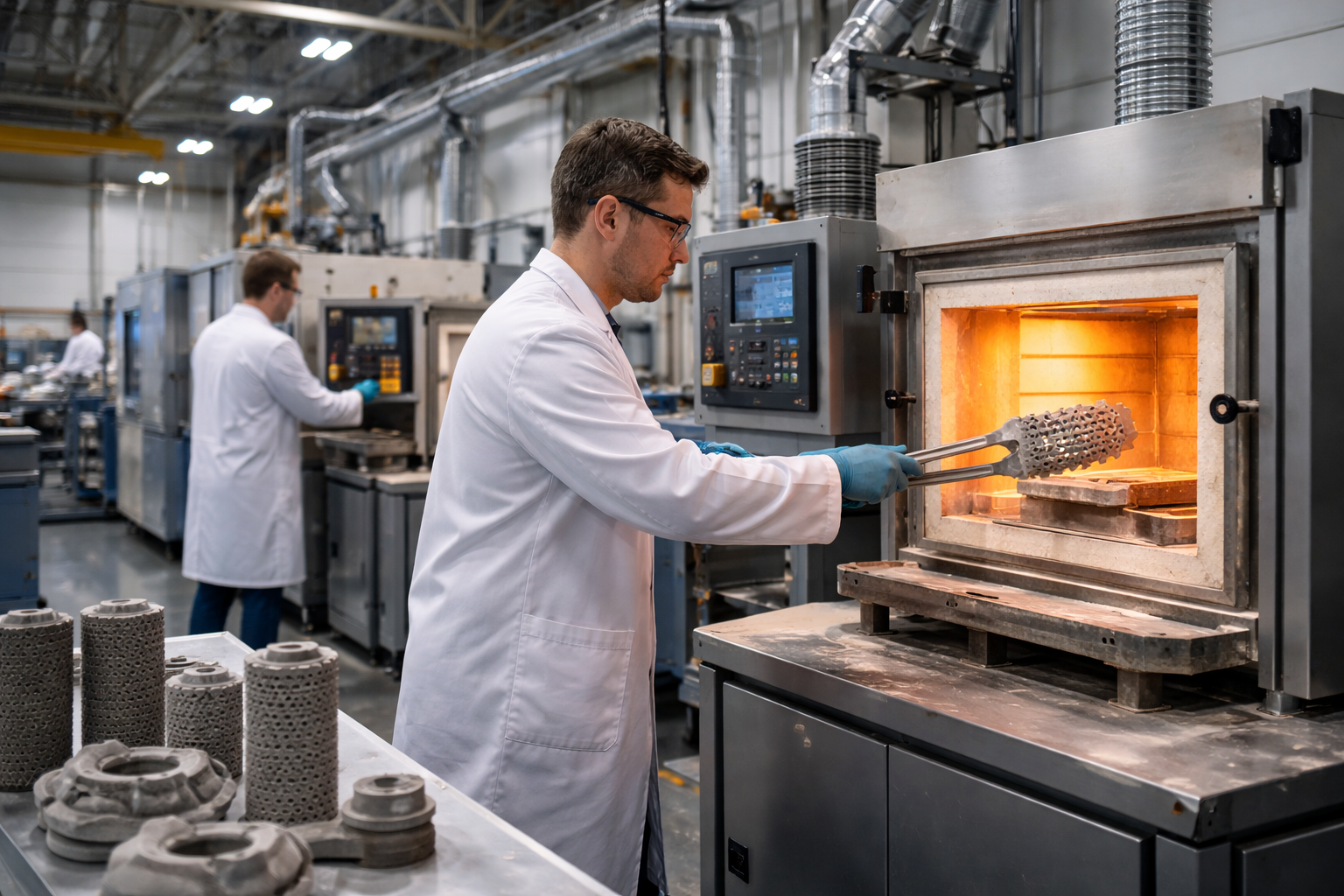
Steel chemistry, forging temperature, grain structure, machining, and heat treatment must therefore remain controlled across large batches. Non-destructive inspection is needed to identify cracks or inclusions that would not be visible during ordinary dimensional checks.
Explosive filling creates a separate production constraint. Filling buildings require separation distances, remote handling, environmental controls, specialist utilities, and extensive safety systems, while operators work under rules that limit the quantity of energetic material present in each area.
Fuzes, primers, and propellant charges bring additional supply chains. Raising shell-body output cannot increase complete-round deliveries when one of those components remains scarce, and each uses different equipment, skills, regulations, and raw materials.
The use of propellant manufactured at other Rheinmetall sites illustrates how widely the work is distributed. Components can cross several borders before final delivery, exposing output to transport restrictions, export approvals, dangerous-goods capacity, and the availability of secure storage.
Factory capacity figures usually describe machinery operating under planned conditions; accepted output depends on yield, maintenance, labour, and material flow. Early production often reveals tool wear, dimensional drift, supplier variation, or inspection failures that are not apparent during commissioning.
The first Ukrainian shipment shows that Unterlüß has moved beyond installed equipment and trial batches. Steel, machines, people, explosive processes, inspection, documentation, and customer acceptance have begun operating as a connected production system.
Increasing output towards the planned rate will require stable shifts and experienced supervision. Ammunition plants cannot recruit large numbers of new personnel and expect full productivity immediately, particularly in explosive handling, quality control, heat treatment, and non-destructive testing.
Upstream suppliers will carry part of the expansion. Steel producers, forging companies, chemical manufacturers, machine-tool builders, cutting-tool suppliers, packaging businesses, transport operators, and inspection-equipment companies all contribute to the final count.
A bottleneck within one lower-tier business can slow several factories. Forging dies, specialist steels, explosive precursors, electronic fuzes, and propellant ingredients often come from relatively narrow markets that were sized for much lower peacetime demand.
Rheinmetall intends to manufacture approximately 1.5 million 155mm projectiles annually across its international network by the end of the decade. Capacity is being developed or expanded in Germany, Spain, South Africa, Australia, Hungary, Lithuania, Romania, and other markets.
Geographic distribution can improve resilience while bringing greater demands for common drawings, qualified materials, compatible components, and consistent acceptance standards. National workshare arrangements offer political support but can create duplication unless production remains technically interchangeable.
Similar pressure is visible in Australia, where a new Queensland forging line is intended to retain more of the 155mm manufacturing chain domestically. Forging, machining, filling, propellant, and final assembly are increasingly treated as strategic capabilities rather than ordinary subcontract work.
Long-term orders remain essential for every new plant. Ammunition factories carry high fixed costs, strict safety obligations, specialist workforces, and equipment that cannot be maintained economically through occasional surge contracts.
Governments seeking emergency capacity must therefore support production during quieter periods. Machinery left idle does not preserve an immediately available workforce, qualified supplier chain, or reliable explosive process.
Storage and shelf-life management will also expand with output. Large inventories need magazines, environmental monitoring, inspection, rotation, and safe disposal routes, while customers must decide how much ammunition remains ready for immediate use and how much enters strategic reserve.
Ukraine supplies an immediate source of high demand and a severe test of delivery speed, compatibility, and consistency. European governments are attempting to replenish their own stocks simultaneously, keeping order books full but increasing competition for common components.
Unterlüß will be judged through monthly deliveries rather than its nameplate capacity. Rising accepted output, stable yields, safe operation, and reliable supply of complete rounds will show whether Europe’s artillery expansion is producing durable industrial depth.