IN Brief:
- Japan and South Korea have resumed bilateral SAREX naval activity after a nine-year pause.
- The drill involved destroyer, landing ship, helicopter, LINKEX, cross-deck, and PHOTOEX activity.
- Renewed cooperation strengthens APAC demand for compatible communications, aviation, and shipboard systems.
Japan and South Korea have resumed bilateral naval search-and-rescue training for the first time in nine years, restoring a practical layer of ship-to-ship and aviation interoperability between two of Northeast Asia’s most important maritime forces.
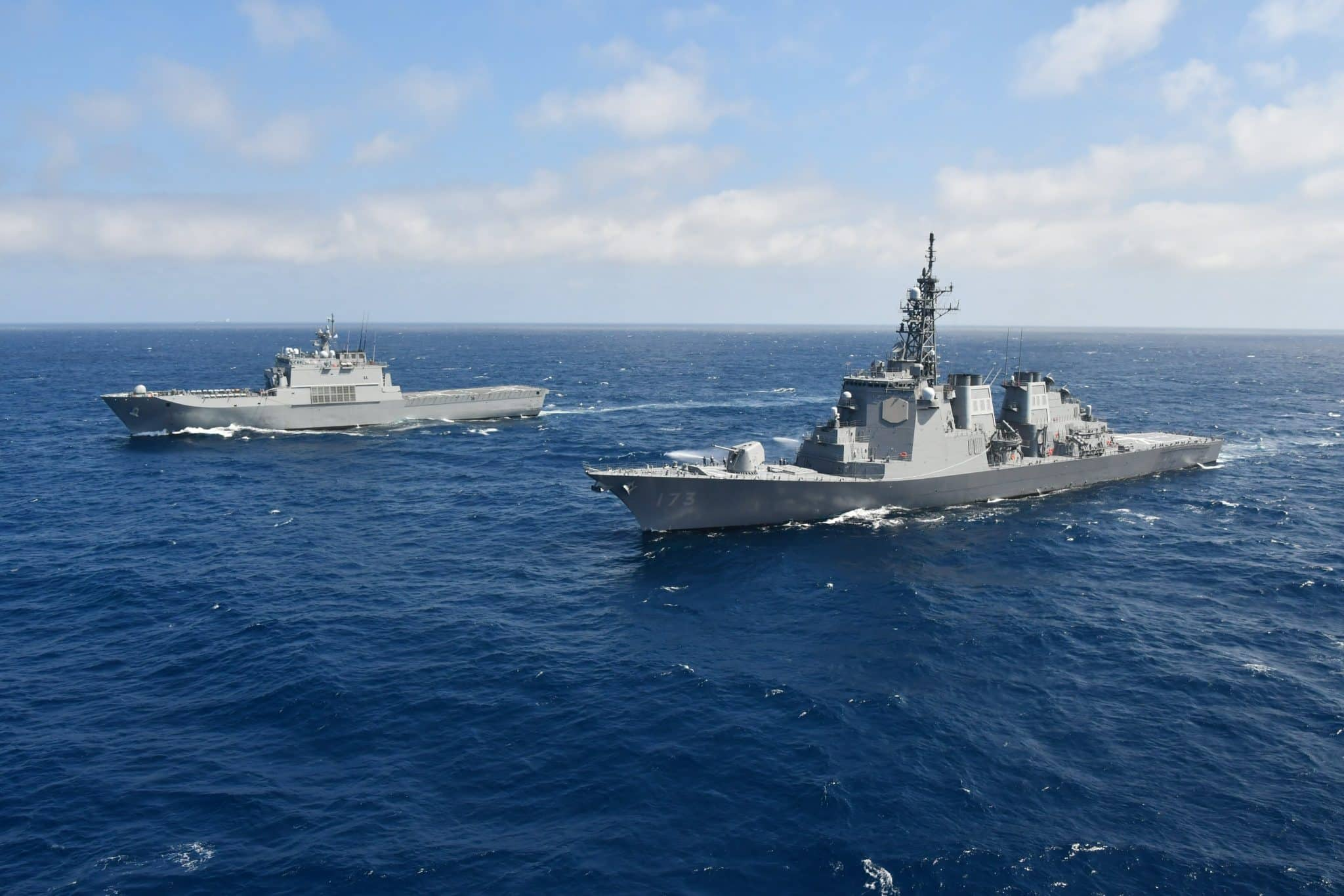
During the activity, conducted west of Japan’s Goto Islands on 7 June, the Japan Maritime Self-Defense Force deployed the Kongo-class Aegis destroyer JS Kongo and an SH-60K helicopter. The Republic of Korea Navy deployed the Cheon Wang Bong-class landing ship ROKS Cheon Ja Bong. The drill included search-and-rescue manoeuvres, LINKEX, cross-deck helicopter operations, and PHOTOEX activity.
Behind the search-and-rescue framework sits a more technical maritime integration issue. LINKEX activity requires ships to exchange tactical information through standardised data procedures, while cross-deck helicopter operations demand aligned flight-deck processes, communications protocols, refuelling arrangements, safety rules, and deck-handling discipline. Even low-threat activity at sea relies on equipment, documentation, and software that can function across national boundaries.
Coalition maritime operations are rarely constrained by the simple ability of a ship to sail or a helicopter to fly. They are constrained by the interfaces between systems, the reliability of communications, the availability of spares, the maturity of operating procedures, and the training needed to make separate national assets function as one force. Renewed Japan–South Korea activity therefore places attention on the industrial layer behind interoperability rather than on the exercise label alone.
In the Western Pacific, where Japan and South Korea both maintain substantial shipbuilding, aerospace, electronics, and defence engineering bases, practical exercise activity creates a route for more routine technical alignment. Naval communications, maritime domain awareness, flight-deck support, search-and-rescue equipment, secure data exchange, and shipboard aviation services all sit within that convergence. Each area requires suppliers able to work across national standards and long service lives.
That same shipboard integration burden is visible as maritime forces bring compact uncrewed aircraft into deck-based operations, where launch, recovery, communications, maintenance, and support procedures have to fit around existing naval workflows.
Shipboard aviation remains one of the sharper tests of practical compatibility. Deck markings, fuel procedures, tie-down arrangements, crew training, emergency response, radio discipline, and weather limits all need to align before a helicopter can safely operate from another nation’s ship. Once cross-deck operations become more routine, the demand for common simulation, documentation, aviation support equipment, and maintenance planning also grows.
Regional planners are operating against a crowded maritime backdrop. Missile development, submarine activity, grey-zone pressure, uncrewed systems, and contested sea lanes have all increased the value of allied naval familiarity. Search and rescue offers a politically manageable route back into cooperation, while still exercising communications, tracking, deck handling, and command procedures that support wider maritime readiness.
Manufacturing opportunities sit mostly in the connective tissue between platforms. Destroyers, landing ships, helicopters, and patrol assets remain the visible markers of capability, yet their operational value depends increasingly on data links, secure radios, aviation support equipment, mission planning systems, simulators, and support contracts. As Japan and South Korea rebuild working familiarity at sea, suppliers able to provide interoperable systems and upgrade paths will have a stronger role in APAC maritime modernisation.
The return of SAREX is modest in scale, but it puts a necessary engineering discipline back into motion. Regional naval integration will not be delivered by new hulls alone. It will depend on the equipment, procedures, and support systems that allow those hulls to work together when the operating environment becomes less forgiving.