
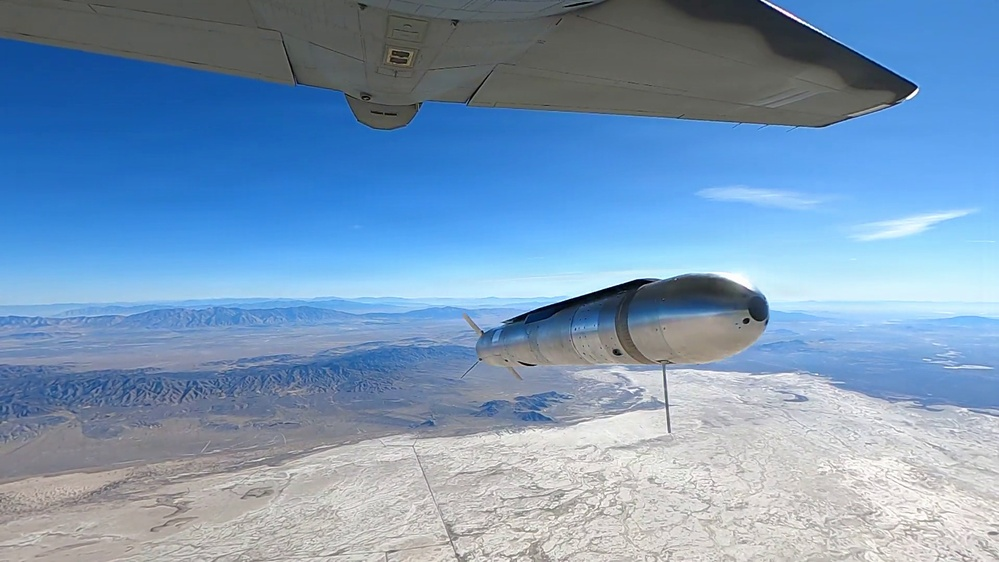
IN Brief:
- JRC receives a $47.39 million modification for technical and engineering support to SLCM-N.
- Work covers systems integration, testing, modelling, prototype oversight, configuration management, and NC3 support.
- $10.14 million is obligated at award, with performance continuing through November 2030.
JRC Integrated Systems has received a $47.39 million US Navy contract modification expanding its technical and engineering support for the Nuclear-Armed, Sea-Launched Cruise Missile programme, extending work across systems integration, testing, modelling, configuration management, nuclear command and control, and acquisition support through November 2030.
The cost-plus-fixed-fee modification, designated P00007, applies to existing contract N0003026C7001 and includes optional line items. Strategic Systems Programs is obligating $10.14 million in fiscal 2025 research, development, test, and evaluation funding at award, leaving the remainder of the stated modification value dependent on subsequent programme requirements and option exercise.
The award is therefore an engineering-support action rather than a production order for completed missiles. Public contracting information identifies no missile quantity, unit price, production rate, deployment schedule, or operational inventory associated with the $47.39 million figure.
JRC’s work covers a broad span of programme activity. Tasks include systems engineering and system integration, test and flight-test engineering, modelling and simulation, prototype oversight, system-design documentation, interface management, configuration management, programme management, and acquisition support.
The contract also calls for Nuclear Command, Control, and Communications expertise alongside executive and tactical nuclear-weapons subject-matter support. Those requirements distinguish the programme from a conventional cruise-missile engineering effort because weapon integration has to account for command, control, assurance, security, and authorisation disciplines throughout development.
Most of the work will be performed in Washington, DC, which accounts for 80% of the programme activity under the modification. Bangor, Washington, will take 15%, with the remaining 5% performed in Norfolk, Virginia. Completion is scheduled for 30 November 2030.
The breadth of that work reflects the systems problem surrounding SLCM-N. A sea-launched weapon has to function as part of a wider architecture incorporating the missile, launch equipment, submarine interfaces, fire control, command functions, test equipment, software, configuration data, training, and shore-based programme support.
Separate programme activity has already begun to define some of those interfaces. The Navy awarded prototype work in 2025 for launcher and canister development intended to integrate with a Virginia Payload Tube and connect the missile subsystem with submarine shipboard systems. JRC’s systems-engineering role sits across the wider programme rather than replacing those hardware-specific development contracts.
The same distinction applies to separate SLCM-N fire-control engineering work awarded to General Dynamics Mission Systems. That contract concentrates on the fire-control subsystem, while JRC’s modification covers programme-level engineering, interface management, modelling, test support, configuration control, and acquisition activity.
Keeping those workstreams aligned is a substantial part of the development task. A missile can progress successfully at component level while still encountering programme delays if launcher interfaces, fire control, software, platform equipment, or qualification evidence mature on different schedules. Systems engineering exists in part to expose those mismatches before they become expensive hardware problems.
Interface management is particularly important as the programme moves from concept and prototype activity towards integrated testing. Physical dimensions, electrical connections, data protocols, software behaviour, environmental requirements, safety constraints, and command interfaces all need controlled definitions so that separate suppliers can develop equipment against the same assumptions.
Configuration management provides the corresponding control over change. Development programmes rarely remain static: test results produce design alterations, suppliers update hardware and software, requirements evolve, and interfaces are refined. Without a controlled baseline, one engineering team can end up designing against a configuration another team has already replaced.
Modelling and simulation provide another route to reducing that risk. Digital models can be used to evaluate system behaviour, examine design trades, explore interfaces, and prepare test cases before scarce prototype hardware or platform time is committed. They do not replace physical testing, but they can reduce the number of problems first discovered during an expensive integrated event.
The test and flight-test engineering element will become increasingly important as programme hardware matures. Integrated weapons development requires instrumentation, test planning, safety analysis, data collection, and post-test assessment across components produced by different organisations. Evidence from those events then feeds back into design, software, and configuration decisions.
JRC’s contract also includes prototype oversight, placing the company close to the transition between analytical engineering and physical hardware. Oversight in this context does not make JRC the manufacturer of the missile or launcher; it gives the programme another layer of technical coordination as prototype subsystems move through design reviews, fabrication, integration, and test.
The nuclear-command element adds requirements that cannot be deferred until the weapon is otherwise complete. NC3 interfaces, nuclear surety considerations, technical documentation, programme controls, and specialist subject-matter expertise have to be incorporated during development because they can affect architecture and verification requirements elsewhere in the system.
Strategic Systems Programs is managing SLCM-N alongside its longer-established responsibilities for submarine-launched strategic weapon systems. The command has publicly described the cruise-missile programme as part of its work on future regional-strike capabilities, while continuing to sustain Trident II D5LE and develop the D5LE2 strategic weapon system.
For JRC, the modification extends an existing engineering relationship with the Navy’s strategic-systems organisation. The company’s work is concentrated in technical support rather than serial weapon manufacture, with systems engineering, programme analysis, acquisition support, and integration forming the core of the awarded scope.
The $47.39 million ceiling should therefore be read as funding capacity for a multi-year engineering programme rather than as the price of an identifiable batch of weapons. Only $10.14 million is being obligated with the modification, and optional line items remain part of the maximum stated value.
The next substantive milestones will come through system integration and test rather than another headline contract figure. Missile hardware, launch equipment, fire control, submarine interfaces, and programme-level engineering must reach compatible maturity before SLCM-N can progress through realistic end-to-end evaluation.
JRC’s work runs through the end of November 2030, giving the Navy a defined engineering-support base across that period. The contract does not establish when SLCM-N will become operational, but it does expand the technical organisation responsible for turning separate development activities into a controlled, testable weapon-system architecture.