IN Brief:
- Kongsberg has received a $54m modification to an existing US government prototype agreement.
- The contract covers multiple autonomous underwater vehicle types and associated components, with individual configurations unspecified.
- The company has secured NOK1.7bn in AUV contracts across defence and commercial markets during 2026.
Kongsberg has secured a $54m US government contract modification covering autonomous underwater vehicles and associated equipment, extending its involvement in the development and supply of undersea capabilities for American defence programmes.
The award modifies an existing Prototype Other Transaction Agreement administered through the US government’s defence innovation organisation, DIU. It primarily covers deliveries of a range of autonomous underwater vehicles (AUVs), alongside components supporting underwater capability development.
Kongsberg will continue working with DIU and the US Navy under the agreement, building on an established relationship involving autonomous platforms and underwater technologies. The company has identified the general scope of the additional equipment without specifying individual vehicle models, quantities, or delivery dates.
The contract forms part of growing demand for Kongsberg’s underwater technology. During 2026, the company has secured AUV orders worth NOK1.7bn across its defence and commercial markets, covering a broader collection of customers and programmes than the latest US modification alone.
Kongsberg has developed autonomous underwater vehicles for more than three decades, producing systems used in seabed surveying, oceanographic research, underwater inspection, and defence applications. The company’s experience spans vehicle design, navigation, sensor integration, and the operation of equipment beneath the surface without continuous direct control.
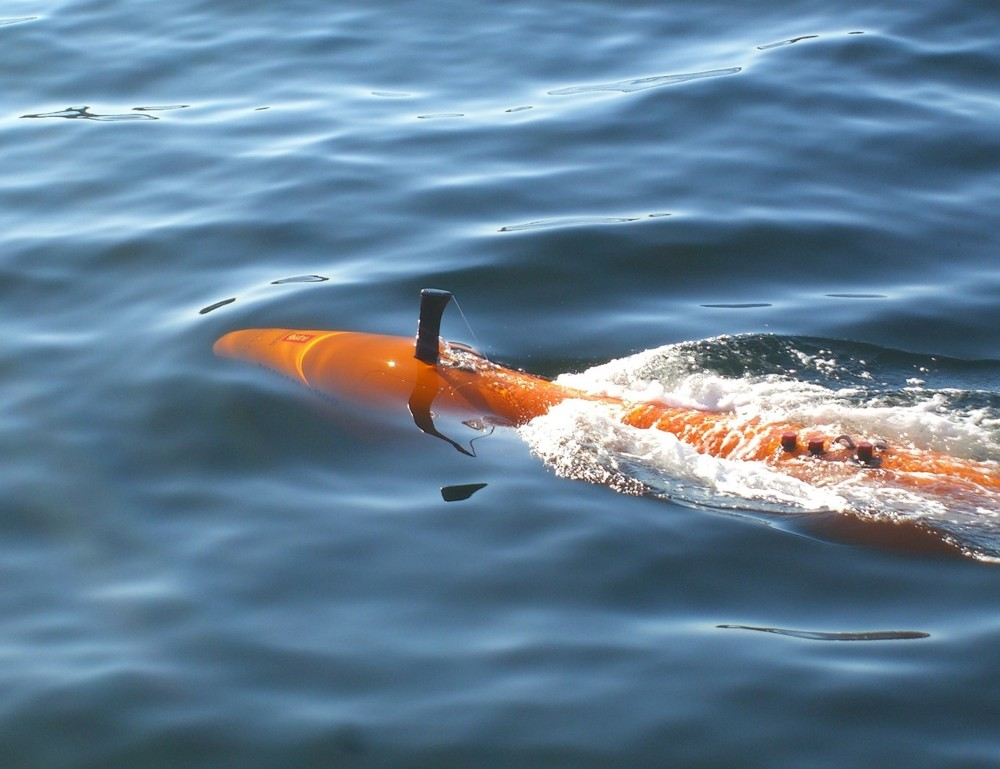
Its established portfolio includes the HUGIN family of AUVs, which can accommodate different sensors and mission equipment according to the application. The family provides an example of Kongsberg’s technological capabilities, although the company has not identified the specific vehicles ordered under the US government modification.
Autonomous underwater vehicles undertake programmed missions using onboard control systems, navigation equipment, and sensors. Their ability to operate beneath the surface allows measurements to be collected close to the seabed or other underwater features, where direct observation from a surface vessel may be less effective.
Acoustic instruments are particularly important because light travels relatively poorly through seawater, especially at significant depths or in conditions with suspended material. Sonar systems transmit sound and analyse returning signals to measure distances, examine underwater structures, or produce images of objects and the seabed.
Kongsberg’s HUGIN vehicles can carry synthetic aperture sonar, multibeam echo sounders, cameras, environmental instruments, and sub-bottom profiling equipment. Different combinations of these sensors support seabed mapping, object identification, and the examination of underwater conditions.
Synthetic aperture sonar combines acoustic observations collected as the vehicle moves to produce detailed seabed imagery. Multibeam echo sounders measure depth across a wider area beneath the platform, allowing engineers to construct three-dimensional representations of underwater terrain from successive measurements.
The accuracy of those measurements depends on the vehicle’s estimated position and orientation. Navigation data must therefore be associated with sensor observations so that the information collected throughout a mission can be processed into a coherent survey.
Underwater navigation presents a particular engineering constraint because satellite positioning signals cannot generally be received while submerged. AUVs use inertial navigation and other available measurements to estimate their location, with the resulting position accuracy influenced by sensor characteristics, elapsed time, and the opportunities available to correct accumulated errors.
Vehicle movement also affects acoustic measurements. Changes in orientation or speed can alter the relationship between a sensor and the seabed, requiring the processing system to account for the platform’s behaviour when reconstructing images and survey data.
The mission control system coordinates these functions with the vehicle’s propulsion, power supply, and operating instructions. Each task must remain within the equipment’s available energy and the capabilities of its installed sensors, while navigation and vehicle control continue throughout the underwater mission.
Communications impose further limitations. Acoustic links can transfer information through water but offer different performance characteristics from radio communications in air. Their practical bandwidth and reliability depend on distance, environmental conditions, and the communication equipment involved.
A submerged vehicle may therefore need to complete substantial portions of its assigned work without continuous communication with operators. Mission software can manage planned activities and record information onboard, with the equipment returning data through the communication and recovery arrangements established for the operation.
Kongsberg has been developing greater onboard processing and autonomy to support these requirements. More capable computing allows underwater platforms to process sensor information during a mission, although the functions available to a particular vehicle depend on its hardware, software configuration, and approved operating parameters.
The company’s larger HUGIN Endurance design illustrates the relationship between energy storage, sensor operation, and mission duration. It is designed for operations lasting up to 15 days and distances of up to 2,200km, allowing extended underwater surveying without continuous support from a dedicated crewed vessel.
Those figures belong to the HUGIN Endurance product rather than the undisclosed vehicles covered by the US contract. Actual mission duration depends on equipment configuration, the selected operating conditions, and the energy consumed by propulsion, sensors, and onboard computing.
Defence applications draw on many of the same underlying technologies used in commercial surveying. Underwater navigation, acoustic sensing, and reliable vehicle control can support maritime surveillance, infrastructure inspection, and mine countermeasure activities, with each application introducing its own equipment and integration requirements.
Kongsberg is also expanding its underwater acoustics expertise through the proposed acquisition of California-based Sonatech, which received US government approval during the third quarter. The transaction supports its wider position in underwater sensing and provides additional access to specialist American technology capabilities.
The enlarged portfolio combines autonomous vehicles with the sensors and acoustic systems needed to gather information beneath the surface. Individual programmes still require the selection, integration, and testing of equipment appropriate to their intended tasks.
The $54m agreement extends Kongsberg’s supply of underwater systems to US government customers under an established prototype arrangement. Delivery of the contracted vehicles and associated equipment will provide the next stage of the cooperation, while the configuration and number of systems remain defined by the underlying contract.