IN Brief:
- Kratos will build its Project Helios hypersonic aerothermal testing facility in Odon, Indiana.
- The facility is intended to increase test bandwidth for hypersonic materials and thermal protection systems.
- Aerothermal testing remains a key industrial bottleneck for reusable and expendable high-speed weapons.
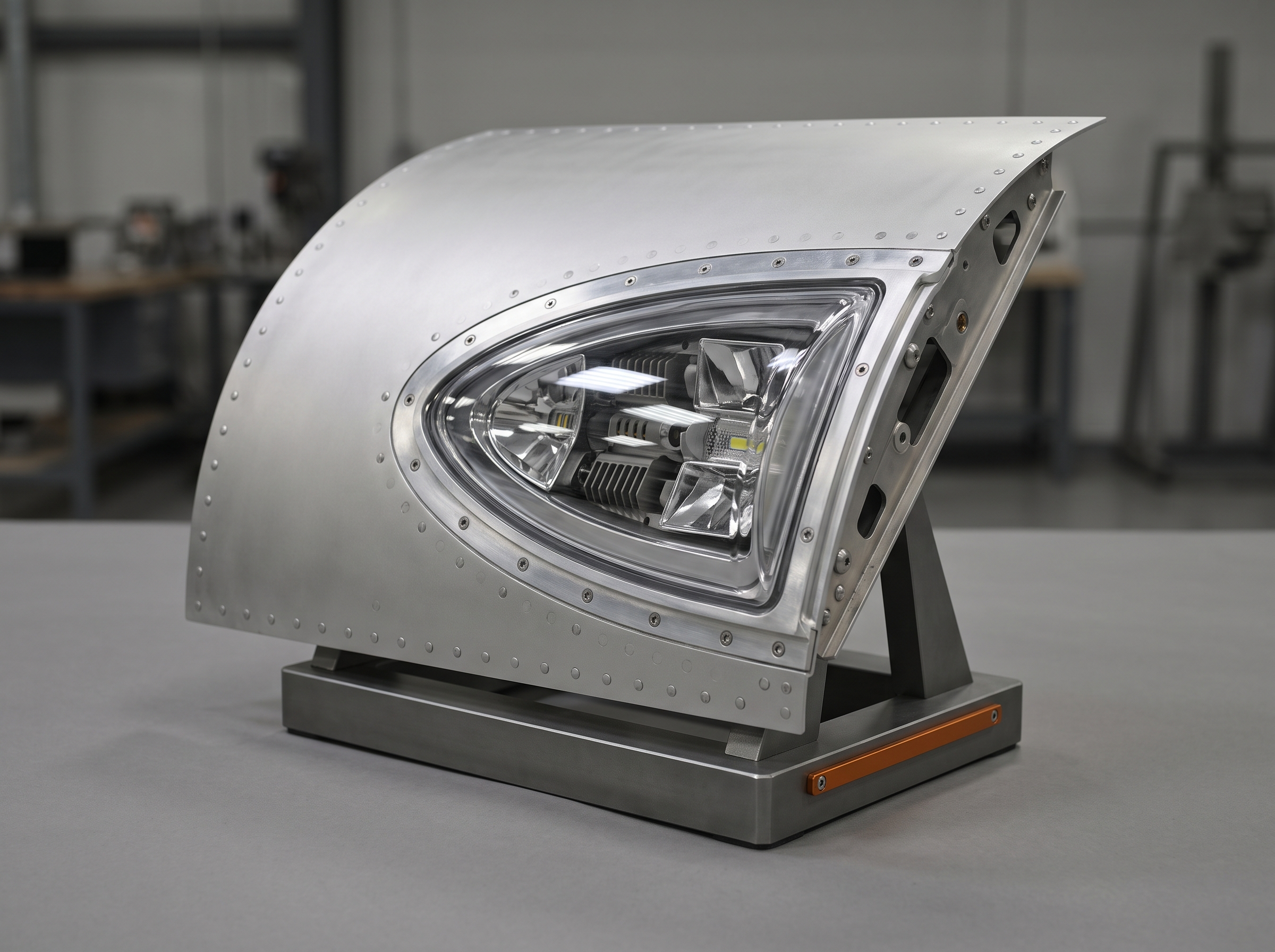
Kratos has selected Odon, Indiana, as the site for Project Helios, a new hypersonic aerothermal testing facility designed to expand US capacity for evaluating materials used in high-speed defence systems.
The facility will support aerothermal testing for materials exposed to the extreme heating, pressure, vibration, and mechanical stress generated during hypersonic flight. Kratos has positioned the site as a bridge between laboratory material development and operational system application, with higher-throughput testing intended to support faster and more cost-effective evaluation.
Hypersonic programmes are often discussed through their most visible components: missiles, glide vehicles, boosters, interceptors, launch platforms, and flight-test events. Beneath that sits a more constrained industrial layer. Before a weapon can move towards production, its materials, coatings, insulation, control surfaces, seals, leading edges, and thermal protection systems must be exposed to conditions that replicate or approximate the flight environment.
Flight above Mach 5 produces severe aerothermal loads. Vehicles moving at those speeds encounter intense heating from air compression and surface friction, especially around leading edges, nose structures, control surfaces, inlets, and areas where airflow separates or shocks form. Materials have to retain strength, shape, and protective properties during rapid heating and cooling. Thermal protection systems have to manage temperature without adding prohibitive mass or compromising manoeuvrability.
Test infrastructure is therefore one of the most important parts of the hypersonic industrial base. Arc-jet facilities, plasma heating, high-temperature material testing, laser-based simulation, wind tunnels, computational models, and flight-test ranges all contribute to qualification. Such infrastructure is expensive to build, difficult to operate, and often oversubscribed. Limited access to test facilities can slow development even when programme funding and design concepts are available.
Project Helios is aimed squarely at that bottleneck. Greater aerothermal test capacity gives engineers more opportunities to compare materials, evaluate coatings, expose failure modes, and generate data before committing to costly flight tests. In a domain where full flight trials are scarce and expensive, better ground-test availability can reduce risk and improve the maturity of hardware before it enters later-stage development.
For manufacturers, ground-test data feeds directly into production decisions. A material coupon that performs well in a laboratory setting may prove difficult to manufacture repeatedly in full-scale geometry. Coatings can become sensitive to surface preparation, curing, thickness variation, inspection method, or repair process. Thermal protection structures may deliver performance but prove too slow, too expensive, or too fragile for scaled production.
The US has invested heavily in hypersonic weapons, interceptors, and enabling technologies, but production maturity remains a recurring challenge. Test capacity, material qualification, propulsion integration, electronics survivability, and supply-chain readiness all sit between prototype flight and fielded inventory. A facility that can support more frequent and repeatable evaluation may help programmes move from bespoke development towards disciplined manufacturing qualification.
Odon also places the facility within a growing defence-industrial region. Kratos already has activity in Indiana around hypersonic systems and related technologies, while the state offers access to technical labour, industrial land, secure infrastructure, and wider defence manufacturing support. Location will not solve the technical challenge alone, but proximity to suppliers, engineers, and test customers can shorten some of the friction between design, fabrication, and qualification.
The work also connects with a broader shift in strike production. IN Defence recently covered European cruise missile production efforts involving Rheinmetall and Destinus, where industrial depth was as important as concept development. Hypersonic weapons sit in a different performance class, but they face a similar requirement for material suppliers, test infrastructure, inspection systems, production tooling, and qualified labour.
The materials problem is particularly unforgiving at hypersonic speeds. Surface roughness, bond-line quality, porosity, microcracks, coating defects, heat-treatment variation, and inconsistent assembly can all become flight risks. These are not abstract engineering details. At extreme temperature and speed, minor production variation can affect thermal load, aerodynamic stability, control authority, or structural survival. Non-destructive inspection, digital process control, material traceability, and test-linked qualification data become essential parts of the production system.
Project Helios could also support work beyond offensive hypersonic weapons. Defensive interceptors, high-speed test articles, reusable vehicles, advanced propulsion systems, thermal materials, and future missile defence programmes all require aerothermal data. As more countries invest in manoeuvring high-speed weapons, the same test infrastructure will be needed for both attack and defence.
Kratos’ selection of Odon for Project Helios places the focus on one of the less visible barriers to hypersonic fielding. The ability to fly fast attracts attention, but the ability to qualify, manufacture, inspect, and repeat hardware that survives that flight will determine whether hypersonics become operational inventory rather than a sequence of expensive demonstrations.