IN Brief:
- Rheinmetall aims to begin cruise missile production with Destinus by late 2026 or early 2027.
- The Rheinmetall Destinus Strike Systems venture will focus on cruise missiles and ballistic rocket artillery.
- The programme reflects Europe’s shift from limited precision inventories towards scalable deep-strike production.
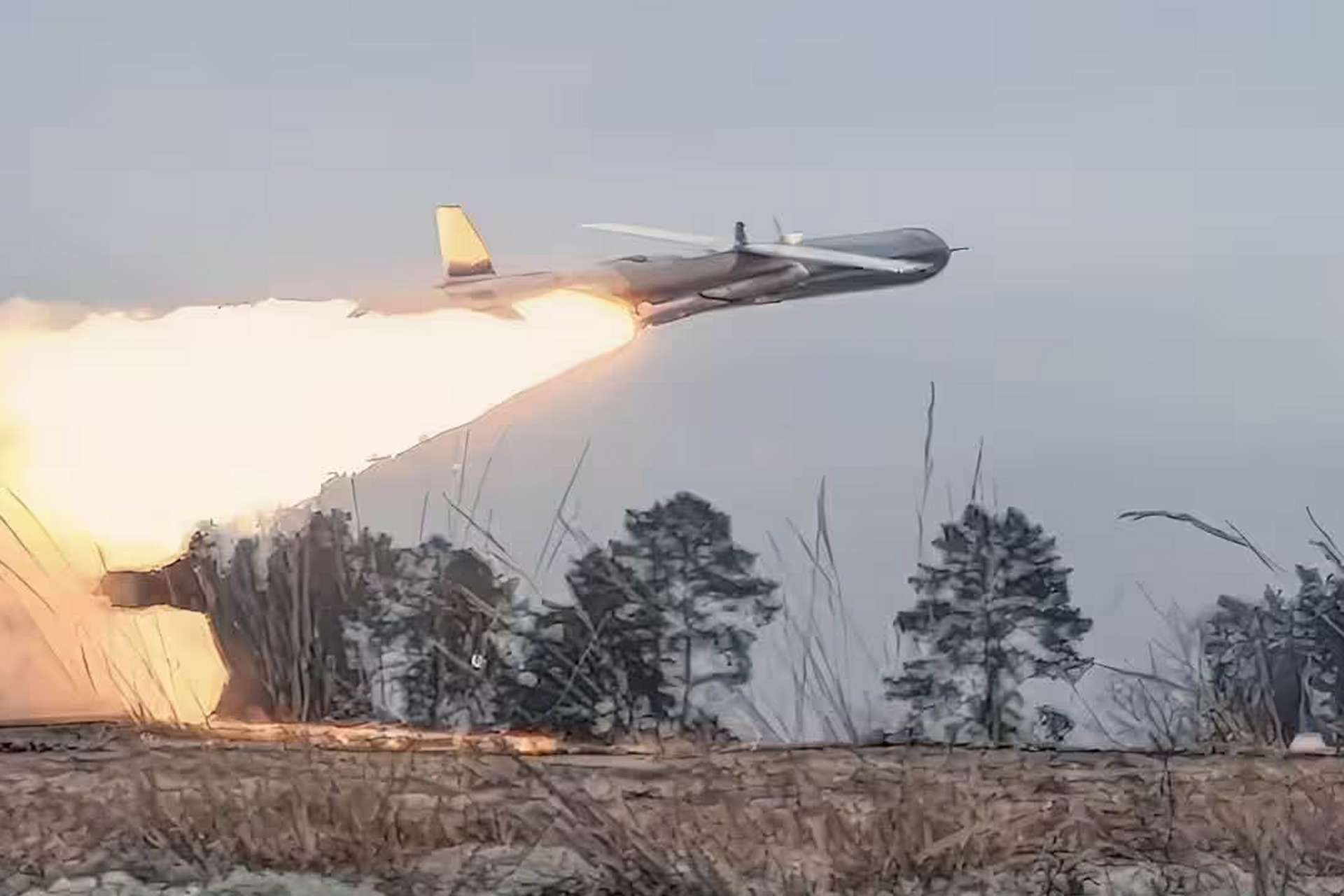
Rheinmetall is moving towards cruise missile production with Destinus, as European governments try to rebuild deep-strike capacity around industrial output rather than limited inventories of high-end weapons.
The German group and the Netherlands-based defence technology company have agreed to establish Rheinmetall Destinus Strike Systems during the second half of 2026. Rheinmetall will hold 51% of the venture, with Destinus holding 49%, subject to regulatory approvals. The new company will be based in Unterlüß, Lower Saxony, and will manufacture, market, and deliver advanced missile systems, including cruise missiles and ballistic rocket artillery.
Production is expected to begin by the fourth quarter of 2026 or early 2027. If achieved, that schedule would place the venture among Europe’s most closely watched missile manufacturing projects, at a point when long-range precision strike is being treated as a stockpile and production problem rather than an occasional high-end procurement.
The partnership brings together two different industrial strengths. Rheinmetall offers production capacity, qualification infrastructure, programme management, explosives and ammunition experience, and access to NATO customer networks. Destinus brings missile design, scalable strike systems, propulsion work, guidance, and a development base focused on lower-cost precision effectors.
Europe does not lack missile design expertise. MBDA, Kongsberg, Saab, Diehl, Safran, Thales, and national laboratories already support advanced weapons across air defence, anti-ship strike, and long-range fires. The deeper constraint is throughput: the ability to build, qualify, stockpile, upgrade, and sustain enough weapons under consumption rates that resemble wartime use rather than peacetime training.
Cruise missile production is technically demanding because each weapon combines propulsion, fuel systems, guidance, navigation, flight control, warhead integration, terminal sensing, datalinks, survivability measures, and software assurance inside a constrained airframe. Low-altitude flight performance, anti-jam navigation, and mission-planning integration add further engineering burden. Scale comes from repeatable manufacturing, stable suppliers, and test capacity as much as from the missile design itself.
Unterlüß gives the project a strategic manufacturing location. Rheinmetall has been expanding its ammunition and weapons footprint, and the site already sits within Germany’s defence-industrial infrastructure. Adding missile work there would place cruise missile and rocket artillery production within an environment accustomed to controlled materials, military qualification, quality assurance, and serial defence output.
The venture also fits Rheinmetall’s broader expansion across the rearmament supply chain. The company has moved beyond its traditional strengths in vehicles and ammunition into air-defence integration, soldier systems, digital equipment, and long-range strike. IN Defence recently covered the company’s €1.04bn Bundeswehr soldier systems order in Rheinmetall wins €1bn soldier systems order, reflecting a portfolio that is being pulled across multiple areas of European force modernisation.
For European forces, the operational requirement has sharpened under the pressure of the war in Ukraine. Russia has used large numbers of missiles, drones, and long-range weapons to attack infrastructure, air defences, command nodes, and logistics. Western stocks of precision missiles are expensive and slow to regenerate. A credible European deterrent posture now needs production lines capable of sustaining expenditure, replacing stocks, and adapting designs as countermeasures evolve.
That requirement places new emphasis on propulsion manufacturing, guidance resilience, energetic materials, and software update cycles. Long-range missiles must operate in contested electromagnetic environments where GNSS disruption, spoofing, radar surveillance, air-defence networks, and mobile decoys are expected. Production has to support frequent testing, seeker validation, electronic hardening, mission planning, and configuration control.
Ballistic rocket artillery adds a parallel opportunity. Europe has watched the US Army’s Precision Strike Missile pathway closely, and IN Defence recently examined the PrSM anti-ship variant in PrSM anti-ship variant targets Pacific range. European equivalents or complementary systems would need launcher compatibility, motor production, seeker performance, warhead options, and command-and-control links. Rheinmetall’s venture gives Germany and partner nations a route into that market if qualification and customer demand align.
Export approvals will still shape any production model. Cruise missiles and long-range rockets are politically sensitive technologies, governed by national licensing, end-use controls, and international regimes. A European production base can reduce dependency on US suppliers, but it does not remove transfer restrictions or customer scrutiny around components, software control, wartime prioritisation, and through-life support.
For Destinus, the deal offers a path from missile development into major industrial production. For Rheinmetall, it brings access to designs and engineering culture that can move faster than traditional prime-contractor cycles. The challenge will be combining speed with military qualification, including safety cases, reliability data, environmental testing, storage life, insensitive munitions compliance, handling procedures, and integration evidence.
Europe’s deep-strike debate is moving from policy language to production arithmetic. The Rheinmetall-Destinus venture gives that debate a factory location, a corporate structure, and a near-term schedule. Its success will be measured not by whether Europe can produce a cruise missile, but by whether it can produce enough of them, update them fast enough, and keep the supply chain stable when demand rises.