IN Brief:
- PrSM Increment 4 is being developed for maritime and relocatable land targets.
- The requirement includes Indo-Pacific operability and ranges at or beyond 1,000 km.
- Production will need to combine missile range, seeker performance, contested navigation, and launcher compatibility.
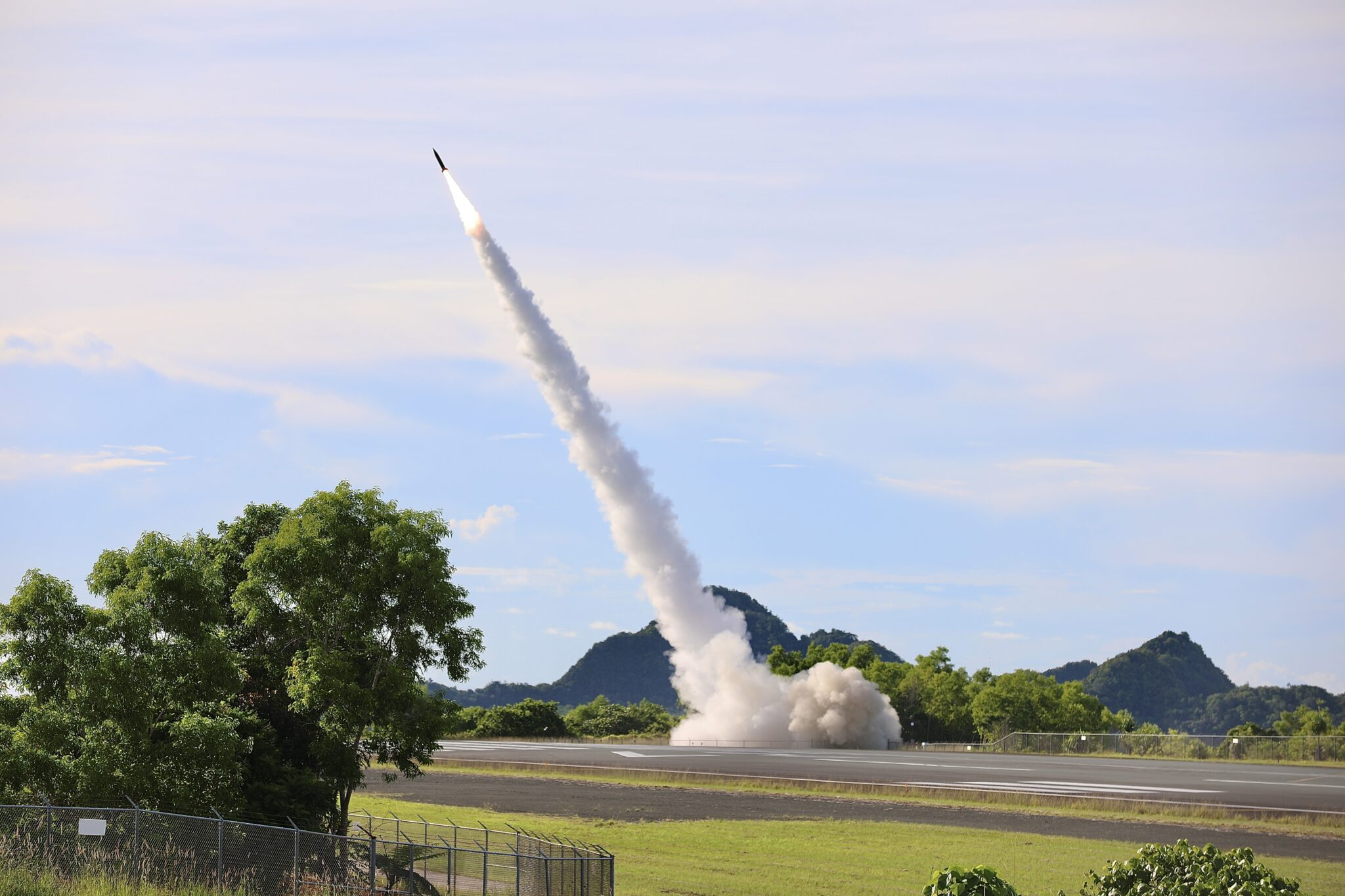
The US Army’s future Precision Strike Missile Increment 4 is being shaped for long-range maritime strike in the Indo-Pacific, with programme material setting out a requirement to engage mobile maritime and relocatable land targets at ranges at or beyond 1,000 km.
The missile would expand the role of HIMARS and future launch formations by giving ground forces a maritime strike function. In an island-chain environment, mobile launchers can complicate naval movement and create distributed fires without relying solely on ships or aircraft.
The requirement includes operation in GPS-contested environments. A missile designed to hit moving maritime targets at long range needs resilient navigation, target discrimination, seeker performance, and access to reliable mission data during a rapidly changing engagement.
Earlier PrSM increments have already pushed the US Army toward longer-range precision fires. Increment 4 adds the additional complexity of maritime targeting, where movement, clutter, weather, electronic warfare, and interrupted sensor data all affect the final engagement.
Missile production and the moving-target problem
A maritime strike missile compatible with existing launcher architecture must fit range, propulsion, seeker, electronics, and datalink requirements inside a constrained form factor. The missile cannot grow freely without affecting launcher compatibility and logistics.
The seeker is central to the production burden. Long-range maritime strike requires target acquisition and discrimination in a cluttered environment, with electronics hardened against jamming and deception. That brings radar, infrared, processing, and software validation into the same manufacturing envelope as propulsion and warhead integration.
The wider system also includes the targeting chain. Sensors, mission-planning tools, communications, and launch-control software have to work together if the missile is to exploit its range. Production therefore extends beyond the round itself into test equipment, tactical software, and integration across launcher units.
PrSM Increment 4 reflects a shift in land-based fires manufacturing. Missiles are becoming part of distributed maritime denial systems, with production success measured by seeker reliability, contested-navigation performance, and integration across the kill chain.