IN Brief:
- GDOTS and Firehawk Aerospace have signed a teaming agreement for 155mm base bleed motors.
- Firehawk will contribute thermoplastic propellant and moulding technologies.
- The partnership targets extended-range artillery demand and base bleed production constraints.
General Dynamics Ordnance and Tactical Systems and Firehawk Aerospace have signed a teaming agreement to advance next-generation 155mm base bleed motor production.
The agreement establishes an exclusive teaming arrangement focused on Direct Commercial Sales opportunities and growing international demand for extended-range artillery systems. Firehawk brings thermoplastic propellant formulations, injection moulding, and compression moulding processes, while GDOTS contributes metal parts production, munitions integration, and established artillery manufacturing experience.
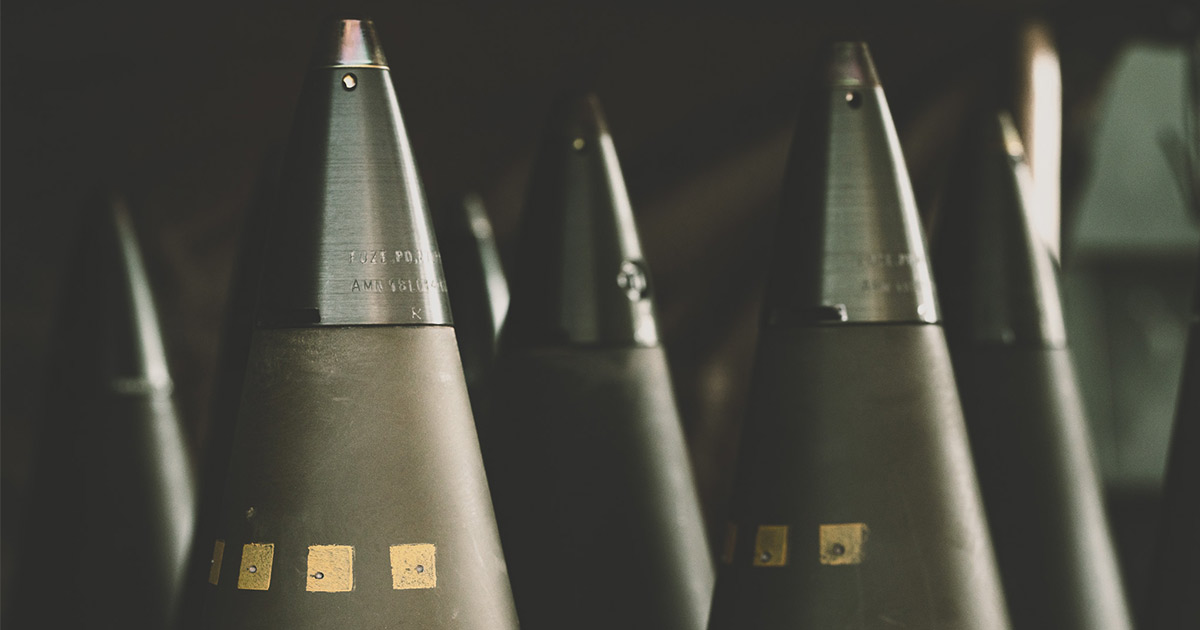
Base bleed motors reduce drag behind an artillery projectile, extending range without turning the round into a full rocket-assisted munition. The technology is increasingly relevant as armies seek longer-range fires while rebuilding artillery ammunition stocks.
The partnership is also intended to expand production capacity for a subcomponent that can constrain extended-range projectile output if supply does not keep pace with demand.
Energetics production pressure
155mm ammunition production depends on a chain of specialised processes. Projectile bodies, explosive fill, fuzes, propelling charges, packaging, and energetic subcomponents must arrive in sequence. Base bleed adds further complexity through propellant consistency, casing tolerances, ignition reliability, geometry control, and environmental stability.
Firehawk’s thermoplastic propellant and moulding approach is designed to support scalable production. GDOTS brings experience in munitions integration, metal components, qualification, and delivery to allied customers.
The combination is aimed at turning base bleed technology into repeatable manufacturing capacity. That requires process control, lot consistency, safety management, inspection discipline, and qualification evidence across production batches.
Extended-range artillery demand
International demand for 155mm ammunition remains high as allied forces rebuild stocks and place greater emphasis on range, survivability, and fires mass. Extended-range projectiles allow artillery units to engage targets from farther away, but they also increase stress on the industrial base.
Firehawk intends to use its Lawton, Oklahoma facility to expand operations under the partnership. That gives the agreement a direct manufacturing footprint rather than limiting it to technology development.
The artillery supply chain has been defined by bottlenecks in energetics, metal parts, propellant, and load-assemble-pack capacity. Base bleed motors sit directly inside that pressure point. Scaling them safely and consistently will be central to any wider move toward larger extended-range artillery inventories.