IN Brief:
- Malaysia is seeking clarification from Norway after export-control changes halted Naval Strike Missile deliveries.
- The missiles were intended for the Royal Malaysian Navy’s delayed Littoral Combat Ship programme.
- Export licensing, combat-system integration, and equipment delays are adding pressure to naval delivery schedules.
Malaysia’s Littoral Combat Ship programme has encountered a new weapons supply problem after Norway halted the delivery of Naval Strike Missiles intended for the Royal Malaysian Navy’s new surface combatants.
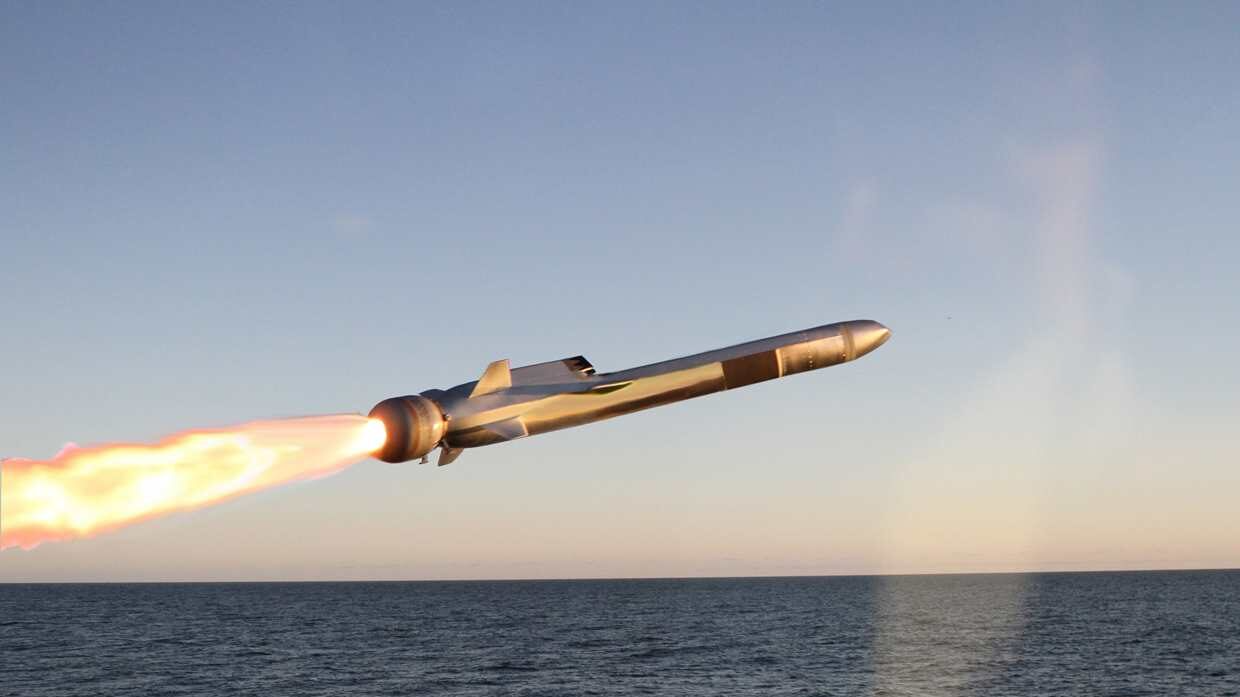
The Malaysian Defence Ministry will discuss the change in Norway’s defence export approval position with Oslo, after the halt affected a procurement contract with Kongsberg Defence & Aerospace. The Naval Strike Missile, or NSM, was selected to equip Malaysia’s LCS vessels, providing an over-the-horizon anti-ship and land-attack capability for the class.
The halt lands on a programme already shaped by delay, cost pressure, and rework. Malaysia’s LCS project was awarded in 2011 for six vessels at an initial cost of 6bn ringgit, before later reviews reduced the planned acquisition to five ships. The first vessel, originally scheduled for delivery in August 2026, has been pushed to December because of late equipment deliveries and ongoing rework.
Missile integration sits deep inside a ship’s design rather than at the edge of it. Launcher placement, deck reinforcement, combat-management software, fire-control interfaces, power supply, cooling, datalinks, safety zoning, training, magazine procedures, and acceptance trials are all shaped by the selected weapon. When a primary missile supply route is disrupted late in construction, shipbuilders and naval customers are left balancing the cost of waiting against the cost of redesign.
The NSM is a mature, export-proven system used by several navies and designed for low-observable sea-skimming attacks against ships and land targets. For Malaysia’s LCS programme, the missile forms part of the class’s combat credibility. Without a settled delivery path, the Royal Malaysian Navy faces uncertainty around the lead ship’s weapons fit, crew training plan, and operational work-up.
Equipment delays of this kind expose how naval manufacturing schedules depend on long-lead systems. Engines, gearboxes, generators, radar arrays, combat systems, weapons, and electronic warfare equipment all shape the critical path. Physical construction can continue for a period when a supplier problem emerges, but once cabling, foundations, software baselines, and acceptance documentation depend on unavailable equipment, stored work and retrofit planning begin to erode momentum.
Mid-sized naval programmes are particularly exposed when they rely on multi-national equipment chains. A frigate or corvette may be assembled domestically while drawing weapons, sensors, propulsion equipment, and combat software from several countries. That model can deliver capable ships while supporting local industry, but it depends on continued political alignment across every supplier nation. Export-control changes can arrive long after the customer has fixed the vessel’s architecture.
Malaysia’s programme has already been through a difficult restart, which makes late-stage weapons uncertainty especially costly. Rework in naval construction is expensive because changes ripple through stability calculations, electromagnetic compatibility, cable routes, launch clearances, software interfaces, test documentation, and crew procedures. A replacement missile may be technically feasible, but qualification is rarely quick.
The case sits alongside a wider regional push for more capable surface fleets and greater domestic shipbuilding participation. Asian navies are adding frigates, corvettes, submarines, uncrewed systems, and coastal missile networks while trying to retain more national workshare. IN Defence recently covered Singapore’s move deeper into serial production of its unmanned-systems-focused Victory-class MRCVs in Singapore advances Victory-class MRCV production. Malaysia’s experience shows how domestic assembly still depends heavily on resilient access to controlled foreign weapons and subsystems.
Kongsberg’s position will also be watched closely. The NSM has become one of the most visible Western anti-ship missile families, selected for naval and coastal defence roles across allied markets. Customers assessing missile options will look beyond range, seeker performance, and launcher flexibility, with export reliability and delivery assurance now central to procurement risk.
Malaysia’s immediate decision is whether to preserve the LCS configuration while seeking a licensing resolution, or to assess alternatives that could bring new cost and integration work. Delivering ships with provisions for later missile fitting would keep construction moving, but it would defer operational capability and create another shipyard or dockyard phase. Waiting for the original weapon path to resolve would protect the intended configuration while risking further delay.
Anti-ship missile availability has become a strategic procurement issue across the Indo-Pacific. Navies are no longer buying hulls alone; they are buying distributed maritime strike capacity. Launchers, missiles, targeting data, and stockpile depth shape the value of each ship. Malaysia’s LCS programme now has to manage that reality inside a project already carrying political, financial, and industrial baggage.