IN Brief:
- Greenerwave and Telespazio France have signed an agreement to distribute sovereign multi-orbit SATCOM terminals in Europe.
- The terminals are designed for low-power GEO/LEO connectivity across defence, government, and security markets.
- The partnership reflects growing demand for resilient satellite communications that can be deployed, powered, secured, and sustained at scale.
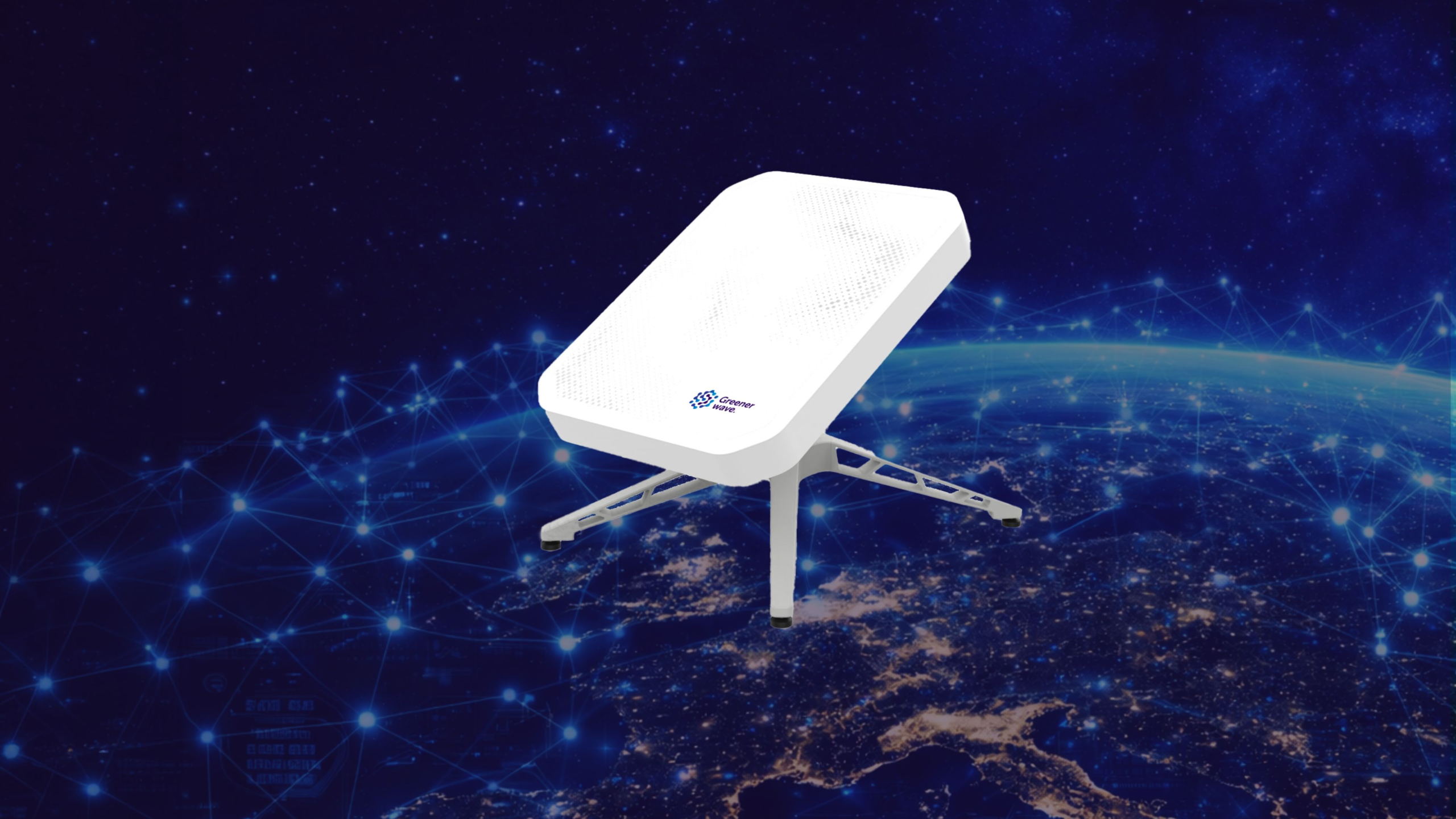
Greenerwave and Telespazio France have signed a strategic agreement to deploy and distribute Greenerwave’s low-power, multi-orbit SATCOM terminals across European defence, government, and security markets.
Under the agreement, Telespazio France will distribute Greenerwave’s GEO/LEO terminals to priority institutional users in France, wider Europe, and the United Kingdom. The partnership brings together Greenerwave’s antenna and terminal technology with Telespazio France’s position in satellite services, ground systems, and critical communications.
Europe’s demand for sovereign communications is rising as defence users place greater emphasis on resilient connectivity. Forces need systems that can operate across multiple satellite orbits, support mission continuity, reduce power demand, and avoid overdependence on non-European supply chains. Multi-orbit SATCOM allows users to draw on geostationary and low-Earth-orbit services, improving resilience when one layer is congested, unavailable, or vulnerable to interference.
The terminal is the operational edge of that strategy. Strategic autonomy in satellite communications is often discussed through constellations, launch vehicles, and spectrum, but deployed resilience depends heavily on the ground segment. Terminals must be compact, rugged, electronically secure, power-efficient, software-updatable, and simple enough to deploy under pressure. They also have to work across vehicles, command posts, temporary sites, vessels, and critical infrastructure without becoming a bespoke integration project each time.
Low-power operation has become a design priority as deployed forces carry more data-dependent equipment. Communications terminals compete with sensors, compute, electronic warfare systems, batteries, chargers, and vehicle power budgets. Energy-efficient SATCOM equipment can reduce fuel demand, simplify battery planning, lower thermal signatures, and make resilient connectivity more practical for smaller units or austere sites.
The GEO/LEO capability adds a demanding engineering layer. LEO services can provide lower latency and high capacity, but constellations move overhead and require agile tracking, beam steering, and handover performance. GEO services provide persistent regional coverage with different latency and resilience characteristics. A multi-orbit terminal has to manage those differences without imposing excessive operator workload.
Manufacturing these systems involves antennas, beamforming, radio-frequency components, embedded software, modems, thermal design, environmental hardening, encryption interfaces, and certification. Defence customers will expect terminals that perform in rain, dust, vibration, electromagnetic interference, and contested environments. They will also want supply assurance, repair routes, spare parts, and configuration control for equipment deployed across several agencies and mission profiles.
The Telespazio route gives the agreement a strong services dimension. Defence communications customers rarely buy hardware in isolation. They buy service continuity, network management, installation, training, cybersecurity assurance, helpdesk support, and integration into existing communications architectures. Telespazio France gives Greenerwave a distribution and service channel into defence and government markets that would be difficult for a terminal specialist to build quickly alone.
Pierre Glatt, Sales Director at Telespazio France, said the partnership enables the company to integrate advanced antenna technology into its SATCOM offering and expand European-made solutions for customers. He said the collaboration strengthens flexible, high-performance connectivity for demanding environments and supports multi-orbit service continuity for critical missions.
Geoffroy Lerosey, CEO and co-founder of Greenerwave, said the agreement is a milestone as the company scales deployment of next-generation SATCOM terminals across Europe. He said combining Greenerwave’s technology with Telespazio’s defence and government market presence supports sovereign, energy-efficient, and resilient connectivity for institutional users.
The defence communications environment is becoming more contested. Distributed operations, dispersed logistics, uncrewed systems, air defence, cyber response, and national-security command structures all depend on resilient data links. Satellite communications are also exposed to jamming, spoofing, cyber intrusion, congestion, and concerns over kinetic or non-kinetic counter-space activity.
IN Defence recently covered the UK’s move to strengthen alternative positioning, navigation, and timing through UK backs eLoran for resilient navigation. The Greenerwave-Telespazio agreement sits in the same resilience landscape. Forces are looking beyond single-point access to space-based services, whether through terrestrial backups, multi-orbit connectivity, alternative navigation, or secure ground infrastructure.
For European industry, SATCOM terminals offer a more attainable sovereignty path than entire satellite constellations. A country or alliance may not control every spacecraft it uses, but it can still build trusted terminals, secure software, ground-segment services, and integration capability. Those elements determine who can connect, how traffic is routed, how updates are managed, and how quickly equipment can be deployed.
The UK’s inclusion in the distribution market is also notable. European and UK defence communications requirements remain closely aligned, even where industrial and procurement structures differ. Defence SATCOM users across the region face similar pressure around resilience, sovereignty, multi-domain operations, and secure connectivity for critical missions.
The partnership’s success will depend on deployable volume as much as terminal performance. Defence customers will want evidence from field trials, cybersecurity assessments, interoperability testing, orbit-switching performance, and integration with existing command systems. Production capacity and supply-chain exposure for critical RF and electronic components will sit high on the evaluation list.
Greenerwave and Telespazio France are positioning the terminal as part of Europe’s ground infrastructure for contested communications. In that market, performance has to be matched by the ability to manufacture, deploy, update, and support terminals at the pace European security conditions now demand.