IN Brief:
- Switzerland is collecting information from Germany, France, Israel, and South Korea on additional long-range air-defence options.
- The move follows a four-to-five-year delay to Switzerland’s US Patriot system deliveries.
- Industrial participation, European production share, delivery speed, and system integration will shape the next stage of the evaluation.
Switzerland is examining additional long-range air-defence options after delays to its Patriot order exposed the risks of relying on a single delivery queue for a critical national capability.
Armasuisse has requested information from authorities in Germany, France, Israel, and South Korea, while five manufacturers have also been approached. The priorities include delivery time, cost, performance, and the share of production in Europe, ideally in Switzerland. Responses are expected by the end of May, although they will not yet constitute formal offers.
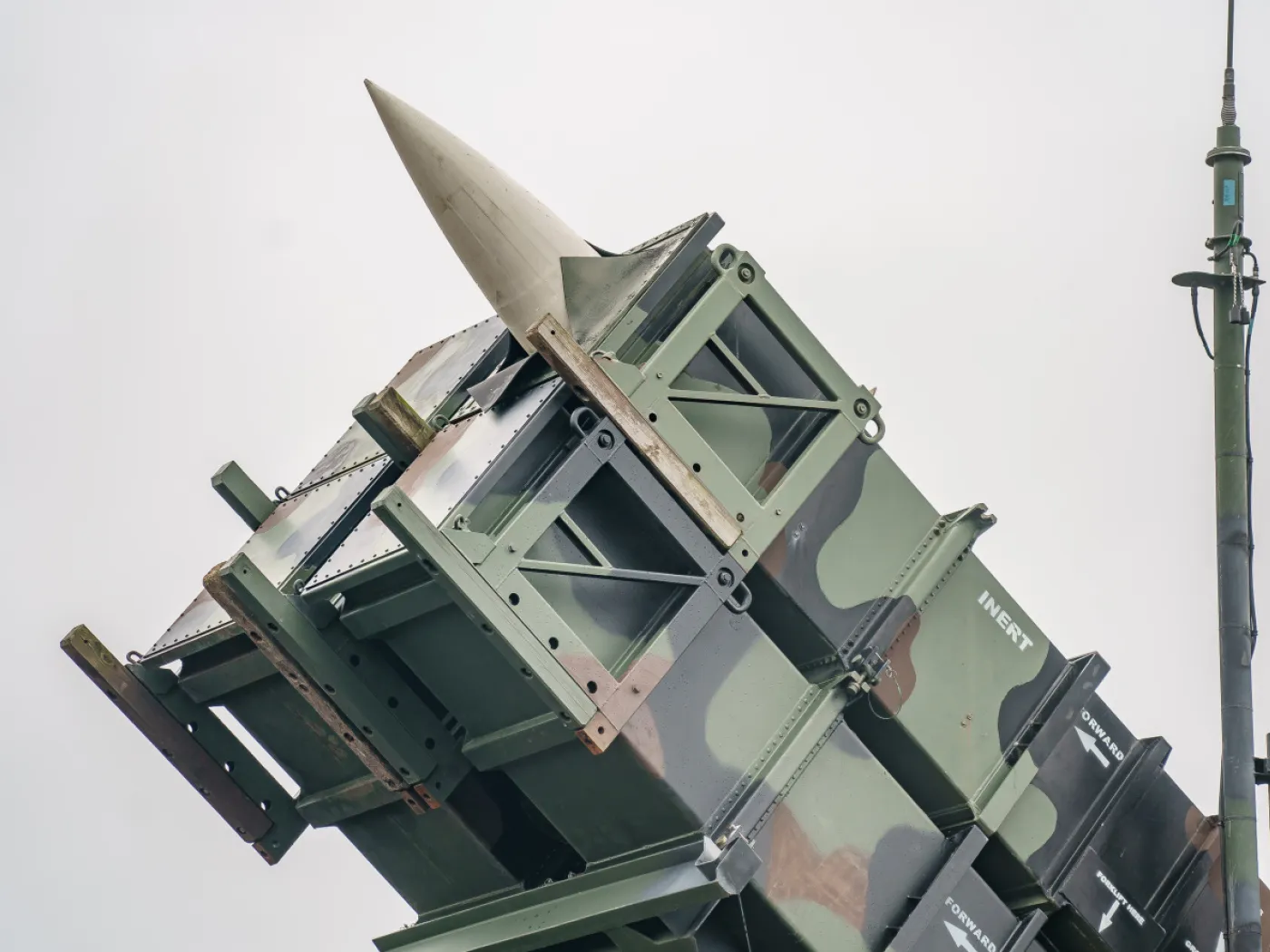
Bern ordered five Patriot systems in 2022, with delivery originally scheduled to begin in 2026 and finish in 2028. The United States later reprioritised Patriot deliveries to support Ukraine, pushing Swiss production batches further down the queue. Swiss officials have warned that the delay could run four to five years, while the government has kept payments on hold as it seeks binding delivery dates.
Switzerland’s air-defence gap now has both procurement and industrial dimensions. Long-range systems can no longer be bought on the assumption that mature designs are readily available once budgets are approved. Patriot, SAMP/T, IRIS-T variants, David’s Sling, Arrow-family systems, and South Korea’s KM-SAM/Cheongung family all sit within supply chains shaped by Ukraine, Middle East demand, missile stockpile depletion, and expanding NATO requirements.
Delivery speed depends on far more than launcher production. Interceptor motors, seekers, radar hardware, command-and-control equipment, vehicles, software baselines, fire-control integration, and customer-specific configuration all affect the schedule. Even mature systems can carry long lead times when existing customers, wartime replenishment, and politically prioritised deliveries compete for the same production capacity.
Switzerland’s request is therefore a test of allied air-defence capacity. The supplier geography points towards a mixed field of European, Israeli, and South Korean options, although Armasuisse has not publicly named the systems or manufacturers under consideration. Each route would bring different interceptor classes, radar dependencies, launcher architectures, training requirements, and integration demands.
The emphasis on European or Swiss production share shows how procurement priorities have shifted. Switzerland is not only assessing launchers and interceptors; it is assessing control over maintenance, training, component work, command-system integration, vehicle adaptation, test support, depot activity, and future upgrades. For a neutral country with a specialised industrial base, local participation can reduce dependency without requiring full domestic missile production.
Patriot’s delay also demonstrates the limits of contract certainty in a stressed market. Switzerland’s order was placed before the full scale of European air-defence demand became visible. Once US delivery priorities moved towards Ukraine support, Bern’s assumptions changed. Other buyers are facing similar conditions as national plans collide with wartime production pressure.
Adding a second air-defence system would bring both resilience and complexity. Mixed fleets require different interceptors, launchers, radar interfaces, training pipelines, spares, software support, maintenance equipment, and command-and-control links. If integration is weak, the buyer gains hardware while adding operational friction. If integration is robust, layered air defence becomes more resilient because no single production line, missile type, or sensor architecture defines the national shield.
Switzerland’s wider defence posture is already being reshaped by cost and readiness pressure. Its F-35A purchase has been affected by cost increases, while Patriot uncertainty has fed a broader debate about the pace of capability renewal. IN Defence recently covered allied sensor and air-defence industrial capacity in Saab UK expands radar testing at Fareham, where radar production, verification, software testing, and customer acceptance were central to the expansion. Air defence is constrained by sensors, integration capacity, and acceptance testing as much as by interceptor availability.
For European manufacturers, Switzerland’s evaluation presents a commercially attractive opportunity with a high bar for delivery evidence. Bern will assess whether suppliers can support long-term stockpile renewal, software updates, and integration with Swiss surveillance and command systems. Performance against ballistic missiles, cruise missiles, aircraft, and drones will be weighed against cost, delivery realism, and production control.
The procurement also reflects a wider move away from single-system national air defence. Countries are building layered architectures that combine long-range interceptors, medium-range missiles, short-range systems, counter-drone sensors, guns, electronic warfare, and passive detection. Switzerland’s search beyond Patriot does not require abandoning the Patriot path. It gives the government options that reduce schedule exposure and improve resilience.
The end-May responses will shape the next stage of Switzerland’s air-defence planning. Delivery time, production share, integration workload, and supplier resilience may prove as decisive as nominal range or interceptor speed. Bern now needs an option that can arrive soon enough to close a capability gap and integrate cleanly enough to strengthen national air defence rather than add another procurement burden.