IN Brief:
- L3Harris has completed a full-scale, flight-like solid-fuel ramjet ground test.
- The test used a new fuel grain intended to reduce fuel cost.
- The work is tied to wider investment in Orange County propulsion production capacity.
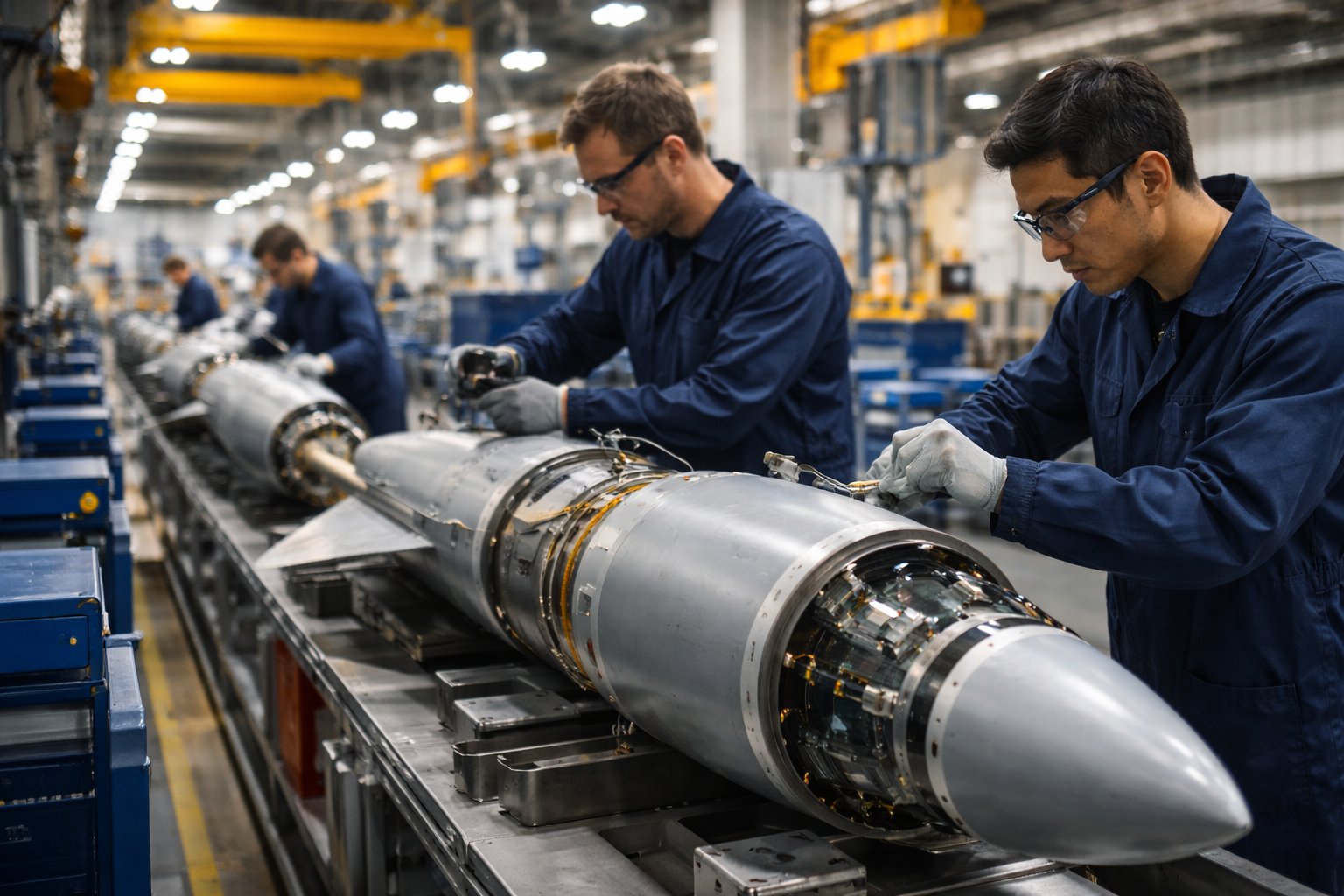
L3Harris has completed a full-scale, flight-like solid-fuel ramjet ground test at its Orange County, Virginia site, advancing a propulsion technology intended to support longer-range, higher-speed tactical missiles that can be manufactured at affordable scale.
The test used a new solid-fuel ramjet grain and operated in a direct-connect, flight-representative environment. Engineers will use the data to refine the propulsion system ahead of further ground testing and a planned tactical missile demonstration. For a missile sector under pressure to increase both performance and production throughput, the connection between test stand and factory is increasingly important.
Propulsion remains one of the hardest constraints in missile design. Militaries want greater range, higher speed, improved survivability, and lower cost, yet those goals often pull against one another. High-performance systems can demand exotic materials, tight tolerances, complex fuels, intensive testing, and slow production cycles. A solid-fuel ramjet offers a possible route to sustained energy without creating a weapon that can be bought only in very small numbers.
Ramjet technology is not new, but adapting it for tactical missiles at scale remains a demanding engineering task. The system must manage airflow, combustion, thermal stress, structural loads, and guidance integration inside a compact missile body that can survive storage, launch, acceleration, manoeuvre, and terminal flight. Fuel formulation is central to that balance.
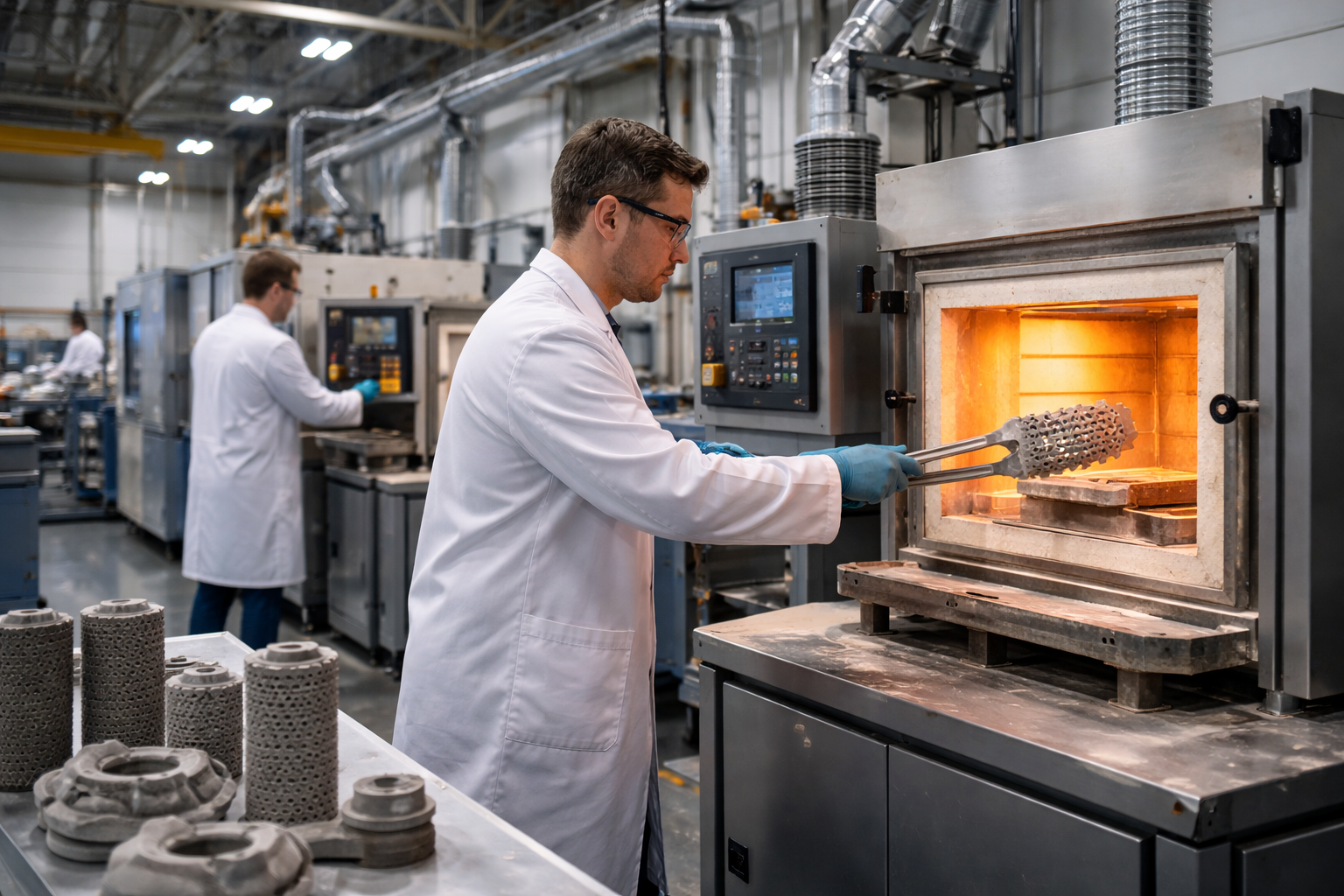
The new fuel grain is therefore an important production detail. A lower-cost fuel could improve the economics of future weapons if it can be manufactured consistently, stored safely, and qualified for operational use. Energetics, however, rarely scale easily. Raw material availability, batch consistency, safety procedures, environmental compliance, and inspection regimes all shape whether a promising formulation can become a repeatable production item.
Orange County is more than a test location. L3Harris is also investing in solid rocket motor production capacity at the Virginia site through its Advanced Propulsion Facilities campus, which is expected to more than double manufacturing space and add hundreds of jobs over the next five years. Development and production are being drawn closer together because missile customers no longer view advanced propulsion as useful unless it can be built at rate.
The US missile industrial base is already stretched across air defence, guided rockets, hypersonics, anti-ship weapons, theatre fires, and stockpile replenishment. Every new weapon concept competes for engineers, test cells, nozzles, casings, igniters, insulation, propellant ingredients, electronics, and quality personnel. A propulsion breakthrough that cannot move into controlled production will not solve the inventory problem.
The same capacity pressure is visible across the wider defence market. Future combat-air programmes, NATO deep-fires projects, and munitions replenishment all depend on a manufacturing base that can deliver performance and quantity together. L3Harris’ ramjet work sits inside that larger industrial race, where the decisive question is no longer only how far or how fast a weapon can fly, but how many can be produced and replenished.
For missile designers, a solid-fuel ramjet can support weapons that retain energy deeper into flight. That may be valuable for air defence, strike, anti-ship, or future air-combat applications where speed, range, and endgame manoeuvre affect survivability. But propulsion improvements force changes elsewhere in the missile, including thermal management, power, control actuation, seeker performance, datalinks, and software.
Ground testing is therefore an essential production filter. Direct-connect tests allow engineers to measure performance under controlled conditions, compare results with models, adjust fuel or geometry, and reduce risk before more expensive flight demonstrations. Strong test infrastructure can shorten development cycles only when it is closely linked to production engineering and supplier readiness.
The tactical demonstration will be the next visible marker, but the harder industrial milestone will come later. L3Harris must show that the propulsion system can be manufactured repeatedly, qualified safely, and integrated into a missile architecture without losing the cost advantages that make the approach attractive. A successful test is an entry point, not a production guarantee.
Allied customers will watch the work through the lens of availability. The US and its partners need missiles that can outrange and outpace adversary systems, but they also need stockpiles large enough to deter, train, and fight. A high-performance missile that arrives slowly and expensively in small batches will not meet that requirement.
L3Harris is tying ramjet development to a larger investment in propulsion capacity, which gives the programme a stronger industrial foundation than a stand-alone technology demonstration. The next phase will show whether solid-fuel ramjet performance can be converted into a manufacturable missile system at the scale modern stockpiles now demand.