IN Brief:
- Lockheed Martin has received a $13.44m engineering and management services order for USS Cleveland's post-shakedown availability.
- The contract allocates 60% of the work to Pascagoula, Mississippi, and 40% to Mayport, Florida.
- USS Cleveland was commissioned in May 2026, with the new engineering order expected to be completed by August 2027.
Lockheed Martin has secured a $13.44 million US Navy order to provide engineering and management services for USS Cleveland during its post-shakedown availability. The work supports the final Freedom-variant littoral combat ship as it progresses beyond initial delivery and commissioning, with engineering activity scheduled to continue through August 2027.
The $13,444,766 cost-plus-award-fee order, N6278626F1000, was issued against Lockheed Martin’s existing basic ordering agreement N00024-19-G-2319. Work is divided between Pascagoula, Mississippi, accounting for 60% of the activity, and Mayport, Florida, accounting for 40%. The full order amount will be obligated from fiscal 2026 Navy shipbuilding and conversion funding.
The Supervisor of Shipbuilding, Conversion, and Repair in Bath, Maine, is administering the contract. Lockheed Martin Mission Systems and Training is the named contractor, reflecting the company’s established engineering and systems integration role within the Freedom-class programme. The order covers technical and management services rather than the acquisition of a new ship or a separately specified package of combat equipment.
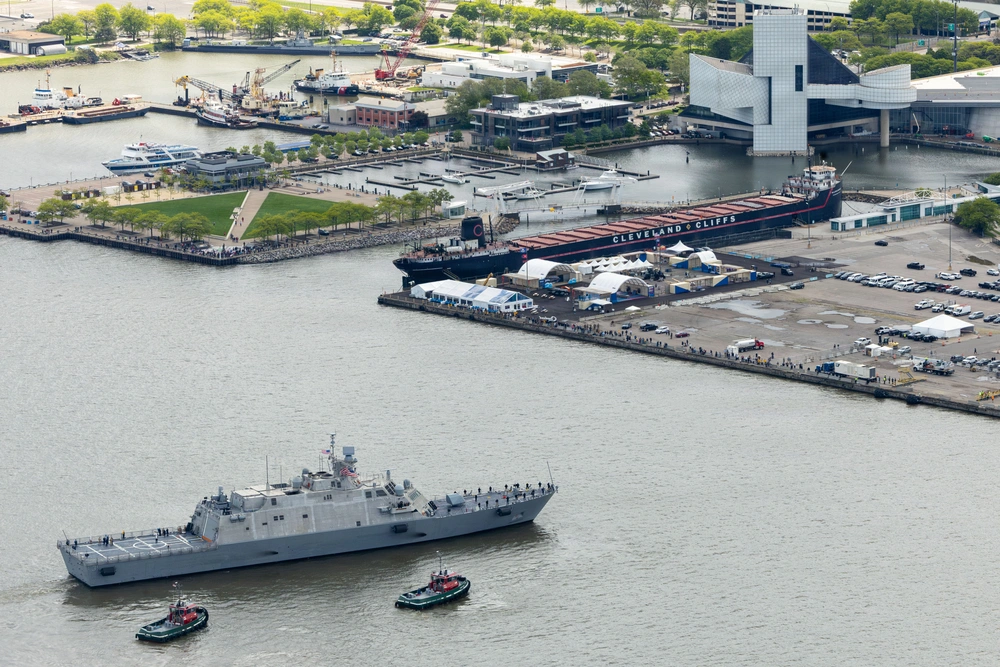
USS Cleveland, designated LCS 31, was accepted by the Navy on 26 November 2025 after construction by Fincantieri Marinette Marine in Wisconsin. It was commissioned in Cleveland, Ohio, on 16 May 2026 and reached its assigned homeport at Naval Station Mayport on 11 June. These milestones completed the vessel’s initial transition from shipyard delivery into commissioned naval service.
Post-shakedown availability follows that transition. Under the Navy’s maintenance arrangements, the period provides an industrial opportunity to correct deficiencies identified during shakedown or earlier trials and to undertake other authorised improvements. It is distinct from the original construction and acceptance process, even though some work may involve equipment fitted during the vessel’s build.
The engineering support required during such an availability begins with determining which findings fall within the approved scope and what technical action is necessary. Reports from ship operations, inspections and earlier trials may need to be examined against the applicable design requirements. The responsible engineering organisations then establish whether an issue requires further investigation, repair instructions, a configuration change or additional testing.
Lockheed Martin’s contract will support those engineering and management requirements for Cleveland. The published award does not list individual defects, identify particular equipment requiring replacement or provide an itemised modification programme. Its value therefore represents a funded technical services commitment rather than a quantified package of repairs to named ship systems.
The company has an established role in the Freedom variant’s systems architecture. Lockheed Martin worked with the shipbuilding team on the design and integration of major mission systems, giving it access to technical information relevant to equipment installed across the class. That engineering background can support investigations requiring an understanding of the interfaces between shipboard hardware and software.
Information gathered during initial operations can reveal differences between expected system behaviour and performance in the complete vessel. A component may have passed its own factory and installation checks, while its interaction with other equipment requires further examination under shipboard operating conditions. Resolving an identified issue can involve reviewing test records and configuration information before determining the appropriate engineering response.
Those investigations must proceed through authorised technical arrangements. Any change to installed equipment requires a defined configuration and suitable documentation, allowing the Navy to establish what has been altered and which tests are required before accepting the result. Engineering instructions, inspection records and updated technical data provide the connection between the investigation and work undertaken aboard the vessel.
The post-shakedown process also requires programme management because technical decisions affect personnel, materials, work locations and the sequence of tasks. An engineering issue that requires physical access to a shipboard compartment may have to be coordinated with other maintenance work, while changes involving software or electronic equipment can require specialist testing resources.
Lockheed Martin’s award uses a cost-plus-award-fee contractual structure. Allowable costs are reimbursed under the agreement, with an award fee governed by its performance provisions. This differs from a fixed-price equipment order and is consistent with work involving technical investigation and management activity whose precise effort may depend on the results obtained as the programme develops.
The division between Pascagoula and Mayport establishes where the contracted services are expected to be performed. Mayport is Cleveland’s homeport and provides access to the ship and its operating organisation. Pascagoula accounts for the larger share of the engineering workload, although the award does not identify a particular repair facility or state that the vessel itself will be present there throughout the programme.
Technical coordination between the locations will require consistent engineering records and arrangements for transferring information about findings, authorised actions and completed work. Where equipment needs additional testing, the relevant organisations must agree the requirements and establish how the results will be recorded. That process allows engineering activity performed away from the ship to support work undertaken at its operating location.
The Navy’s post-shakedown maintenance instructions also define the relationship between identified deficiencies, authorised improvements and the wider shipbuilding programme. Responsibility for correction must be established before work is undertaken, with funding and completion arrangements managed through the applicable acquisition and maintenance authorities.
Those controls are particularly relevant to a newly commissioned ship because the post-delivery period may involve several organisations that participated in construction, systems integration and acceptance. Their roles do not end at the same milestone: some support requirements continue after the vessel has entered naval service, while others are governed by specific contractual obligations.
Cleveland is the sixteenth and final Freedom-variant littoral combat ship constructed for the US Navy. Its commissioning brought the variant’s new-build programme to a close, but vessels already delivered continue to require engineering support and sustainment. The industrial requirement is moving from completing the remaining ships towards maintaining and modifying equipment in service.
The $13.44 million order provides Lockheed Martin with funded engineering and management work through August 2027. The technical tasks performed will be governed by Cleveland’s approved post-shakedown programme and subsequent findings, with completion of the contracted support establishing a further step in the ship’s transition from initial service introduction to its continuing fleet sustainment arrangements.