IN Brief:
- Malaysia has signed for K-SAAM to equip the Royal Malaysian Navy’s LMS Batch 2 corvettes.
- The deal gives the South Korean missile its first export order and adds another major subsystem to an active shipbuilding programme.
- Missile, launcher, combat-system, and support integration will now run alongside hull construction and outfitting ahead of delivery.
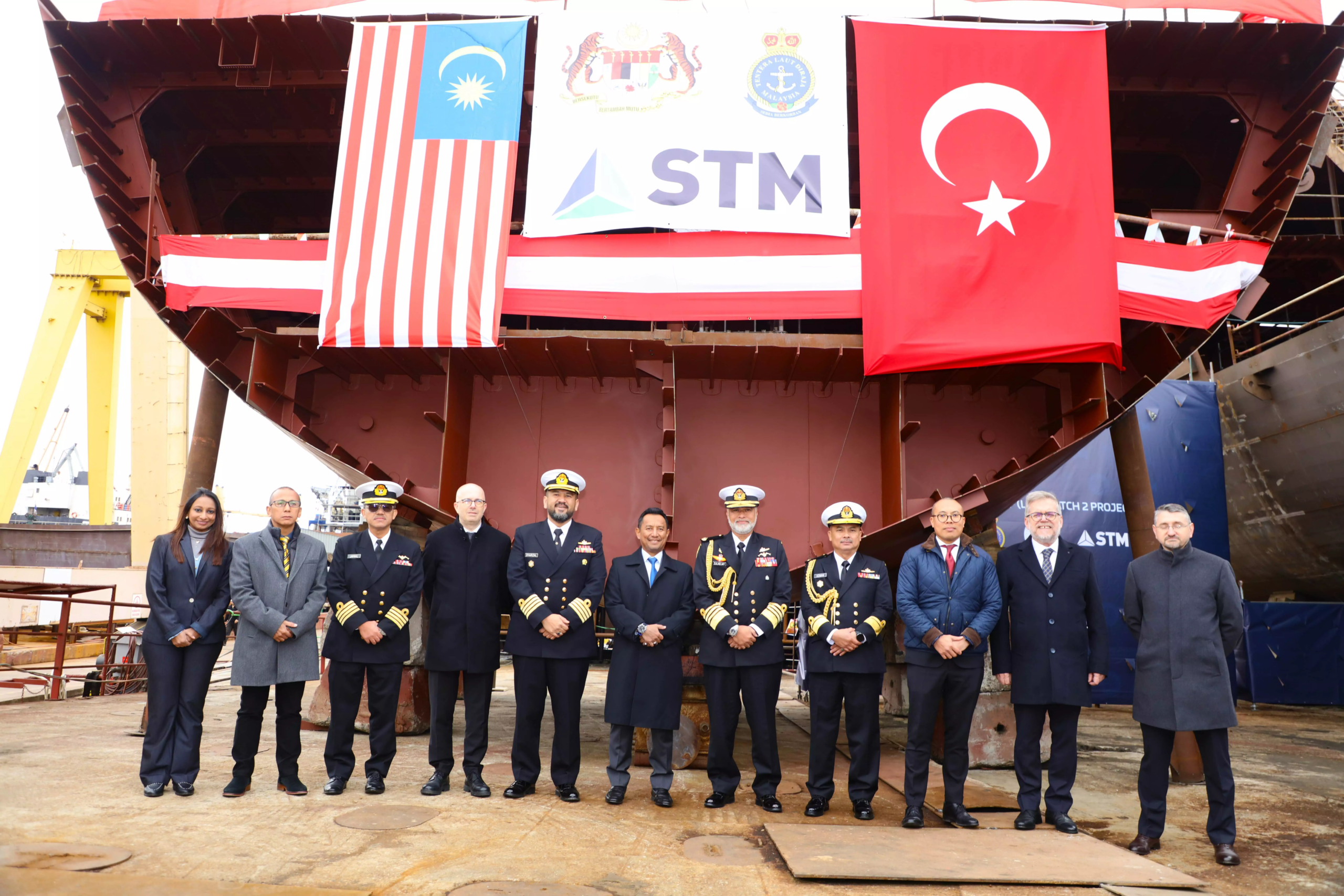
Malaysia has signed for South Korea’s K-SAAM shipborne surface-to-air missile to equip the Royal Malaysian Navy’s LMS Batch 2 corvettes, bringing a new air-defence layer into a programme already moving through construction in Türkiye. The agreement gives the missile its first export customer and adds another major subsystem to a multinational naval build centred on STM’s corvette programme.
The LMS Batch 2 ships form part of Malaysia’s wider effort to renew and standardise parts of its surface fleet. With hull construction already under way, the K-SAAM selection moves straight into ship-level integration work rather than a distant future fit. Launcher arrangements, combat-management links, radar cueing, software baselines, and shipboard testing will now have to align inside the build programme.
Malaysia’s missile choice also adds another industrial layer to a project that already spans several suppliers and jurisdictions. The ships are being built in Türkiye, the missile comes from South Korea, and the wider combat and naval systems architecture already involves Turkish defence industry inputs. That gives integration and configuration control a central place in the next stage of the programme.
Ship integration moves to the forefront
Short-range naval air-defence missiles place specific demands on a corvette design. Beyond launcher installation, the system has to work cleanly with sensors, combat-management software, handling arrangements, magazine safety procedures, and shipboard power and cooling constraints. Harbour acceptance and sea trials will have to show the system operating as part of the wider combat suite rather than as a standalone fit.
That process becomes more demanding when ships and effectors come from different suppliers with different engineering and test cultures. Interface maturity, test planning, and software alignment often define how smoothly a programme moves from steelwork to operational capability.
A longer support chain now follows the missile
The contract also extends beyond the first shipset. Naval missile adoption draws in spares, handling equipment, test gear, crew training, launcher maintenance, software support, and long-term inventory planning. Once a navy commits to a missile family, it commits to the support structure that keeps that weapon usable across the life of the platform.
For K-SAAM, the Malaysian order opens that support chain in export service for the first time. For Malaysia, it adds a new layer of corvette self-defence inside a programme that is already deep into production activity.