IN Brief:
- Maris-Tech has received a US$10 million order for advanced video systems for several next-generation manned defence aircraft.
- The programme will adapt Jupiter video and edge computing technology alongside the ruggedised Opal recording and storage platform.
- Around US$7.1 million of the initial order is expected to be delivered by the end of 2028, with options potentially lifting total orders to US$14.1 million.
Maris-Tech has secured a US$10 million order to develop and supply advanced video systems for several next-generation manned defence aircraft, marking the largest contract announced by the Israeli edge computing specialist.
The multi-year project is being carried out with Magam Safety and will require Maris-Tech to adapt existing products as well as develop equipment specifically for the airborne platforms covered by the programme. Neither company has identified the aircraft involved, leaving the engineering focus on the video architecture, ruggedisation, integration, and production work rather than the wider platform programmes.
Maris-Tech expects equipment representing approximately US$7.1 million of the initial order to be delivered by the end of 2028. Additional purchase options could increase the aggregate value of orders under the project to around US$14.1 million, although those options remain dependent on future customer decisions and should not be treated as committed revenue.
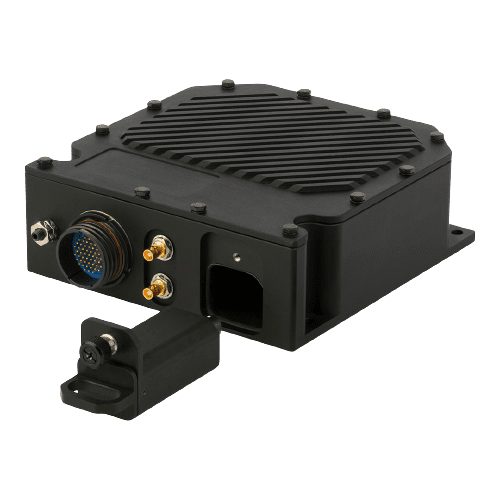
The systems will draw on the company’s Jupiter family of compact video and edge computing platforms alongside its Opal ruggedised recording and network storage technology. Jupiter products are designed to process multiple video streams close to the sensor rather than sending all data back to a central computer, while Opal combines streaming, recording, storage, and processing functions inside a hardened enclosure intended for demanding military environments.
That architecture is particularly relevant aboard aircraft, where video systems have to manage several competing constraints. Electro-optical and infrared sensors can generate large volumes of high resolution imagery, yet available bandwidth, electrical power, cooling, installation volume, and equipment weight remain limited. Processing data close to the sensor can reduce the volume that has to move elsewhere across the aircraft while still supporting recording, compression, analysis, and distribution to other mission systems.
Maris-Tech’s wider edge portfolio supports functions including H.264 and H.265 encoding, multi-channel streaming, local recording, and onboard processing. Its ruggedised products are intended to operate under vibration, shock, humidity, and temperature conditions associated with military installations, giving the company a product base that can be adapted for airborne, land, maritime, and uncrewed applications.
The new order nevertheless requires more than the supply of standard electronics. Equipment installed on a military aircraft must interface with sensors, mission computers, cockpit displays, recording systems, power supplies, and communications equipment while satisfying platform requirements for electromagnetic compatibility, environmental performance, software control, and configuration management. Mechanical packaging also becomes part of the qualification task because enclosure design, connectors, cooling, and mounting points can affect reliability once the aircraft is exposed to sustained vibration and temperature cycling.
Maris-Tech has said existing products will be modified and upgraded for the programme, making the contract a development and qualification exercise before it becomes a serial supply programme. If the equipment is installed across several aircraft types, each configuration may need separate interface work and verification even where the underlying video processor or recorder remains common.
That creates a different production problem from selling a finished commercial module. Hardware and software revisions have to be controlled against approved aircraft configurations, while manufacturing test procedures must demonstrate that each unit leaving production performs consistently with the equipment that completed qualification. Changes to processors, memory, connectors, or other electronic components can also trigger additional assessment if suppliers discontinue parts during a multi-year delivery period.
Magam Safety brings an established aerospace and defence manufacturing background to the programme. The company produces equipment including fuel tanks, parachutes, life jackets, and other survivability systems, giving the collaboration a route into airborne defence integration rather than treating the video package as a standalone electronics sale.
The contract also reflects the changing role of video processing aboard military aircraft. Imagery is no longer confined to a dedicated recorder used after a mission. Modern platforms increasingly distribute live sensor feeds between crew stations, mission computers, datalinks, and other aircraft, creating demand for equipment that can capture, compress, store, and route data without overwhelming onboard networks.
Edge processing adds another layer by allowing selected analytical functions to run close to the source of the data. That can reduce bandwidth requirements and accelerate the handling of imagery, although the disclosed Maris-Tech contract should not be overstated as a dedicated artificial intelligence programme. The confirmed requirement is for advanced video systems built around the company’s existing edge computing and recording technologies.
The scale of the order is significant for Maris-Tech because it ties product development to a multi-year airborne programme rather than a one-off equipment sale. It also places pressure on the company to maintain electronic component availability and manufacturing consistency through 2028 while supporting platform-specific engineering in parallel.
Delivery performance will now provide the clearest measure of progress. With most of the initial order expected to be supplied by the end of 2028, Maris-Tech has to convert its Jupiter and Opal technology into qualified aircraft equipment that can be manufactured repeatedly across several years of integration and production work.