IN Brief:
- Ocius has ordered 40 ThayerMahan Outpost acoustic payloads for the Royal Australian Navy.
- Thales Australia's BlueSentry arrays will also be integrated for Maritime Border Command surveillance.
- Fleet-scale sensor integration adds a substantial production and support task to Australia's expanding Bluebottle programme.
Ocius Technology is integrating acoustic surveillance systems from ThayerMahan and Thales Australia across its Bluebottle uncrewed surface vessel fleet, extending the Australian-built platform’s role in persistent surface and subsurface intelligence gathering.
The Royal Australian Navy’s SEA 1200 programme will receive 40 ThayerMahan Outpost acoustic intelligence payloads with TransparenSea processing software under a contract placed by Ocius. Separately, Thales Australia’s BlueSentry thin-line arrays and acoustic processing will be integrated with Bluebottles supporting Maritime Border Command operations to Australia’s north.
Both systems use fully retractable thin-line acoustic arrays, but the integrations address different operational requirements. ThayerMahan’s package is intended for distributed anti-submarine warfare surveillance, while the Thales equipment will support persistent monitoring around Australia’s northern maritime approaches. Ocius will manufacture the vessels and install acoustic arrays at its production facility in Sydney.
Bluebottle was designed around a payload-agnostic keel, winch, and payload bay, allowing different sensors to be fitted without rebuilding the vessel around a single mission system. That architecture gives operators scope to configure the same basic platform for acoustic surveillance, surface monitoring, communications, or other payloads, while keeping hull, propulsion, and support arrangements common across the fleet.
The sensor contracts arrive as the Royal Australian Navy expands Bluebottle from a small operational fleet into a programme of record. In March, the Australian government announced a A$176 million investment for 40 additional Australian-designed and built vessels, taking the planned Navy fleet to 55. The programme is also supporting new manufacturing capacity in Sydney, a second production site in the Hunter region, and additional work across the domestic supply chain.
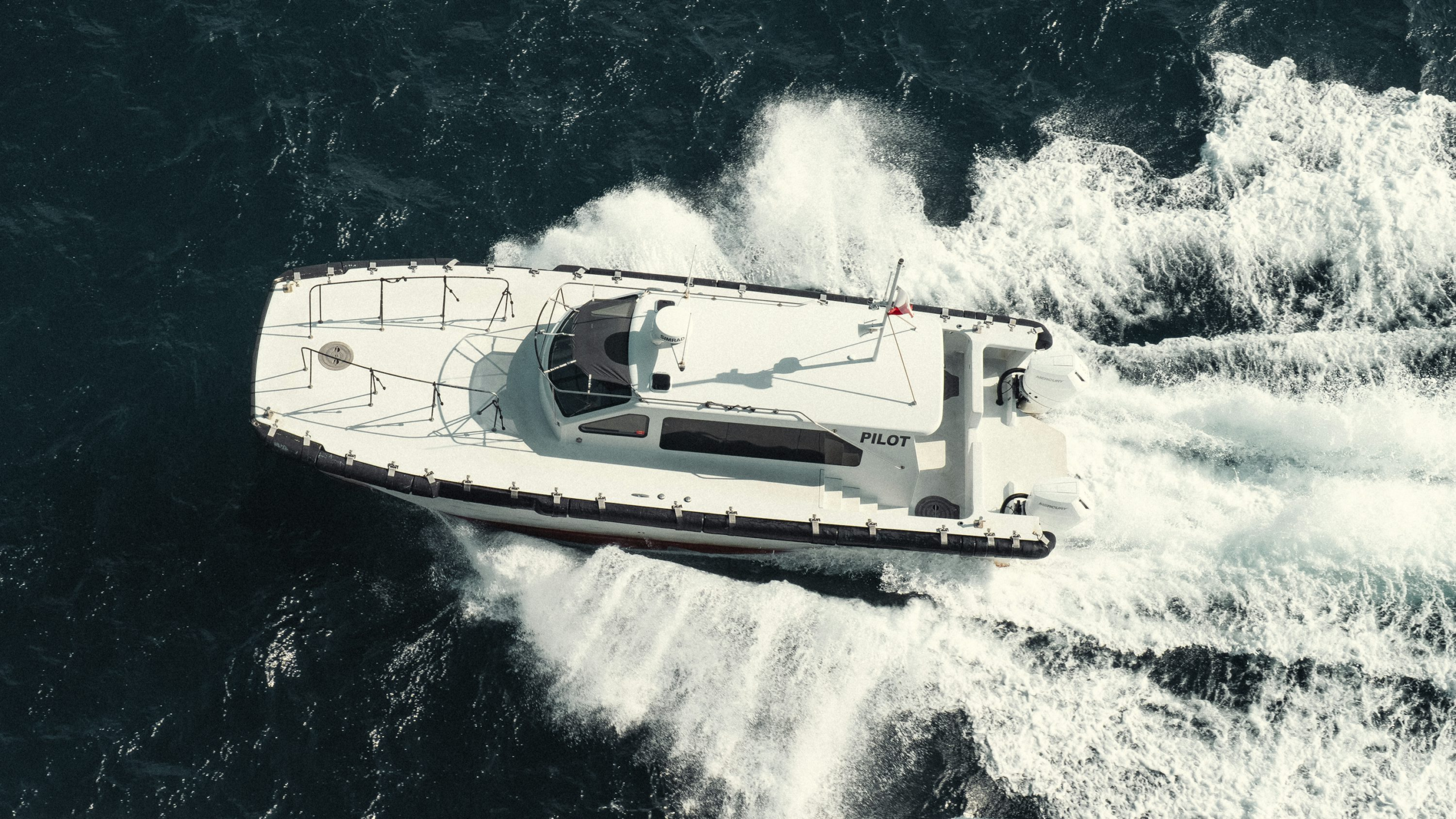
Bluebottle’s endurance is central to the acoustic role. The seven-metre vessel harvests solar, wind, and wave energy, allowing it to stay at sea for extended periods without the fuel and crew burden of a conventional patrol craft. Australian defence officials have described deployments lasting months, while Ocius has accumulated operational experience in sustained surveillance work for Defence and other government customers.
Persistent acoustic surveillance places different demands on an uncrewed platform from visual or radar-based monitoring. The vessel has to manage self-noise, array deployment geometry, power demand, onboard processing, communications, and recovery of the sensor while maintaining the stability needed to collect useful acoustic data. Those requirements become more complicated when the same vessel must support payloads from different suppliers.
ThayerMahan’s Outpost system combines acoustic sensing with processing software designed to detect, localise, and track contacts before distributing data to operators and commanders. Ocius and ThayerMahan have previously demonstrated the pairing in US waters, including work for the US Navy and Coast Guard, so the new order takes an established integration into a larger Australian fleet rather than starting from an unproven laboratory configuration.
The BlueSentry work adds a sovereign Australian sensor chain. Thales Australia manufactures the arrays and associated sensor technology in Sydney, with the company linking BlueSentry’s heritage to acoustic systems used on Collins-class submarines. Installing that equipment on Bluebottles creates another route for distributing undersea sensing without assigning a crewed ship or submarine to every surveillance task.
The programme also provides a practical industrial example of AUKUS Pillar II cooperation. Australian autonomous maritime hardware is being combined with US acoustic sensing and processing while a separate Australian supplier provides another sonar option for national operations. The engineering challenge is to keep interfaces, software, power, deployment mechanisms, and data outputs sufficiently standardised that different payloads can be introduced without fragmenting the fleet.
Fleet scale increases the importance of that standardisation. Fifty-five vessels carrying multiple payload configurations require controlled installation procedures, software configuration management, spares, maintenance, test equipment, and training that can be applied repeatedly. A system that works on one demonstrator has to be reproducible across production units and supportable after months at sea.
For Ocius, the sonar contracts therefore extend the manufacturing task created by the March fleet order. The company is no longer only building autonomous hulls; it is integrating mission systems from several suppliers into a platform expected to operate continuously across large maritime areas. That makes payload integration, acceptance testing, and through-life support part of the production programme rather than an experimental add-on.
The next test will be the pace at which the 40 Outpost payloads and BlueSentry systems can be installed, qualified, and deployed across the expanding fleet. Their value will be measured in reliable contact data, sustained availability, and the ability to maintain different acoustic configurations without undermining the common platform architecture that made Bluebottle attractive in the first place.