IN Brief:
- PAC-3 ACE is designed to cost less than half as much as a PAC-3 MSE interceptor.
- The weapon will target cruise missiles, aircraft, and shorter-range ballistic threats rather than replacing every MSE mission.
- Lockheed plans a separate production route involving suppliers in the United States and Europe.
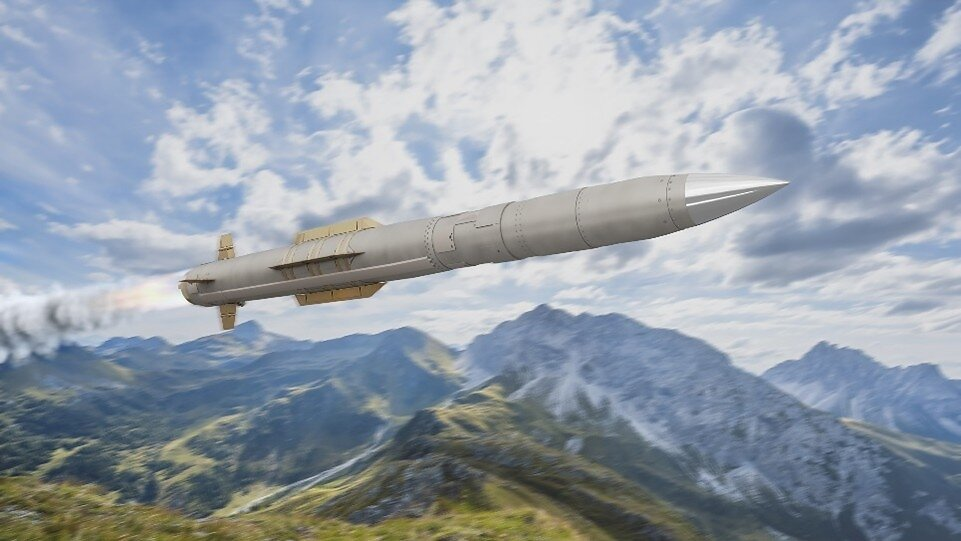
Lockheed Martin has introduced PAC-3 ACE, a lower-cost hit-to-kill interceptor intended for cruise missiles, aircraft, and shorter-range ballistic threats operating within the Patriot air-defence architecture.
The company has set a unit-cost objective below half that of the PAC-3 Missile Segment Enhancement interceptor. PAC-3 ACE will use the existing PAC-3 fire-control environment and is being designed for operation through Patriot and the Integrated Battle Command System.
Rather than replacing MSE across its full target set, ACE will provide another engagement layer for threats that do not require the larger interceptor’s complete range, altitude, manoeuvrability, or ballistic-missile performance.
Air-defence forces have been using high-end weapons against targets with widely different speeds, signatures, trajectories, and production costs. A common interceptor family simplifies training and logistics, but sustained campaigns become economically and industrially difficult when every engagement consumes the most capable missile available.
PAC-3 ACE is expected to use a less costly propulsion and guidance arrangement while retaining hit-to-kill technology. Reducing performance to a defined target set can lower manufacturing cost, provided the redesign removes expensive materials, components, and processes rather than transferring them into additional qualification or support work.
Rocket motors, guidance electronics, seekers, control systems, energetic materials, thermal batteries, and precision structures dominate much of an interceptor’s cost and production risk. Adjusting requirements may allow alternative suppliers, less demanding tolerances, or simplified manufacturing, although safety, reliability, storage life, and environmental performance remain strict.
Lockheed is planning a production route separate from PAC-3 MSE and has indicated that American and European suppliers could participate. Initial flight activity is targeted around 2028, with production dependent on development progress, testing, and customer commitments.
A separate line needs a separate supply system
Dedicated production could expand output without disrupting MSE assembly, but it also requires tooling, qualified workers, test equipment, facilities, and component suppliers. Compatibility at launcher and command level does not mean that both missiles will share every manufacturing process.
European workshare may address regional demand for sovereign capacity and political expectations around industrial participation. It could include propulsion, guidance electronics, structures, subassemblies, or final integration, although the allocation will determine whether ACE adds genuine output or competes with other missile programmes for the same resources.
Rocket motors remain a persistent constraint. Cases, propellants, insulation, igniters, nozzles, and energetic-material processing require specialist facilities with demanding safety approvals, while expansion usually takes longer than the addition of conventional machining or assembly capacity.
Guidance and control hardware face another set of pressures, including rugged processors, inertial sensors, actuators, power supplies, and precision electronics. Commercial components may reduce costs in selected functions, but long storage life, extreme acceleration, temperature ranges, and security requirements restrict straightforward adoption.
Affordability must survive flight testing and rate production. A target cost established during design can rise if reliability problems lead to additional components, tighter tolerances, more inspection, or expensive rework. Production volume also determines how development, tooling, and factory overhead are distributed across individual missiles.
No disclosed production contract yet underwrites the proposed line. Suppliers may hesitate to invest until demand becomes firmer, although waiting for a final order can delay capacity and reinforce the shortages the programme is intended to address.
PAC-3 ACE enters a European market already increasing launcher numbers and missile stocks. Britain’s expansion of Sky Sabre has similarly connected operational air-defence growth with command equipment, vehicles, interceptors, and manufacturing capacity.
The new missile will not address the cheapest end of the aerial threat. Small drones and improvised one-way aircraft require guns, electronic warfare, guided rockets, compact missiles, and other effectors whose cost is substantially below any Patriot interceptor.
ACE instead occupies the space between those systems and the most capable ballistic-missile defence weapons. Its value will depend on whether operators can match the right interceptor to each target without creating excessive complexity in stock management, training, and battlefield command.
A lower quoted unit price represents only one part of the programme. Lockheed and its suppliers must qualify the missile quickly, establish a line that does not constrain MSE, and demonstrate that output can rise far enough to alter the economics of sustained air defence.