IN Brief:
- SwarmShot is being developed as a reusable airborne counter-UAS system carried by compatible uncrewed aircraft.
- Federal will develop ammunition, Mossberg the airborne weapon module and Palladyne AI the autonomy and fire control architecture.
- Initial integration will use Palladyne’s Gremlin-X before a planned kit is developed for aircraft from other manufacturers.
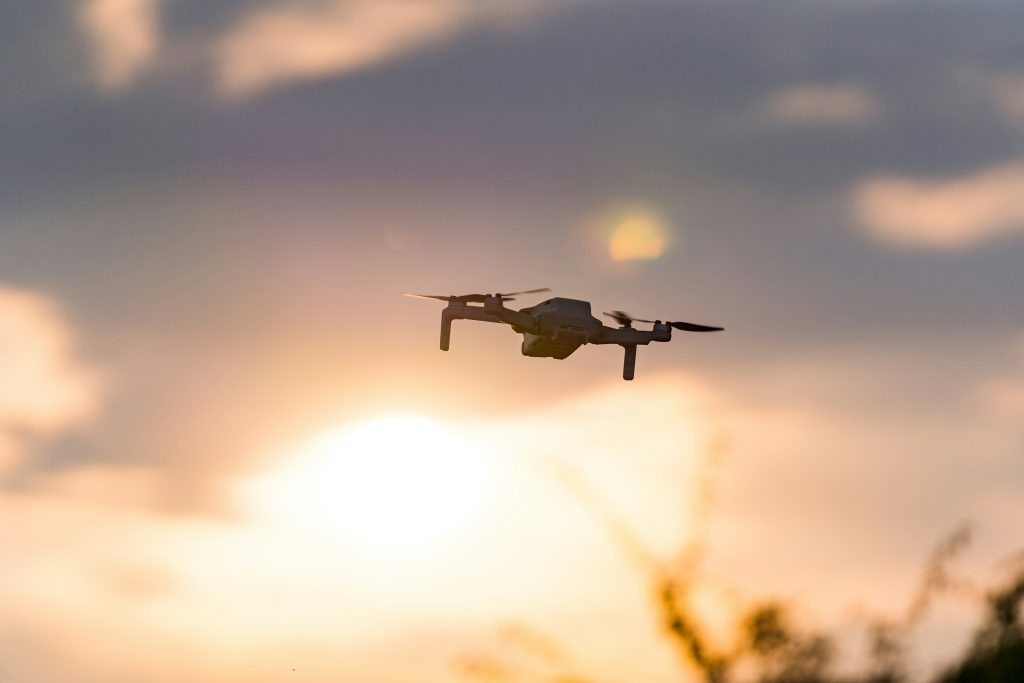
Federal Ammunition, Mossberg and Palladyne AI are developing SwarmShot, an airborne counter-UAS system that combines specialised ammunition, a lightweight weapon module and collaborative autonomy on reusable uncrewed aircraft. Initial development will use Palladyne’s Gremlin-X Group 1 quadcopter before the partners attempt to transfer the package to other compatible platforms.
The engineering work is divided according to the three companies’ roles in that combined system, with Palladyne leading aircraft integration, fire control, terminal intercept autonomy and coordination between multiple interceptors while Federal develops the ammunition and Mossberg handles the airborne weapon module, including recoil management, remote operation, reliability and safety.
Once Gremlin-X integration is complete, the partners intend to package those elements into a kit containing ammunition, the weapon module, IntelliSwarm hardware and software, fire control electronics and the interfaces needed to connect them to another aircraft. Portability will depend on more than common mounting points because every host platform brings different payload limits, power systems, centres of gravity, control interfaces and vibration environments.
Those aircraft differences feed directly into the underlying engagement concept because SwarmShot moves the weapon towards the target before firing rather than asking a ground system to reach the threat from a fixed position. An airborne interceptor can manoeuvre around terrain and approach from a more useful angle, but it has to carry the weapon and supporting electronics while preserving enough endurance to reach and pursue the target.
That creates a direct trade between firepower and flight performance because ammunition, sensors, computing hardware and mount structure all consume payload capacity that would otherwise be available for batteries or propulsion. Additional mass can reduce endurance and manoeuvrability, potentially eroding the same airborne advantage the system is intended to create if the complete payload becomes too heavy for the host aircraft.
Recoil links the weapon problem directly to flight control because each shot produces an impulse capable of disturbing aircraft attitude at the moment stable alignment is required. Mossberg’s work on the weapon module therefore has to be coordinated with Palladyne’s control software rather than treated as a separate mechanical installation attached after the aircraft has already been tuned.
Federal’s ammunition development is being handled within the same integrated approach, with the companies intending to optimise the round, weapon and firing geometry together. That allows terminal effect to be assessed against the motion and position of the airborne platform instead of adapting ammunition designed around a ground firing case after the aircraft integration is complete.
Palladyne’s IntelliSwarm architecture then provides the coordination layer between several interceptors, combining BRAIN avionics with SwarmOS so aircraft can exchange information and allocate tasks. The company has already demonstrated collaborative autonomy with the US Army during Project Convergence Capstone 6, providing a basis for applying similar coordination to an airborne defensive mission.
SwarmShot is intended to receive validated threat tracks from an existing sensing and command network rather than replace detection itself. Once a target is available, the autonomy system can decide which interceptor is best placed to respond and calculate a route that brings the aircraft into a useful firing position without sending several vehicles unnecessarily towards the same contact.
Multiple incoming drones increase the difficulty of that allocation because each assignment changes the options available for the remaining threats. The software has to coordinate those decisions while individual aircraft continue to close on targets whose speed, direction and position are changing, leaving little time to correct a poor allocation late in the engagement.
As an interceptor reaches firing range, the aircraft, autonomy and weapon work converge because flight control has to maintain the required attitude, the weapon must remain inside safe firing limits and terminal accuracy has to remain sufficient while both aircraft and target are moving. Recoil cannot destabilise the host beyond recovery, and the control system has to settle the aircraft quickly enough if more than one shot or engagement is required.
Those demands also complicate transfer to aircraft from other manufacturers because a host with different mass, rotor layout or flight controller may respond differently to the same weapon impulse. A common kit can reduce redesign, but each integration still has to demonstrate that the aircraft remains controllable and that the firing solution remains accurate across the intended manoeuvre envelope.
No completed integrated firing test has yet been disclosed for the current configuration, so those interactions remain to be demonstrated rather than assumed. SwarmShot will depend on whether the partners can preserve enough endurance and manoeuvrability to make the airborne engagement advantage worthwhile after the complete weapon, ammunition and autonomy package is installed.