IN Brief:
- Corvo Vipera is a compact small uncrewed aircraft designed for rapid intelligence, surveillance and reconnaissance.
- The folding boom quadcopter can deploy from ground vehicles, surface vessels or dismounted positions.
- Communications options include mesh IP radio frequency networking and an optical fibre tether for command and control.
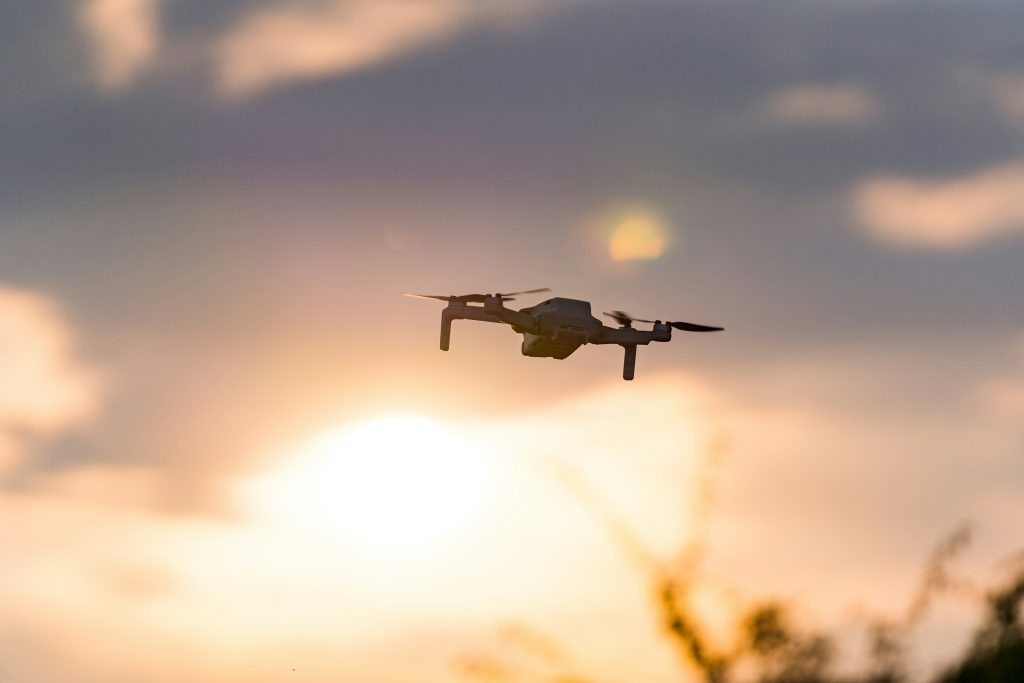
SYPAQ Systems has launched Corvo Vipera, a compact uncrewed aircraft designed to provide rapid intelligence, surveillance and reconnaissance from vehicles, vessels and dismounted positions. The aircraft uses a folding boom quadcopter configuration housed inside a launch tube, reducing the space needed for carriage and allowing crews to deploy it without assembling a conventional multirotor before flight.
SYPAQ Systems intends that packaging to give operators a view beyond terrain, buildings or other obstacles within seconds of deployment. Because the same air vehicle can be launched from ground vehicles, surface vessels or by dismounted personnel, the design is intended to preserve a common reconnaissance capability across several operating environments rather than require a separate aircraft for each one.
Fitting a quadcopter into a tube creates engineering constraints because the booms and rotors must remain protected during transport and then unfold into a repeatable geometry after launch. Small differences in motor position or structural alignment can affect stability and sensor pointing, so the mechanism has to combine deployment speed with enough mechanical consistency for the flight controller to behave predictably every time the aircraft is released.
Those requirements become harder when the aircraft is carried on moving platforms because vibration, dust, salt exposure and repeated handling can all affect mechanisms, connectors and sensors before launch. A system intended for vehicles and vessels therefore has to protect the folded aircraft during transport while still allowing crews to open the tube and reach a flight ready state without a lengthy preparation sequence.
Once airborne, the multirotor layout allows Corvo Vipera to hover and manoeuvre at low speed over a defined area rather than continually pass the target as a fixed wing aircraft would. That suits local observation but also increases power demand, linking the value of the hovering capability directly to battery capacity and endurance.
Because SYPAQ has not published endurance, operating radius or payload mass, several important performance limits remain open. Those figures will determine how long the aircraft can remain over a target area, how far it can work from the operator and how much sensor equipment it can carry before the extra weight begins to reduce useful flight time.
The disclosed design instead emphasises modular payloads and two communications methods, allowing the system to adapt to different missions without changing the core aircraft. A modular sensor arrangement provides that flexibility only if electrical supply, data interfaces, balance and software remain compatible with each configuration, so payload interchangeability still depends on disciplined integration and repeatable setup procedures.
Where wireless communications are practical, Corvo Vipera can use mesh IP radio frequency networking, allowing participating nodes to pass data between one another instead of forcing every aircraft to maintain a direct link with a single control station. That can help preserve connectivity when terrain or structures block line of sight, although the network still depends on enough nodes remaining within useful range and on the radio environment remaining suitable for the required data flow.
For missions where radio disruption is a greater concern, an optical fibre tether provides a different control path. The physical fibre avoids dependence on a wireless channel and can reduce exposure to interference or jamming, but it constrains movement because the aircraft has to manage the line throughout the flight and cannot manoeuvre as freely as the radio controlled configuration.
The two communications methods therefore trade freedom of manoeuvre against resistance to radio disruption rather than representing interchangeable versions of the same link. Fibre length, handling and the speed with which crews can deploy it will determine how useful the tethered mode is without undermining the rapid launch concept that underpins the aircraft.
Rapid deployment also depends on the sequence after the tube is opened because Corvo Vipera still has to unfold, initialise navigation, establish communications and begin returning useful sensor data. If those steps introduce significant delay, compact carriage alone provides less advantage over a conventional small aircraft already prepared for flight.
Once a sortie ends, the operating cycle continues through recovery, inspection and preparation for another flight. SYPAQ has not detailed how the aircraft is recovered, how quickly it can be prepared for another sortie or which components require inspection after use, so turnaround time and battery handling remain part of system performance even though they are not visible in the launch sequence.
Corvo Vipera joins a wider CORVO family through which SYPAQ has developed uncrewed aircraft, avionics, autonomy software and sensing technology. Reusing common engineering elements may reduce integration effort, but the new airframe still has to establish its own endurance, payload, communications and recovery limits before operators can judge where it fits among the growing range of compact reconnaissance systems.