IN Brief:
- Australia’s second tranche of HIMARS launchers arrived two years ahead of the original delivery schedule.
- The Army is developing two regiments for fires at long range, with up to 90 HIMARS launchers expected in service.
- Australian GMLRS production has started in South Australia, while domestic rocket motor capacity is planned at Mulwala.
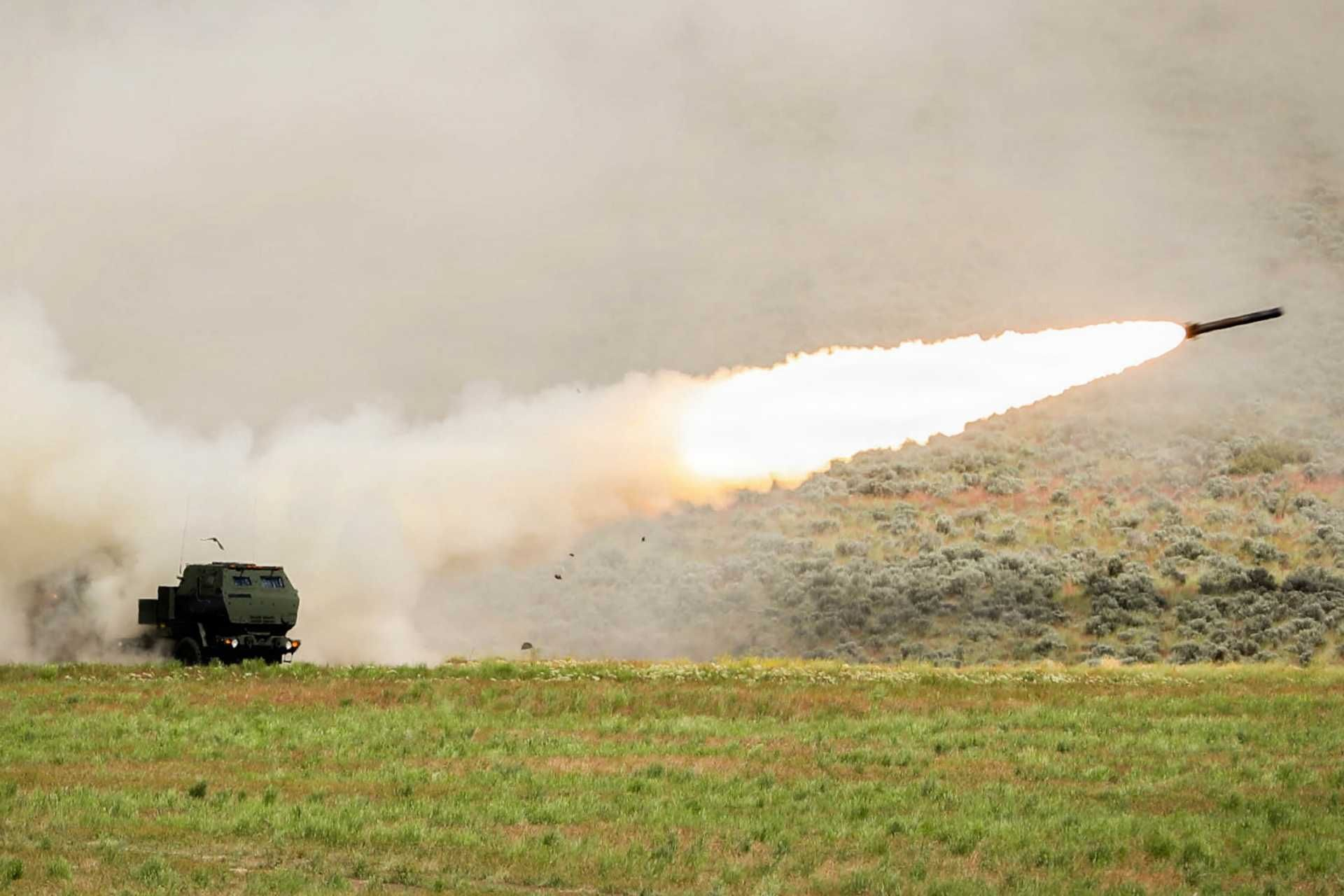
Australia has received its second tranche of High Mobility Artillery Rocket System launchers two years ahead of schedule, accelerating the Army’s expansion of fires at long range while domestic missile production and sustainment capacity are still being built. The additional systems will support the 10th Fires Brigade, which is being developed around two regiments equipped for fires at long range, with Australia expecting its total HIMARS fleet to reach as many as 90 launchers.
Because HIMARS uses a common wheeled launcher for several guided weapons, increasing the fleet changes both the number of firing units available and the range of effects they can deliver. Guided Multiple Launch Rocket System ammunition provides one layer of capability, while the Precision Strike Missile extends the reach available from the same launcher family. Australia currently describes a strike range of up to 500km, and later Precision Strike Missile increments are intended to push that beyond 1,000km, so the expansion places growing demands on targeting, ammunition and logistics as well as vehicle numbers.
Those additional launchers will only be useful at sustained tempo if ammunition production and replenishment grow alongside them. Lockheed Martin is involved in domestic Guided Multiple Launch Rocket System production at Port Wakefield in South Australia, where missile manufacture began after new production capacity opened in late 2025. A separate $120 million agreement has also brought Moog Australia and AW Bell into production of components for GMLRS rounds manufactured locally.
Moving further into the propulsion chain requires a more demanding set of industrial processes. Northrop Grumman Australia has been selected as the preferred partner for domestic solid rocket motor production, initially focused on GMLRS motors at the Mulwala munitions facility in New South Wales by 2030. Unlike final assembly, rocket motor manufacture requires tightly controlled propellant processing, case production, inspection and testing, giving Australia a deeper role in the weapon rather than simply bringing imported subsystems together.
The same industrial strategy extends beyond HIMARS ammunition. A facility near Newcastle is being established for Australian manufacture and maintenance of Kongsberg Naval Strike Missiles and Joint Strike Missiles, while the government has also stated that domestic production of Precision Strike Missile is planned as the fires programme develops. The production sequence and Australian content for that weapon have not yet been defined, but the direction of travel is towards greater domestic involvement across several guided weapons.
As that industrial expansion continues, a larger launcher fleet creates a correspondingly larger support burden because it consumes far more than missiles alone. Training rounds, war reserve stocks, storage, transport, maintenance and resupply all have to scale with the number of vehicles, while missile factories depend on qualified suppliers, controlled energetic materials, specialist equipment and repeatable acceptance testing. A force able to deploy more launchers therefore needs a support system capable of replenishing them at the rate implied by sustained operations rather than simply delivering the initial stock of weapons.
While the production base develops, Australia has already begun connecting those industrial and operational elements through live activity, with a Precision Strike Missile fired during Exercise Talisman Sabre 2025 and the first GMLRS missile manufactured in Australia later launched from an Australian HIMARS vehicle. The first event demonstrated the weapon with greater range in Australian service, while the second linked domestic manufacture directly with the platform that will consume the ammunition, providing an early test of the production and operating system as a whole.
As missile reach increases, the burden on targeting and command also grows because launchers can only exploit that range when sensors, communications and decision processes can identify a target, distribute coordinates and authorise an engagement in time. Crews also have to disperse, fire, replenish and move before an adversary can locate the firing position, which means the two planned regiments require maintainers, ammunition handlers, protected communications and logistics vehicles as well as launchers and missiles.
Because HIMARS is now expected to become fully operational four years earlier than previously planned, those supporting elements have less time to mature alongside the launcher fleet. Missile production, personnel, infrastructure and logistics all have to develop quickly enough to avoid a situation in which Australia can field the vehicles but cannot sustain the tempo or range of operations the expanded force is intended to support.
Reflecting that broader requirement, Australia’s 2026 National Defence Strategy and Integrated Investment Program allocates up to A$37 billion to targeting and strike capability at long range and up to A$36 billion over the decade to the Guided Weapons and Explosive Ordnance Enterprise. Those figures cover programmes beyond HIMARS, but they place the early arrival of the second tranche inside a wider effort to connect launcher numbers, missile stocks, domestic manufacturing and the command architecture required to employ them.
By the time both fires regiments are operating routinely, the programme will be judged less by how many HIMARS vehicles have been delivered than by whether missiles, spares, targeting data and logistics can keep pace with them. The second tranche advances the launcher side of that equation two years early, while the industrial and support system now has to accelerate around it.