IN Brief:
- X-Bow has received a prototype agreement worth up to $69.7 million for a future US Navy missile booster.
- The first phase provides $50.4 million for development, followed by a $19.3 million qualification option.
- The programme funds tooling at Luling, Texas, for potential production of up to 500 motors annually.
X-Bow Systems has received a prototype agreement worth up to $69.7 million to develop and qualify a solid rocket motor booster for a future US Navy weapon while preparing tooling for production of up to 500 motors a year. The programme combines propulsion development with manufacturing readiness rather than postponing industrialisation until qualification is complete.
US Army Contracting Command at Rock Island is administering the agreement, which divides the work into a $50.4 million development phase and a $19.3 million qualification option. Around $50 million was obligated at award to fund the first 12 months, with work distributed across facilities in California, New Mexico and Texas.
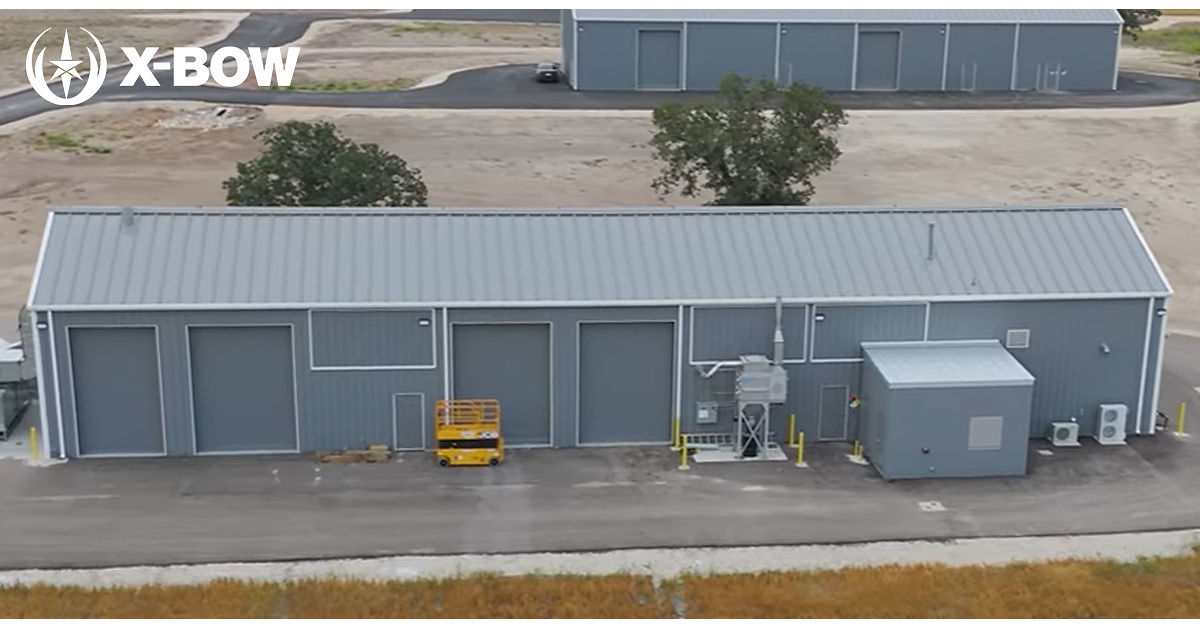
The Texas element places production rate inside the programme from the outset because X-Bow will install tooling at Luling for a line capable of producing as many as 500 motors annually if the Navy progresses the weapon into volume manufacture. That figure describes planned capacity rather than a committed yearly order, but it establishes the scale the manufacturing system is expected to support if later procurement reaches that level.
The weapon itself has not been identified publicly by name, although X-Bow describes it as a future Navy capability for surface warfare and says the wider programme uses a common architecture intended to place more interceptors inside an existing launch system. Fitting more weapons into the same launcher turns propulsion packaging into one of the central engineering constraints because each interceptor still has to achieve the acceleration, range and control performance required for its mission.
Missile diameter, motor case structure, propellant geometry and burn profile all influence how much impulse can be generated inside a fixed volume, so additional interceptors cannot simply be accommodated by shrinking every component proportionally. A change to the booster can affect acceleration, available guidance space, structural loading and thermal margins elsewhere in the missile, tying motor design directly to the dimensions of the complete weapon.
Inside the motor, fuel and oxidiser are stored together in the propellant grain, which burns after ignition according to its composition and exposed surface area. Grain geometry helps determine how chamber pressure and thrust evolve during the burn, directly connecting the internal manufacturing process with the acceleration profile the missile experiences after launch.
That relationship makes qualification as much a production problem as a design problem because variations in propellant composition, density, voids or grain geometry can alter performance. A successful development motor is insufficient on its own; the manufacturing process has to reproduce the required ballistic behaviour across repeated builds and the environmental conditions expected in service.
X-Bow has built its production model around modular motor designs and additive manufacturing techniques intended to reduce some of the dedicated tooling normally required for each new design. The Navy programme will test whether those methods can support repeated output at useful scale rather than producing isolated development articles that still depend on extensive manual adjustment.
Installing rate tooling before the motor is fully qualified can shorten the interval between design approval and series manufacture, but it also creates tension between development freedom and manufacturing stability. Engineers may still need to alter the motor as testing exposes problems, while the factory needs a controlled configuration early enough to specify fixtures, inspection methods, process limits and supplier requirements.
Each design change made after tooling decisions have been fixed can therefore carry an industrial cost as well as an engineering one. A revised case dimension, grain geometry or interface may require new inspection routines, altered fixtures or fresh qualification work, so the programme has an incentive to resolve the most consequential design decisions before the production system becomes difficult to change.
X-Bow has already delivered more than 2,100 rocket motors under another production contract, providing recent experience of repeated manufacture. The Navy programme introduces a different motor and qualification regime, however, so previous output does not remove the need to prove that the new design can make the same transition from prototype to rate production.
The effort also sits within a wider US concern over solid rocket motor capacity because several missile programmes rely on the same specialist skills, materials, energetic processing and test infrastructure. Increasing final missile assembly cannot compensate if propulsion output remains the limiting stage of the production chain, which makes additional motor capacity relevant beyond this one weapon.
With an initial Navy capability targeted for early fiscal year 2031, X-Bow has several years to bring motor design, qualification and factory readiness together. The programme will ultimately depend on whether those activities converge without late design changes forcing substantial rework of the production system already being prepared in Texas.