IN Brief:
- Sweden has tasked FMV with studying and procuring interceptor UAVs for the Armed Forces.
- The work will examine how the systems can be developed, introduced, and employed alongside existing counter-UAS capabilities.
- Project GUTE will contribute to the programme as Sweden expands lower-cost options for defeating hostile drones.
Sweden has opened a formal study and acquisition pathway for interceptor UAVs, tasking the Swedish Defence Materiel Administration to examine how the systems should be developed, procured, and introduced into military service.
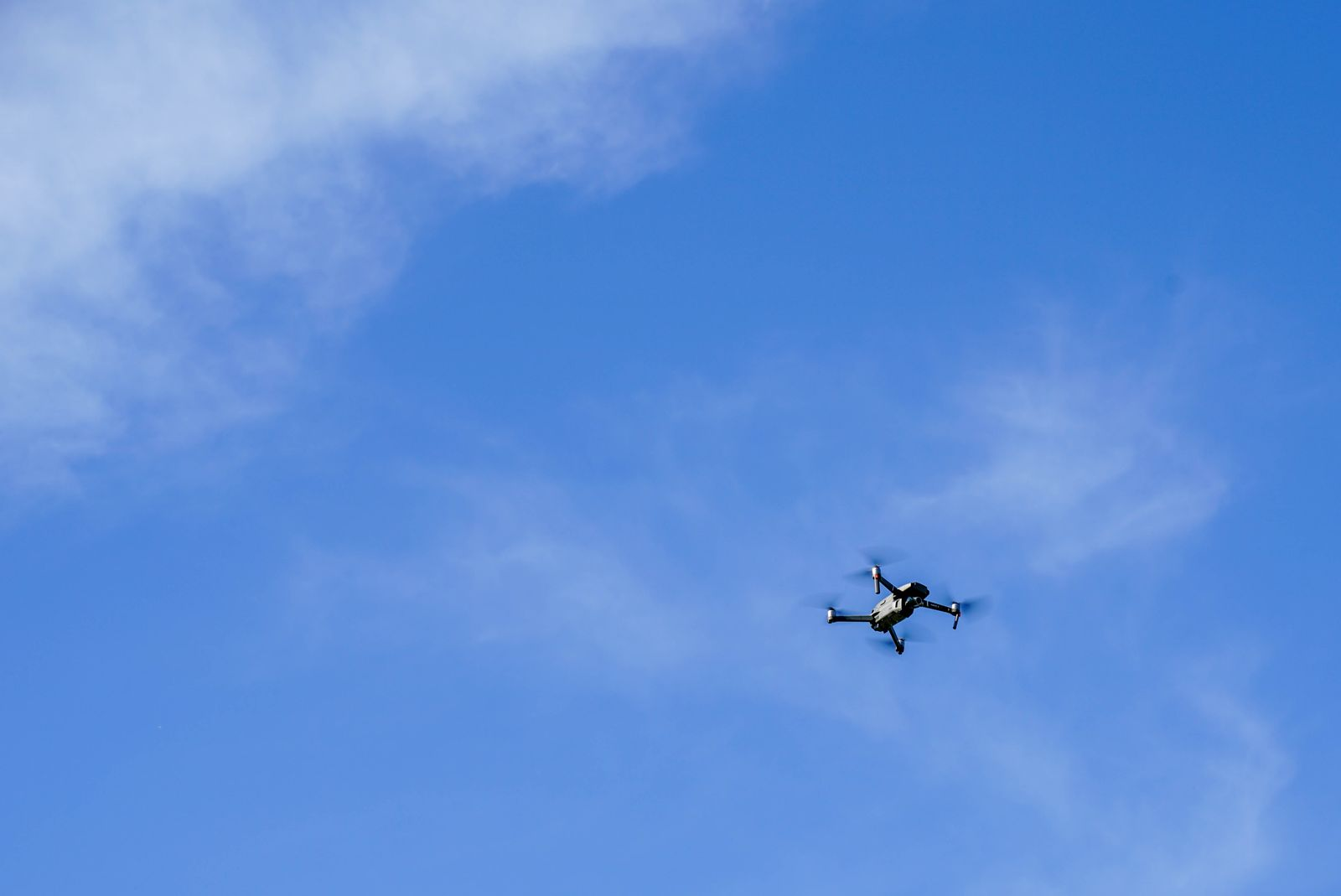
The Swedish Armed Forces and Army have instructed FMV to work on what Sweden calls Jakt-UAV — interceptor drones intended to detect, follow, and defeat hostile unmanned aircraft. The assignment combines technical study with acquisition activity, moving the requirement beyond experimentation alone.
No supplier, quantity, contract value, or delivery schedule has been disclosed. The immediate task is therefore to define how an interceptor-UAV capability should fit into Sweden’s existing counter-UAS structure, which technical approaches can be introduced quickly, and how they should interact with sensors, command systems, and other effectors already under development.
The attraction is partly economic. Small hostile drones can create an unfavourable exchange when comparatively cheap aircraft are engaged with conventional missiles whose unit cost and production rate were set for higher-value targets. Guns, electronic warfare, jammers, and directed countermeasures can address parts of that problem, but none is effective across every range, environment, or threat profile.
An interceptor UAV provides another layer. Depending on the design, it can be launched against a target after cueing from an external radar or optical sensor and may be cheaper to replenish than a conventional guided missile. That cost advantage only matters if the interceptor is reliable enough to generate a useful probability of kill and can be produced in the numbers implied by repeated drone attacks.
The engineering problem begins with target information. An interceptor needs an accurate track, a method of navigating towards the target, and sufficient onboard sensing or external cueing to maintain the engagement as both aircraft move. Small drones can present limited radar, infrared, and visual signatures, while low altitude and background clutter complicate detection and tracking.
Sweden’s Project GUTE will contribute to the new work. The programme has already provided an environment for counter-UAS demonstrations and experimentation, giving FMV and the Armed Forces a framework in which sensors, command systems, and effectors can be assessed together rather than as independent products.
That existing test structure should be useful because the value of an interceptor depends on the complete engagement chain. A sensor has to detect and classify the target, the command system must allocate it to the appropriate effector, the interceptor needs a usable track, and the wider network must prevent several systems from being committed unnecessarily to the same aircraft.
Communications resilience will be another constraint. Counter-UAS systems are intended for environments where radio links and satellite navigation may be jammed or degraded, so an interceptor that depends continuously on an external command signal could become vulnerable at the point of engagement. Greater onboard autonomy can reduce that dependency but increases the software-assurance and sensing requirements inside the aircraft.
Alternative navigation, robust datalinks, and autonomous terminal guidance may therefore become as important as airframe speed or endurance. The system also needs a controlled response when communications are lost: continuing an engagement, aborting, returning, or terminating safely are software and safety decisions that have to be defined before operational deployment.
Army use adds practical requirements beyond the flight vehicle. Launch equipment has to move with units, work from dispersed positions, tolerate difficult weather, and be supported by realistic battery, charging, transport, and maintenance arrangements. The number of ready interceptors available at one position may be more relevant in a mass-drone attack than the maximum endurance of any individual aircraft.
Production capacity follows directly from that requirement. Some interceptor concepts are likely to be consumable, particularly where the engagement relies on physical collision or another terminal effect that destroys the vehicle. A force facing repeated attacks therefore needs replenishment on a scale closer to munitions production than traditional low-volume unmanned aircraft procurement.
Rapid technology change will complicate the acquisition route. Counter-UAS systems are evolving quickly across autonomy, machine vision, sensors, datalinks, navigation, and airframe design. Freezing a requirement too early risks fielding a system that has already been overtaken, while allowing continuous redesign can prevent a configuration from reaching production at all.
FMV will have to manage that balance while keeping the interceptor compatible with the wider Swedish air-defence architecture. An effective demonstration is not enough; the chosen system has to enter service with training, maintenance, communications security, software configuration, logistics, and safety arrangements capable of supporting routine Army use.
The latest tasking is therefore more consequential than another counter-drone trial. Sweden has asked FMV to study and acquire interceptor UAVs, creating a direct route from experimentation towards operational capability. The next milestones will show which configuration is selected, how quickly it can be introduced, and whether the production model can support the volumes demanded by the threat it is intended to counter.