IN Brief:
- Lockheed Martin has received an $850 million modification for continued D5LE2 design and development.
- The programme supports the shared US-UK Trident missile enterprise into the 2040s.
- Low-volume production demands exceptional control over materials, electronics, propulsion, testing, security, and workforce continuity.
Lockheed Martin has received an $850 million US Navy contract modification to continue design and development of the Trident II D5 Life Extension 2 programme, sustaining the engineering base behind the sea-launched component of the US nuclear deterrent.
Work will continue across facilities in Colorado, Florida, Utah, Washington state, Georgia, and the Washington, DC, region, supporting a programme intended to keep the missile system viable into the 2040s and beyond.
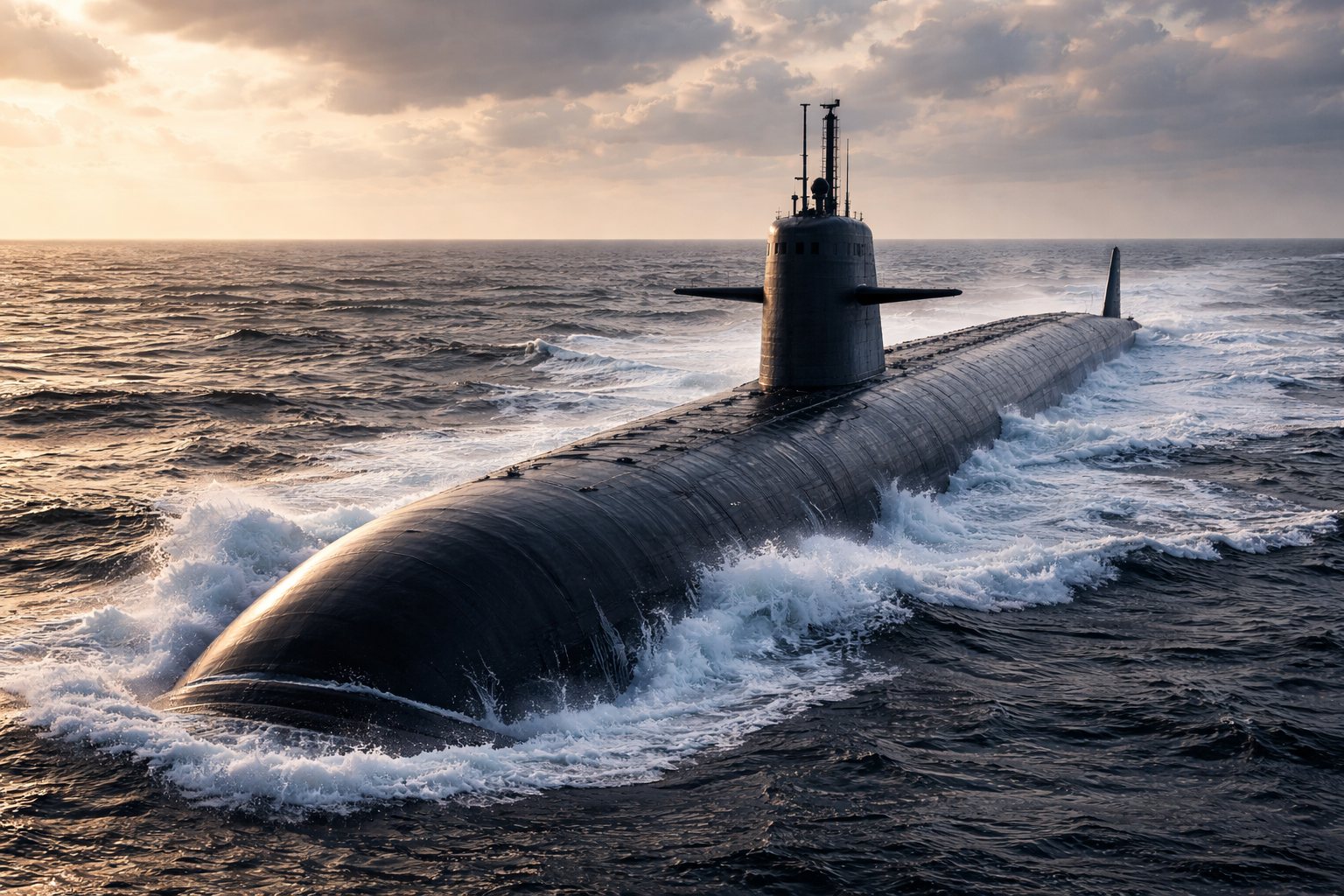
The Trident II D5 is operated by the United States and forms the common strategic weapon underpinning the United Kingdom’s submarine-based deterrent. Its continued support must remain aligned with two major fleet transitions, as Columbia-class submarines replace the US Ohio class and Dreadnought-class boats succeed Britain’s Vanguard fleet.
Those submarine programmes run on separate schedules, but both require a missile enterprise capable of remaining safe, supportable, and technically credible over several decades.
Production volumes are low compared with conventional weapons, yet each material, process, test, software release, and configuration change carries unusually demanding assurance requirements. Maintaining the industrial base therefore depends on continuity rather than periodic surges.
Life extension as controlled redesign
A missile designed in an earlier electronics generation cannot be sustained indefinitely through identical replacement parts. Suppliers close, manufacturing methods change, materials become restricted, processors disappear, and specialist test equipment reaches obsolescence.
Life extension requires engineers to replace those elements without introducing unexpected behaviour elsewhere. New electronics may be smaller, faster, and more efficient, but they must reproduce validated functions, survive the existing environment, and remain compatible with submarines, fire-control equipment, support facilities, and test infrastructure.
Solid-rocket propulsion creates another long-duration challenge. Propellant chemistry, case materials, insulation, bonding, and non-destructive inspection all depend on controlled processes and specialist facilities, while small variations can affect ageing and performance across a missile’s service life.
Guidance equipment, re-entry-system interfaces, safety devices, software, and communications must be managed with similar discipline. Although much of the technical work remains classified, the industrial requirement is familiar: obsolete elements must be redesigned while the demonstrated behaviour of the complete weapon remains stable.
Testing consequently occupies a major share of the programme. Components and assemblies must pass environmental, functional, and acceptance activity, while periodic flight tests provide evidence that cannot be generated entirely through simulation.
The US Navy completed four scheduled D5LE launches in September 2025, bringing the programme’s recorded successful flight-test total to 197. Such events consume hardware and range resources, but they verify the performance of a weapon system expected to remain credible for decades.
Continuity across a small workforce
Strategic-weapons production relies on engineers and technicians whose experience takes years to build. Knowledge of unusual materials, legacy systems, safety processes, and specialist test methods is often concentrated within relatively small teams.
Gaps between development phases can disperse that workforce, leaving later programmes to rebuild expertise at greater cost and risk. D5LE2 funding allows companies and government facilities to retain skills while submarine construction proceeds on its own timetable.
A similar pressure appears across the nuclear enterprise, where the B61-13 production programme has renewed attention on throughput and certification at the Y-12 complex. Both programmes depend on infrastructure and people that cannot be recreated quickly after a prolonged break.
Supplier depth remains another concern. Lockheed Martin can preserve final integration capability, but the programme relies on companies producing specialised materials, electronic assemblies, energetic components, precision mechanisms, and test equipment, sometimes with little commercial demand outside strategic work.
Long-term contracts can give those suppliers enough confidence to invest, although volumes may remain too low to justify second sources for every item. Customers must decide where redundancy is essential and where inventories, technical-data access, or government-owned capability can manage single-source risk.
The shared US-UK arrangement spreads the cost of the broader missile enterprise, but it also requires close schedule and certification coordination. Changes to the common weapon must support separate national submarine programmes, operational requirements, and regulatory structures.
Security shapes every part of the industrial system. Personnel vetting, controlled information, secure facilities, material accountability, and cyber protection add time and cost to recruitment, construction, maintenance, supplier onboarding, and digital engineering.
The $850 million award sustains a carefully controlled development stream rather than initiating high-volume production. D5LE2 must introduce enough modern technology to remain supportable while changing little enough to preserve confidence in the missile’s behaviour.
For a strategic industrial base measured in decades, uninterrupted expertise is not an administrative benefit. It is one of the principal capabilities being produced.