IN Brief:
- The MQ-25A completed its second test flight from MidAmerica St Louis Airport.
- The aircraft retracted and extended its landing gear in flight and operated with revised software.
- Test findings must be incorporated into production without destabilising hardware, software, and supplier configurations.
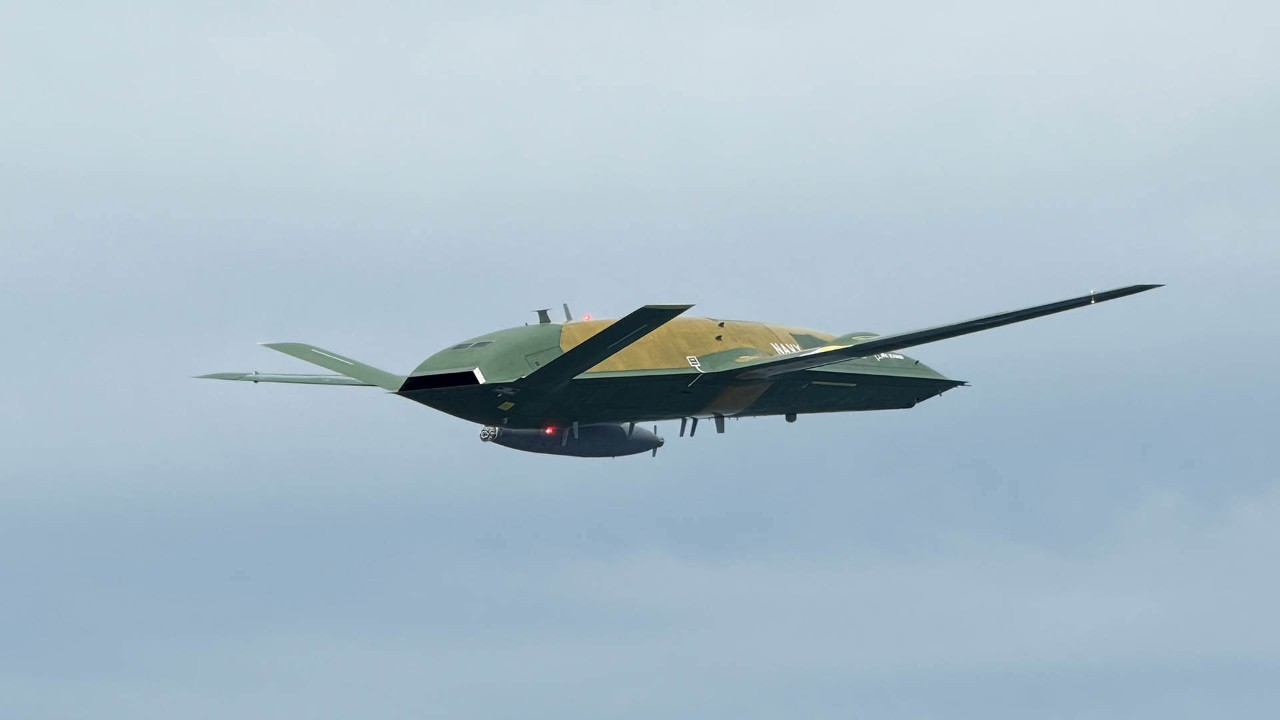
The US Navy’s first production-representative MQ-25A Stingray has completed its second test flight, adding airborne landing-gear operation and revised software to the unmanned tanker’s development programme.
Boeing and US Navy air-vehicle pilots issued commands through the MD-5 ground-control station at MidAmerica St Louis Airport, while the aircraft managed propulsion, guidance, subsystems, and flight controls autonomously throughout the mission.
During the sortie, the MQ-25 retracted and extended its landing gear in flight for the first time. It also operated with an updated software load containing revisions to vehicle-management and mission-computer functions ahead of broader flight-envelope testing.
The aircraft’s first production-representative flight established the initial relationship between the airframe, ground-control architecture, and Rolls-Royce AE 3007N propulsion system. The second sortie introduced configuration changes and more dynamic operating states.
Landing gear affects aerodynamics, flight-control behaviour, structural loads, hydraulic or electromechanical systems, status indication, and emergency procedures. Successful operation in flight therefore verifies several linked systems rather than a single mechanical function.
Software inside the airframe
Uncrewed aircraft transfer functions traditionally managed by pilots into software, sensors, communications, and ground controls. The MQ-25 must detect conditions, execute commands, monitor system health, and respond predictably when data or equipment moves outside normal limits.
Vehicle-management software coordinates many of those functions, making seemingly limited changes capable of altering timing, data traffic, or behaviour elsewhere. Each revision must pass regression testing across laboratories, simulators, ground runs, and flight before release.
The mission computer introduces another integration layer, managing operational data and communicating with other aircraft systems without compromising flight-critical functions. Carrier operations will eventually add deck control, navigation, refuelling, shipboard networks, and congested electromagnetic conditions.
Software therefore requires the same configuration discipline as physical components. Engineers must know which code was installed, which hardware revision it operated on, which tests were completed, and whether a later update invalidates earlier evidence.
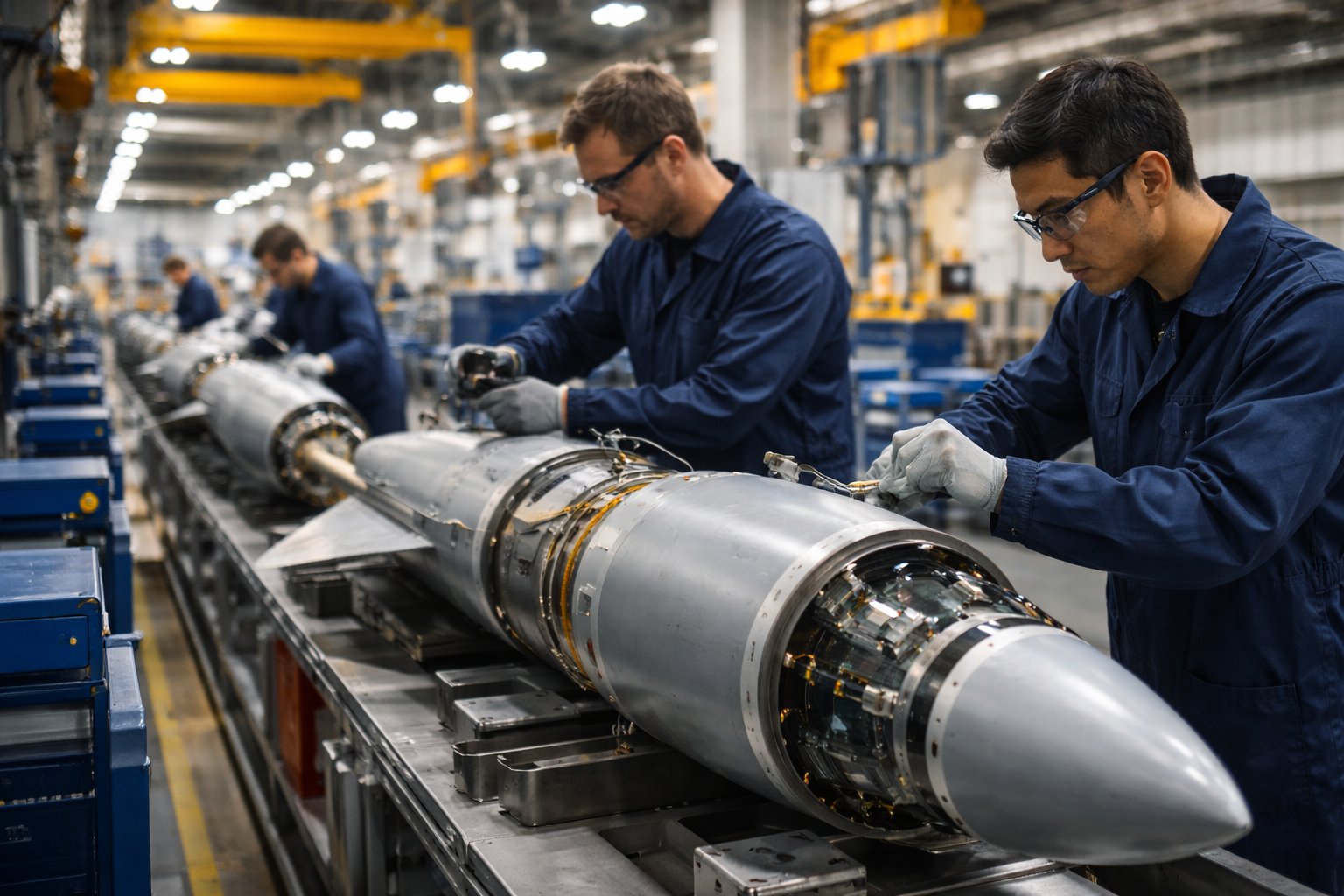
Production aircraft may be assembled while the test fleet continues to identify changes. Essential findings must be incorporated without allowing every discovery to disrupt tooling, supplier schedules, wiring, manuals, or aircraft already in build.
Freezing the design too early can preserve faults and force expensive retrofits, while changing it continuously can leave the fleet divided across several hardware and software baselines. Controlled release points are needed to balance learning against production stability.
Carrier suitability across the supply chain
MQ-25 is intended to refuel carrier-based aircraft, extending the useful reach of the air wing while reducing the tanker burden carried by crewed fighters. Its equipment must therefore survive one of aviation’s harshest routine environments.
Salt, humidity, deck handling, jet blast, electromagnetic activity, limited maintenance space, launch and recovery cycles, towing, and repeated folding operations affect components throughout the aircraft. Suppliers producing actuators, connectors, seals, sensors, and electronic modules must meet maritime requirements unrelated to their basic function.
Landing gear is especially exposed because it must tolerate deck loads, braking, steering, towing, and landing forces within tight structural and aerodynamic constraints. Its control and indication systems must also give remote operators reliable status information without the visual and physical checks available to a cockpit crew.
The supplier base stretches across propulsion, structures, flight controls, fuel systems, communications, sensors, landing systems, and ground control. Managing interface changes among those companies is one of the programme’s largest industrial tasks.
The MQ-25 programme of record covers 76 aircraft, alongside spare engines and support equipment. Although substantial for a new carrier-based uncrewed type, that volume remains small by commercial-aircraft standards and provides limited economies for highly specialised suppliers.
Ground-control stations and shipboard integration create additional production requirements beyond the aircraft count. Training devices, software laboratories, communications equipment, maintenance tools, spares, and test sets must be supplied to shore sites and carriers.
Further envelope expansion will examine increasingly demanding combinations of speed, altitude, configuration, and manoeuvre. Later phases must move towards carrier suitability and autonomous refuelling, where aircraft performance depends on dependable connections to naval command systems and other aircraft.
Flight-test learning must move rapidly into a controlled, supportable configuration without turning every discovery into a factory interruption. The second sortie has placed software and landing systems firmly inside that production challenge.