IN Brief:
- Ukraine tested an unidentified domestically developed ballistic missile on 14 July.
- Its technical specification was revised, accuracy improved, and stated cost reduced by 30%.
- Serial manufacture requires repeatable motors, guidance units, structures, warheads, inspection, and resilient production facilities.
Ukraine has completed a successful test of an unnamed domestically developed ballistic missile after revising its technical specification, improving accuracy, and reducing cost by 30%.
The test took place on 14 July under a Ministry of Defence-managed programme. No name, range, propulsion system, payload, launch vehicle, flight profile, production rate, or timetable for entry into service has been disclosed.
Without those details, the weapon cannot be identified confidently with Sapsan, Hrim-2, FP-7, FP-9, or another public Ukrainian project. Several long-range strike programmes have been discussed, but similarities in broad description do not establish a direct connection.
A 30% cost reduction would require substantial engineering or production change. Possible measures include a simpler airframe, fewer parts, different component sources, more efficient assembly, revised inspection, improved yield, or removal of requirements that added cost without sufficient performance.
Greater accuracy can pull in the opposite direction. More capable inertial equipment, processors, navigation receivers, control actuators, antennas, or terminal-guidance systems normally increase component cost and qualification work.
Achieving lower price and improved precision within the same redesign suggests that engineers have altered several parts of the architecture or removed inefficiencies inherited from an earlier specification. The source of the saving remains undisclosed.
Ballistic missiles place severe demands on every subsystem. Propulsion, guidance, structures, thermal protection, flight controls, warheads, launch equipment, and mission-planning software must function through high acceleration, vibration, temperature, and pressure.
A test is not a production line
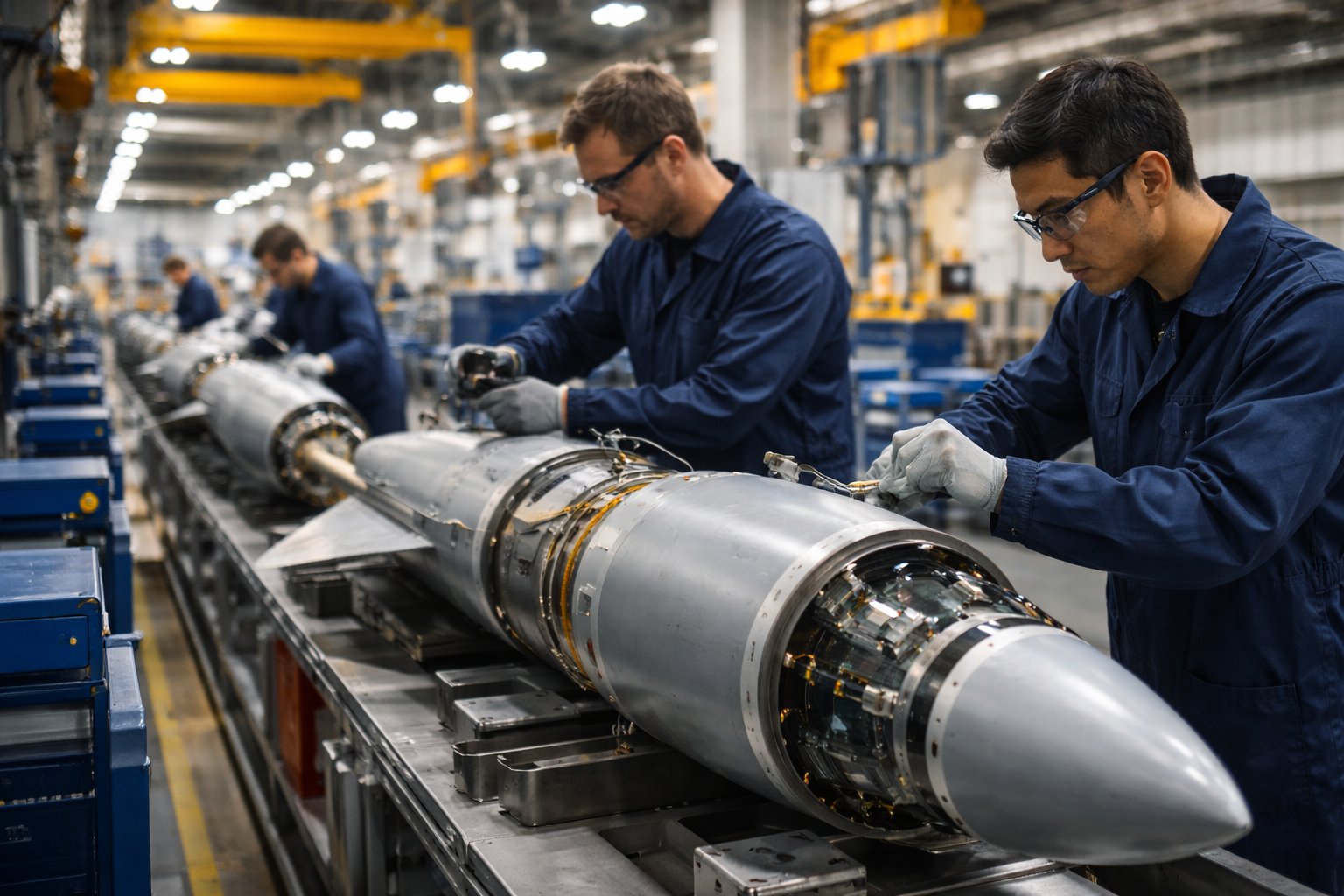
One successful launch demonstrates that an assembled article can complete at least part of the intended flight sequence. Serial manufacture requires comparable performance across motors, electronics, structures, and explosive components produced repeatedly by different teams and suppliers.
Solid propulsion remains one of the most difficult elements to scale. Propellant must be mixed, cast, cured, bonded, inspected, and stored without voids, cracks, contamination, or dimensional variation capable of producing unstable combustion.
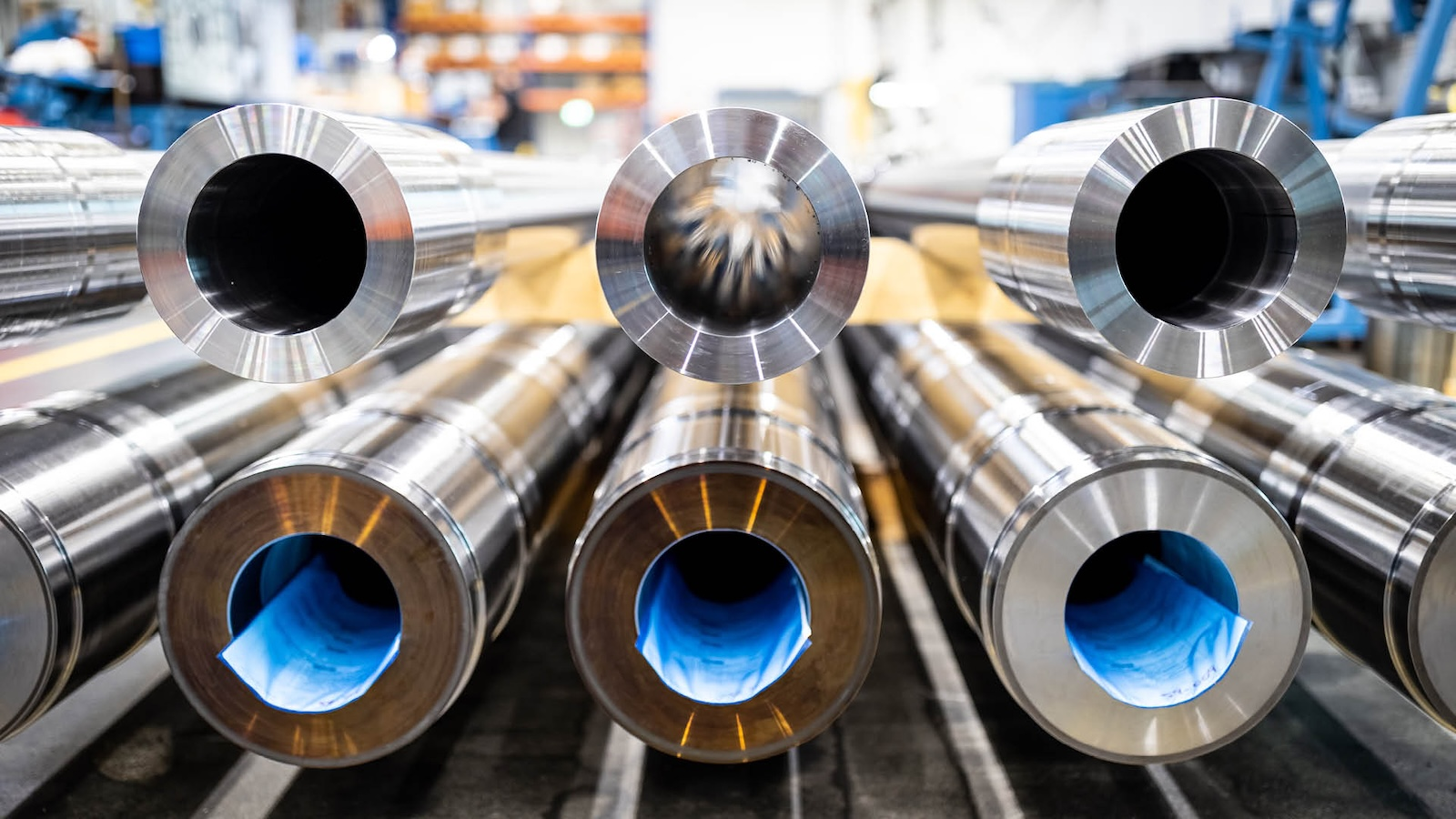
Motor cases and nozzles require controlled materials and manufacturing processes, while changes to propellant composition or grain geometry can affect thrust, structural loading, temperature, and range. Expansion therefore depends on specialist facilities rather than ordinary metalworking capacity.
Guidance units present a separate supply challenge. Inertial sensors, processors, power supplies, actuators, antennas, cabling, and navigation receivers must survive launch shock while retaining accuracy over the complete trajectory.
Ukraine must also design around disrupted satellite navigation and limited access to imported electronics. Replacing an unavailable component can force software changes, new environmental testing, and repeated flight qualification even when the alternative appears functionally similar.
Quality assurance becomes increasingly important as output grows. Firing a large percentage of production is neither affordable nor practical, so non-destructive inspection, motor imaging, electrical tests, software checks, dimensional control, and subsystem acceptance must identify defects before final assembly.
Distributed manufacture improves survivability against attack, although it makes quality and configuration management harder. Separate sites must exchange secure design data, track components, follow identical processes, and deliver assemblies that fit together without extensive rework.
Power interruption, transport disruption, workforce risk, and attacks on industrial infrastructure add costs that are rarely visible in a nominal unit price. Spare tooling, duplicate test equipment, protected storage, and dispersed inventory may raise resilience while reducing conventional factory efficiency.
Long-term domestic contracts can provide sufficient demand for suppliers to purchase machinery, train workers, and standardise production. That stability is particularly valuable for energetic materials, electronics, and precision mechanisms that cannot be expanded through short emergency orders.
European missile production is encountering similar constraints across rocket motors, guidance electronics, energetic materials, and specialist suppliers, as reflected in the second-quarter defence industrial review. Ukraine faces those pressures while its factories and logistics network remain under direct attack.
Cost reduction will acquire strategic value only when it increases the number of dependable weapons delivered. Savings can disappear quickly through low production yield, motor rework, component substitution, emergency procurement, or excessive final inspection.
Accuracy also requires repeated evidence. A successful launch can validate one design change, whereas production acceptance demands confidence that different rounds perform consistently across varied temperatures, storage histories, component batches, and launch conditions.
Further tests, a formal weapon designation, serial-production contracts, identified launch equipment, or evidence of deployment would provide a clearer view of maturity. Until then, the missile remains an unnamed domestic programme whose precise relationship to other Ukrainian developments is unknown.
The test confirms that Ukrainian engineers are addressing cost and accuracy together under extreme industrial conditions. Turning that revised specification into a stable flow of motors, guidance units, airframes, warheads, and completed missiles will be the more demanding achievement.