IN Brief:
- The Air Force has allocated $3.5 million in research, development, test and evaluation funding to Natilus.
- KONA is an optionally piloted blended-wing regional freighter with a manufacturer-stated 3.8-ton payload and 800-nautical-mile range.
- The new funding supports development towards full-scale flight testing and a Joint Force demonstration.
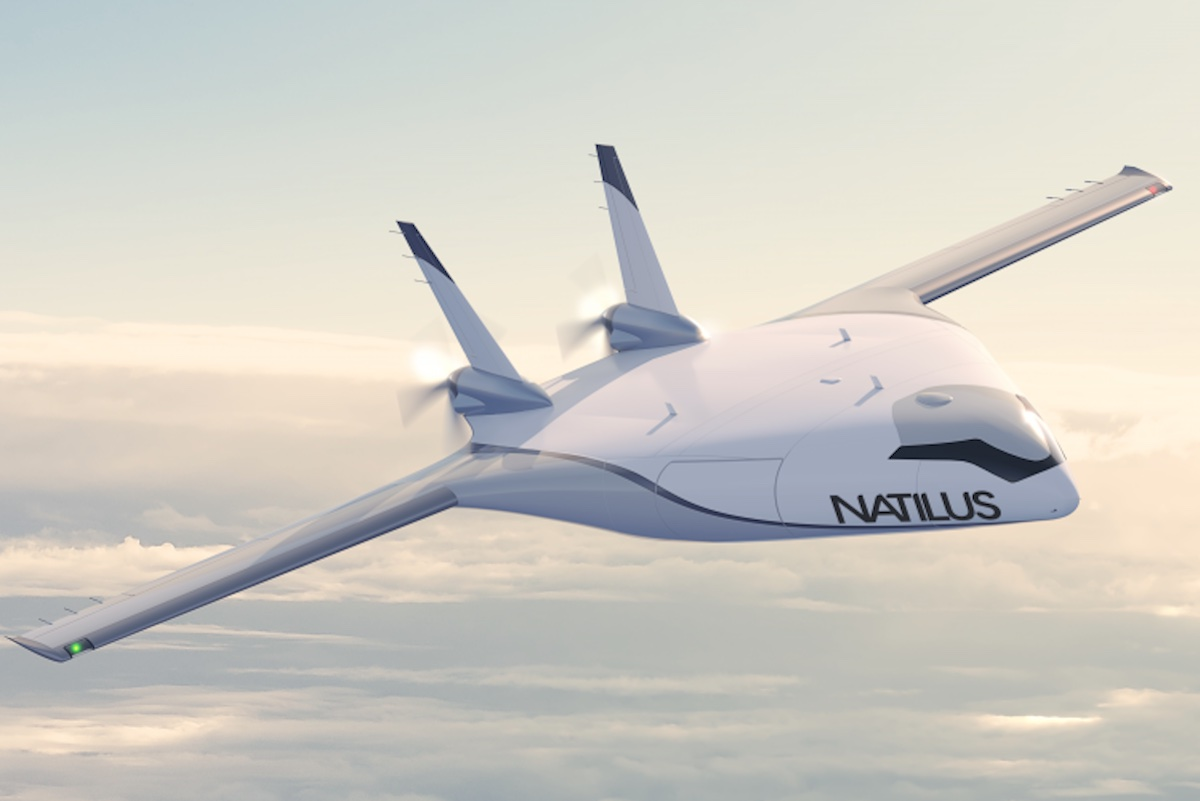
US aerospace developer Natilus has received $3.5 million in Air Force research, development, test and evaluation funding to advance its KONA blended-wing-body regional freighter towards full-scale flight testing and a military logistics demonstration. The award, disclosed on 21 October, supports evaluation of an aircraft being developed for commercial freight rather than ordering an operational military fleet.
The funding comes through Operational Energy – Innovation and the Department of the Air Force’s energy, installations and environment organisation. The company describes KONA as an optionally piloted aircraft with a stated 3.8-ton payload and a design range of 800 nautical miles. Those figures identify intended performance; KONA has not yet completed the full flight testing or certification required to establish them in routine service.
KONA is intended to occupy a payload category between light utility aircraft and larger transports such as the C-130, giving planners a proposed means of distributing moderate loads between smaller airfields. Natilus is developing the same basic airframe for commercial freight and military logistics, while the Air Force funding will help evaluate its usefulness in circumstances where fuel distribution, aircraft availability and runway infrastructure constrain regional resupply.
The blended-wing-body design joins the central aircraft body and lifting surfaces more continuously than a conventional tube-and-wing layout. Natilus expects the configuration to reduce aerodynamic drag for a given cargo mission, but the eventual benefit depends on structural weight, propulsion efficiency, payload loading, airfield performance and other design choices. Full-scale flight testing will be needed to establish how those factors combine rather than relying solely on aerodynamic projections.
Natilus projects fuel consumption about 30% below that of a comparable conventional aircraft. That estimate has not been established through operational flights of a certified KONA. Fuel efficiency is a relevant test objective because aviation fuel must itself be moved and stored at dispersed operating sites; any lower consumption would have to be measured alongside useful payload, turnaround time and actual aircraft range to establish a logistical advantage.
The optionally piloted architecture is another development objective, although Natilus says its immediate certification priority is a single-pilot aircraft under FAA Part 23. Making an airframe capable of later uncrewed operation requires provisions for control, system monitoring and safe command arrangements. The company has discussed potential defence pathways for that work, but has not confirmed whether the initial Joint Force demonstration will use piloted or uncrewed flight.
Commercial certification and the Air Force’s operational assessment will follow different evidence requirements. Natilus has advanced its Part 23 certification planning with the FAA, while the defence award targets full-scale testing and a Joint Force demonstration. Establishing acceptable flying qualities and aircraft systems for civil use would not by itself confirm suitability for dispersed military operations, with their different payload handling and ground support demands.
A useful military evaluation would measure cargo loading, maintenance effort, runway performance, turnaround time and fuel consumption under stated conditions. Those data would indicate whether a regional aircraft can perform more suitable sorties than a larger transport without introducing disproportionate ground support requirements. Natilus has discussed short-field operation, but the actual operating envelope will depend on flight-test measurements, runway conditions and certification limits.
Broader mission concepts mentioned by Natilus include communications relay, intelligence, surveillance and reconnaissance, and payload delivery. None is identified as a funded operational variant under this initial award, which centres on regional transport and contested logistics. Further engineering integration would be required before mission equipment of those types could be carried as part of an approved military configuration.
The award is also separate from the US Air Force’s larger JetZero blended-wing demonstrator investment announced in 2023. JetZero is investigating a substantially larger aircraft class, whereas Natilus has positioned KONA as a regional freighter. Neither the $3.5 million research funding nor commercial expressions of interest establish an Air Force fleet order; procurement numbers and unit costs would follow only if a future programme proceeds beyond experimentation.
Natilus has identified 2028 as its current goal for a full-scale prototype first flight, after earlier plans envisaged an earlier date. Aircraft testing, the relevant certification process and any subsequent military assessment remain ahead. The announced $3.5 million advances those activities, but whether KONA delivers its proposed 3.8-ton payload, 800-nautical-mile range and fuel savings in representative missions will depend on measured performance.
FEATURED IMAGE: IMAGE FALLBACK REQUIRED — primary-source image not verified for reuse.