IN Brief:
- NATO JWC is moving exercises toward theatre-scale integration through 2030.
- Modelling, simulation, and AI-enabled tools will be used to stress-test plans.
- The aim is to tighten the link between training, readiness, and warfare development.
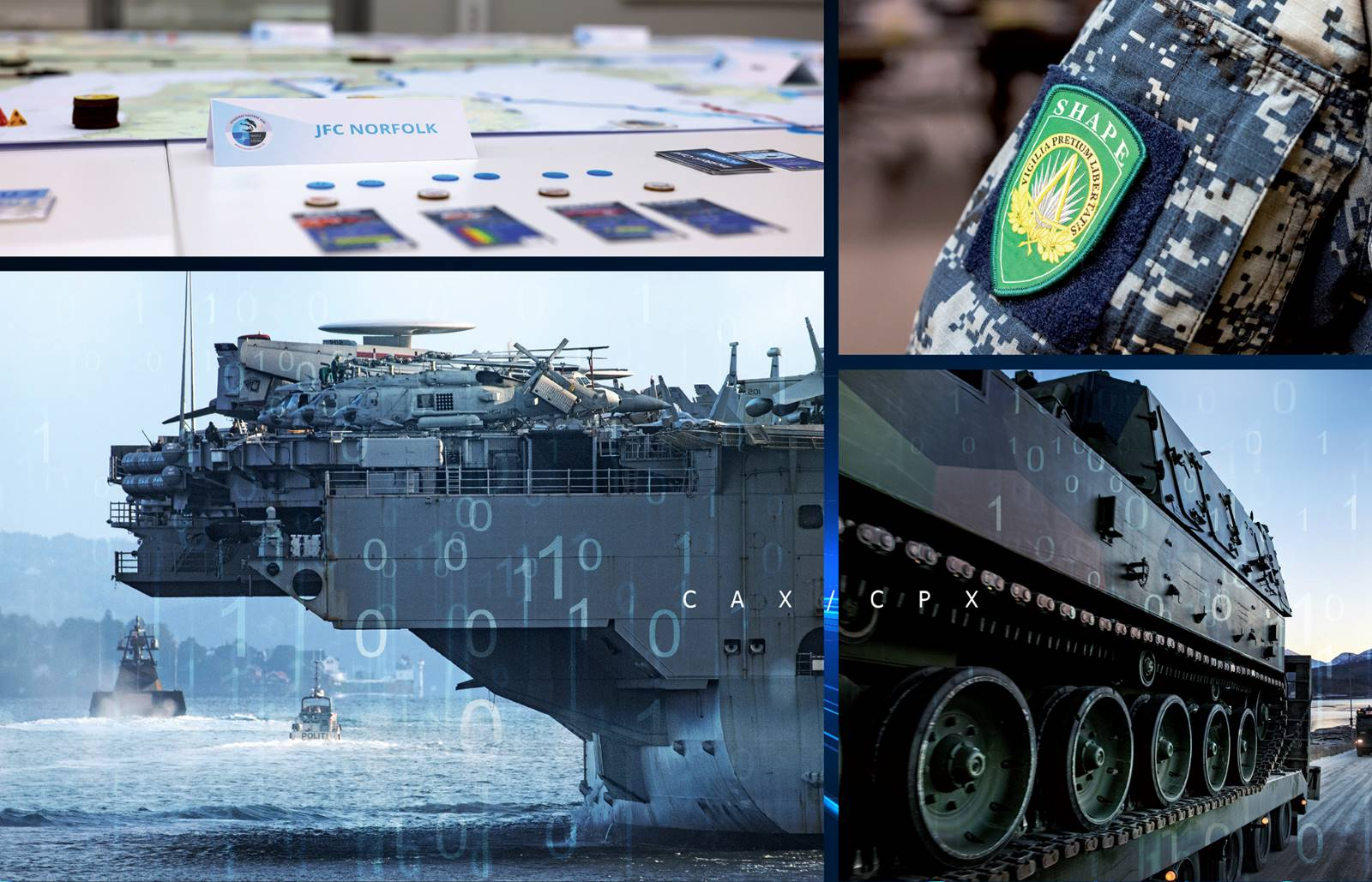
NATO’s Joint Warfare Centre (JWC) in Norway has launched a five-year campaign plan intended to guide Allied training, exercise design, and warfare development through 2030. The plan formalises a shift that many defence training organisations have been circling for years — away from headquarters-based “process compliance” events, and toward exercises that are built around operational intent, force integration, and realistic theatre-level frictions.
At its core, the change is about scope and consequences. Rather than running drills that primarily validate staff procedures inside a single command post, the JWC is pushing for scenarios that stitch together joint and multi-domain activity, force movement, sustainment, and decision cycles in ways that resemble actual operational plans. That demands a different technical backbone: larger-scale modelling, higher-fidelity simulation, and faster iteration so that exercise objectives can be tested, adjusted, and re-tested without waiting for the next calendar slot in a crowded programme.
AI-enabled tooling is part of that architecture, but not as a novelty layer. The intention is to use automation and advanced analytics where it reduces friction — for example, by accelerating scenario generation, identifying patterns across multiple runs, and highlighting where assumed timelines, logistics flows, or command relationships break down under pressure. Done properly, that kind of tooling makes exercises more punitive in the right places: it exposes brittle assumptions earlier, and it forces commanders and staffs to deal with the downstream effects of choices rather than treating injects as isolated events.
The campaign approach also suggests a more deliberate linkage between training and warfare development. If exercises are designed as connected iterations — rather than standalone events — the output becomes cumulative. Lessons can be carried forward in a structured way, and validated fixes can be tested in later runs. That is the difference between “we observed an issue” and “we know this change holds up when the wider theatre moves.”
For industry, the subtext is familiar: simulation ecosystems, data integration, and secure, interoperable tooling are no longer back-office enablers. They are becoming part of the training front line, with requirements that look increasingly like operational systems engineering — resilient architectures, auditable models, and realistic data feeds — rather than a glossy exercise visualisation package.