IN Brief:
- SSC Space and Kuva Space have signed an LoI to explore cooperation across ground, launch, mission, and analytics services.
- The partnership is aimed at commercial, institutional, and security-related programmes in the Nordic region.
- Sovereign infrastructure and faster constellation support are becoming central to Europe’s space-industrial agenda.
SSC Space and Kuva Space have signed a letter of intent to explore a strategic collaboration spanning ground-segment support, mission development, launch services, and downstream analytics, adding a new Nordic layer to Europe’s effort to build more sovereign space capability.
The proposed cooperation covers satellite mission operations, telemetry, tracking and control, and data downlink through SSC’s global ground-station network to support Kuva’s growing constellation. It also extends into hosted payload opportunities, satellite deployment strategies, next-generation mission architectures, technology development, and potential use of Esrange Space Center for future missions.
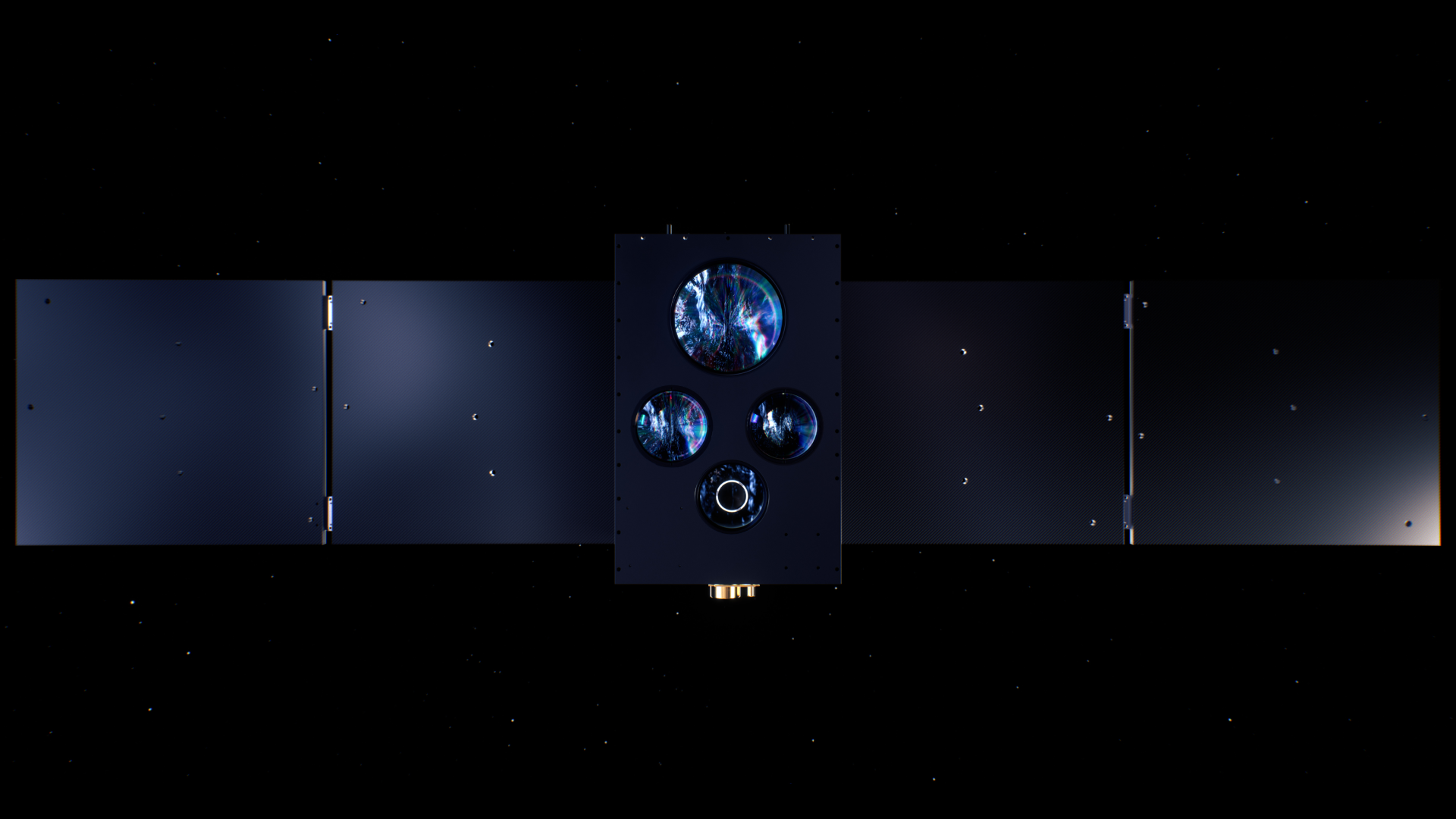
Kuva’s business centres on hyperspectral satellites and AI-driven intelligence, including security applications. SSC brings launch support, mission operations, satellite communications, and ground infrastructure. Together, the two companies are mapping out a broader operational stack than a conventional satellite-services partnership.
Infrastructure and constellation growth
A constellation programme depends on repeatable spacecraft manufacture, stable payload integration, launch access, early-orbit support, and reliable ground-segment capacity. Weakness in any one of those areas slows deployment and raises operating cost.
Kuva’s long-term growth plans point toward a much larger hyperspectral fleet. That raises the industrial workload across satellite production, subsystem sourcing, integration capacity, and mission support.
Nordic capability, European context
SSC’s role gives the partnership practical depth. Ground stations, TT&C, launch infrastructure, and operational support rarely dominate headlines, yet they determine how far a regional industrial base can function independently when demand increases.
The LoI reflects a broader European direction. Space resilience is increasingly being built through combinations of spacecraft manufacturing, mission operations, launch access, and data exploitation rather than through launch vehicles alone.