IN Brief:
- Six-year renewal and expansion supports Type 26 frigate build in Glasgow.
- GXO will run warehousing and materials handling at Scotstoun and Govan.
- A 4PL “Control Tower” model will coordinate flows and improve visibility.
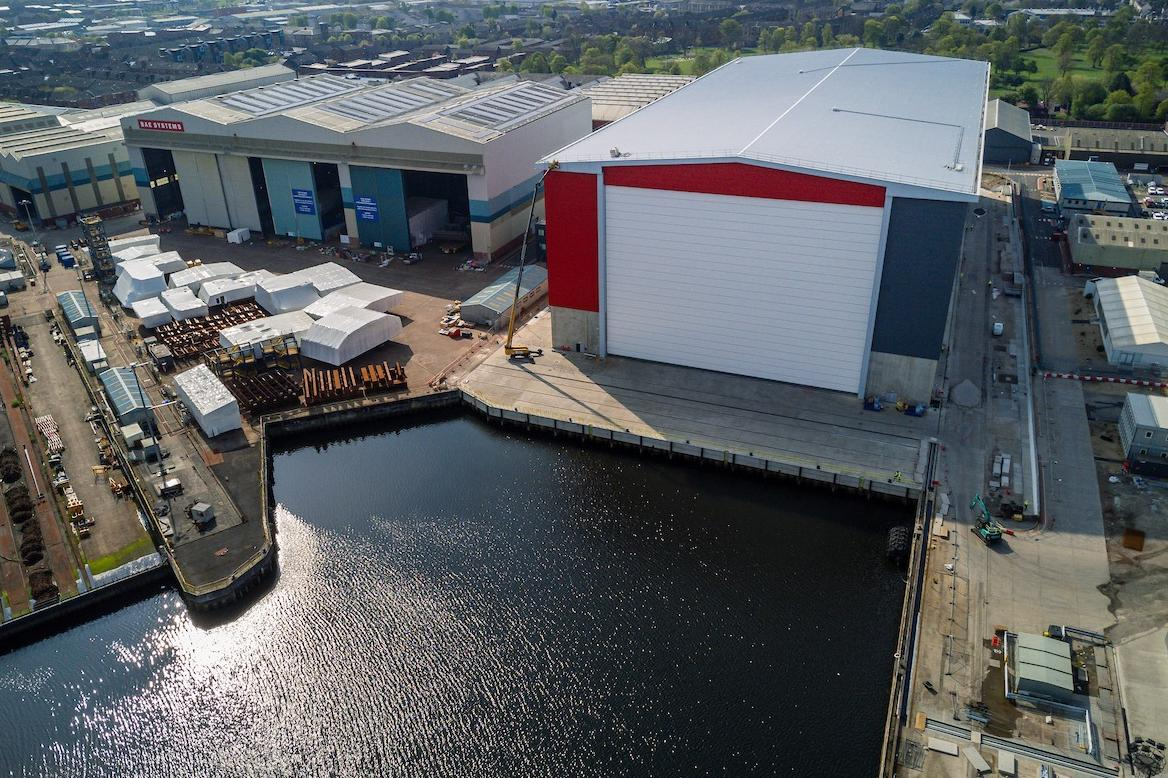
GXO Logistics has renewed and expanded its UK contract with BAE Systems to manage supply chain activity supporting the Type 26 frigate programme, extending the relationship into its third decade. The six-year agreement covers warehousing and materials handling at BAE Systems’ Scotstoun and Govan shipyards on the River Clyde in Glasgow, alongside wider coordination of inbound and outbound volumes across an estate of warehousing facilities in Scotland’s Central Belt.
The renewal is framed as a scale-and-integration move rather than a routine extension. Type 26 shipbuilding depends on high-cadence material availability across thousands of parts, long-lead assemblies, and configuration-controlled equipment, where a single missing component can idle a production sequence that is otherwise ready to move. GXO’s role is therefore less about storage in the narrow sense, and more about synchronising flows, buffering risk, and keeping inventory accuracy tight enough that planners can trust what systems say is physically available.
GXO said it will deploy integrated technology to improve inventory visibility and efficiency. The agreement includes transport coordination through a 4PL “Control Tower” approach, intended to connect multiple sites and movements into a single operational picture. In shipbuilding, where materials may move between storage, kitting, pre-outfitting, and final assembly environments, that visibility is often the difference between planned progress and reactive expediting.
Gavin Williams, Managing Director, GXO UK & Ireland, said: “For more than two decades, we have partnered with BAE Systems to deliver innovative, tech-enabled logistics solutions to support their role in strengthening the UK’s defence capabilities. Extending our partnership reflects BAE Systems’ confidence in our ability to provide best-in-class solutions and marks an important milestone as the first realisation of GXO’s expanded defence capabilities following our acquisition of Wincanton.”
That final point matters operationally because defence supply chains tend to punish thin capacity. The ability to surge labour, shift warehousing footprint, and absorb variability without losing control of inventory discipline is typically built over time, not purchased on demand. GXO’s acquisition of Wincanton has been positioned as part of that capacity build in the UK and Ireland market, and this renewal is being presented as an early proof point.
For BAE Systems, the contract underlines the industrial reality of naval shipbuilding programmes: output is constrained as much by supply chain execution as by yard productivity. In a programme where build schedules are long and material complexity is high, predictable, digitally visible logistics has become an enabling function, not a support service.