IN Brief:
- Airbus is considering an A350 family growth step aimed at higher-capacity long-haul missions.
- The move would sit alongside a production ramp plan that targets higher A350 output later this decade.
- Any new variant would be shaped by supply-chain stability, engine maturity, and airline fleet-replacement cycles.
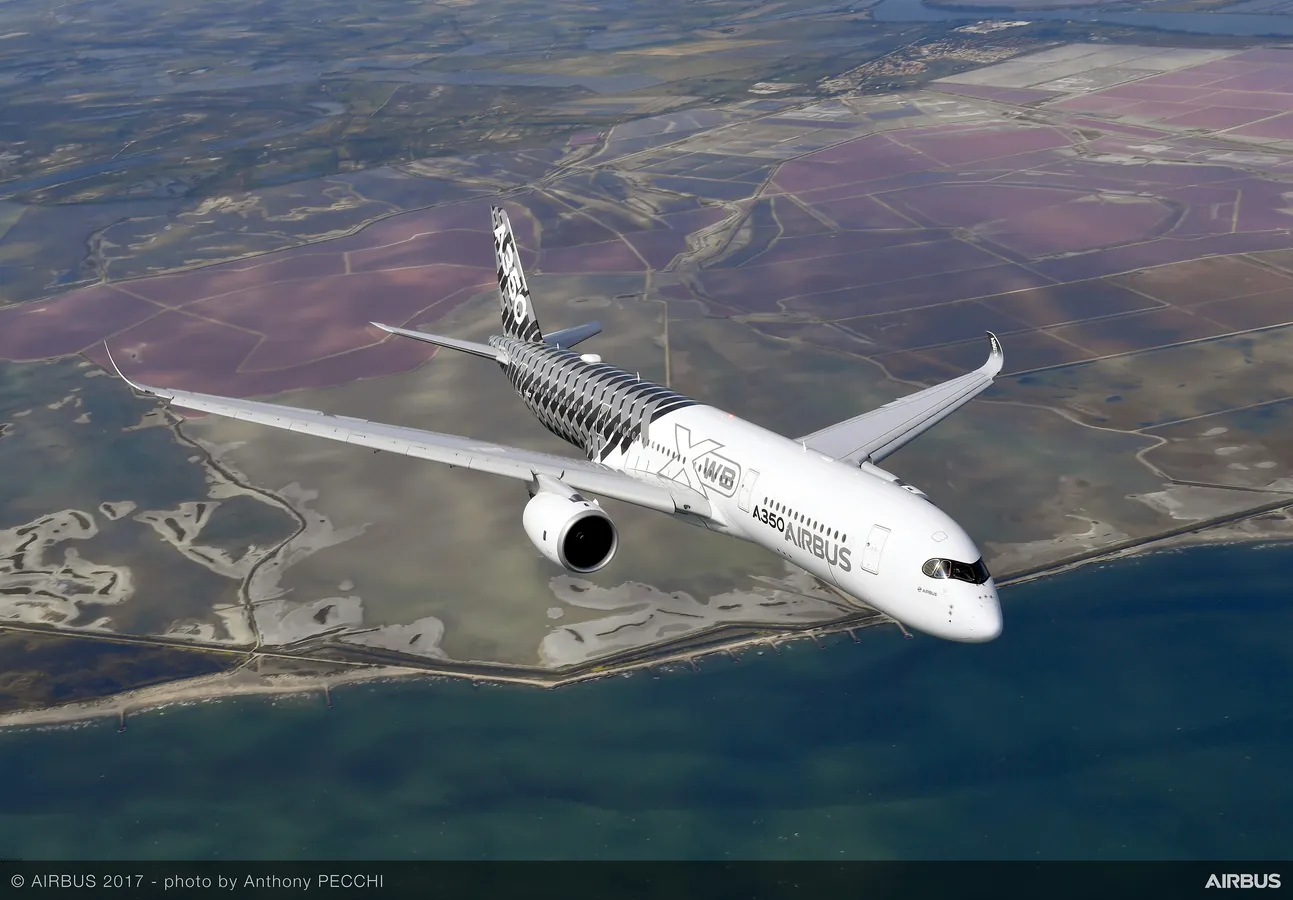
Airbus is weighing whether the next phase of the A350 programme should include a higher-capacity derivative, positioned above today’s A350-1000 and aimed at the same high-density, long-range markets that have traditionally anchored the 777 family.
The timing is awkward in the way aerospace timing usually is: the market signal is there in the form of orders and backlog, but the industrial system still has to earn the right to take on more complexity. Airbus delivered 793 commercial aircraft in 2025 and booked 1,000 gross orders across the portfolio, including 193 A350s, while the company’s widebody backlog ended the year at 1,124 aircraft. Widebody demand is not the constraint.
The constraint is the production system. Airbus has been explicit that it is still managing specific supply-chain pressures as it pushes its commercial ramp-up, with the A350 targeted to reach a rate of 12 aircraft per month in 2028. That rate matters because any higher-capacity A350 would not be a paper exercise: it would pull engineering resources, supplier capacity, and certification effort at precisely the point Airbus is trying to stabilise output, de-risk major subassemblies, and keep delivery performance predictable for existing A350 customers.
A larger A350 variant would also be a programme about propulsion and loads as much as it is about cabin space. Higher maximum take-off weights, landing gear margins, braking energy, structural reinforcements, and engine thrust growth all sit on the critical path for a true step-up aircraft, and the business case depends on whether those changes can be contained within a derivative-level bill of materials, or drift into the cost and risk profile of a new development.
Airbus’ recent A350 messaging has leaned heavily on two points that would also underpin any stretch case: the platform’s order book, and its ability to absorb incremental evolution. The company has continued to add A350 operators and orders, and it is pushing hard on future-proofing themes such as higher Sustainable Aviation Fuel operating capability across the fleet by 2030. Those are not, on their own, an argument for a stretch, but they are the kind of industrial narrative Airbus tends to build before it commits to a long-cycle decision.
For airlines, the appeal of a larger twin is straightforward: replacing ageing high-capacity aircraft with fewer flights, fewer crews, and lower fuel burn per seat, while keeping range and cargo flexibility. For Airbus, the question is whether the incremental return justifies the disruption, and whether the programme can be launched without compromising the existing A350 ramp, the A350F industrialisation path, and the supply-chain recovery work already in flight.