IN Brief:
- 4M Defense has won a tender valued at over $30m for demining work in Israel.
- The programme combines autonomy, robotics, and aerial intelligence for land clearance.
- Large-area deployments are emerging as reference cases for autonomous demining at scale.
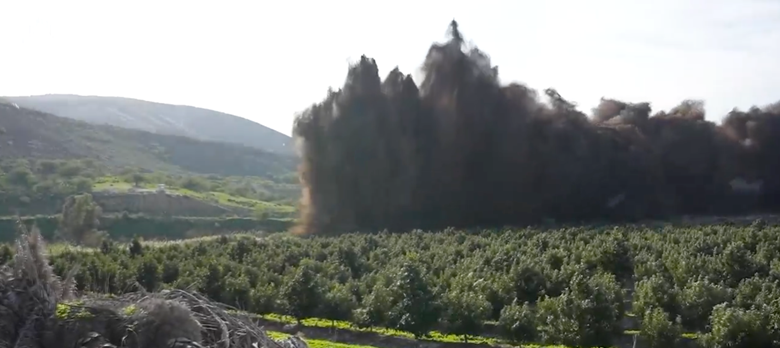
Ondas Inc. says its smart demining subsidiary, 4M Defense, has been awarded a large-scale multi-year demining programme in Israel after winning a tender valued at over $30 million. The company said the project covers approximately 741 acres along the Israel–Syria border, described as a historically contaminated and strategically sensitive region, with an initial execution period of up to three years and options for extensions and scope expansion, tied to defined project milestones.
The award places autonomous and semi-autonomous systems into a segment that has historically been manpower-heavy, equipment-intensive, and constrained by safety risk and verification requirements. Clearing large areas is not simply an engineering problem of detection and excavation; it is also a process discipline problem, where survey data, prioritisation logic, and audit trails must be good enough for authorities to sign off land release decisions. That combination is where autonomy has been trying to earn its place, particularly when operations must continue under security constraints.
“This award reflects the increasing demand for advanced, technology-driven approaches to land clearance in complex and high-risk defense environments,” said Eric Brock, chairman and CEO of Ondas Inc. “4M Defense has developed a differentiated smart demining capability that combines autonomy, robotics, and aerial intelligence to dramatically improve safety, speed, and operational efficiency. This project validates both the scale and strategic importance of autonomous demining within Ondas’ growing defense portfolio.”
Ondas framed the programme as part of a broader approach to border environments that spans monitoring, mapping, and threat detection, through to contested operations and post-conflict land clearance. That lifecycle framing is important commercially, because it treats demining as one element of a longer-term security and sustainment relationship, rather than a single clean-up contract.
“This program reflects Ondas’ broader strategy to deliver end-to-end solutions for border environments across all phases of conflict,” said Oshri Lugassy, co-CEO of Ondas Autonomous Systems. He cited persistent border monitoring, early threat detection, and intelligence support during active conflict, then described smart demining and land-intelligence capabilities as critical for “hazard reduction, and the safe restoration of border areas and critical terrain.”
Ondas said the award strengthens its position in Israel and aligns with a “system-of-systems” strategy that combines multiple autonomous platforms, sensors, and analytical tools into a unified operational framework. It also said 4M Defense’s intelligence-led approach is intended to replace traditional labour-intensive methods, enabling authorities to prioritise clearance activities, improve decision-making, and safely reclaim large areas for security and operational use.
The company expects the deployment to serve as a reference programme for future large-scale autonomous demining and land-intelligence projects globally, which suggests that performance metrics and milestone delivery will be watched closely, both by potential customers and by a supply chain still learning how to industrialise autonomy for dirty, high-consequence field work.