IN Brief:
- A €30 million Series A targets industrial scaling across multiple countries.
- TYTAN is building AI-guided interceptor drones plus integration software.
- The model pushes air defence towards serial production and interoperability.
The NATO Innovation Fund has co-led a €30 million all-European Series A financing round for TYTAN Technologies alongside Armira, with the company stating the raise brings its total funding to €46 million.
TYTAN said the capital will be used to scale its manufacturing footprint across Germany, Ukraine, and allied markets, accelerate development of its AI-powered interceptor systems, and push integration into wider air-defence layers, including missile-based systems. The NATO Innovation Fund described the financing as aimed at building “the industrial and technological foundation for a sovereign, AI-enabled air defence architecture made in Europe for Europe,” in a joint statement attributed to TYTAN co-founders Balazs Nagy and Batuhan Yumurtaci.
Patrick Schneider-Sikorsky, Partner at the NATO Innovation Fund, said TYTAN’s technology “addresses an urgent capability gap for Ukraine and Allies alike,” with a focus on defending airspace, bases, and critical infrastructure at scale.
Alongside the financing, TYTAN said former NATO General Chris Badia is joining its board. The company also announced Tahsin Kart will join as Co-CEO, bringing experience in propulsion and missile systems and taking responsibility for industrial scaling.
Serial production under battlefield feedback
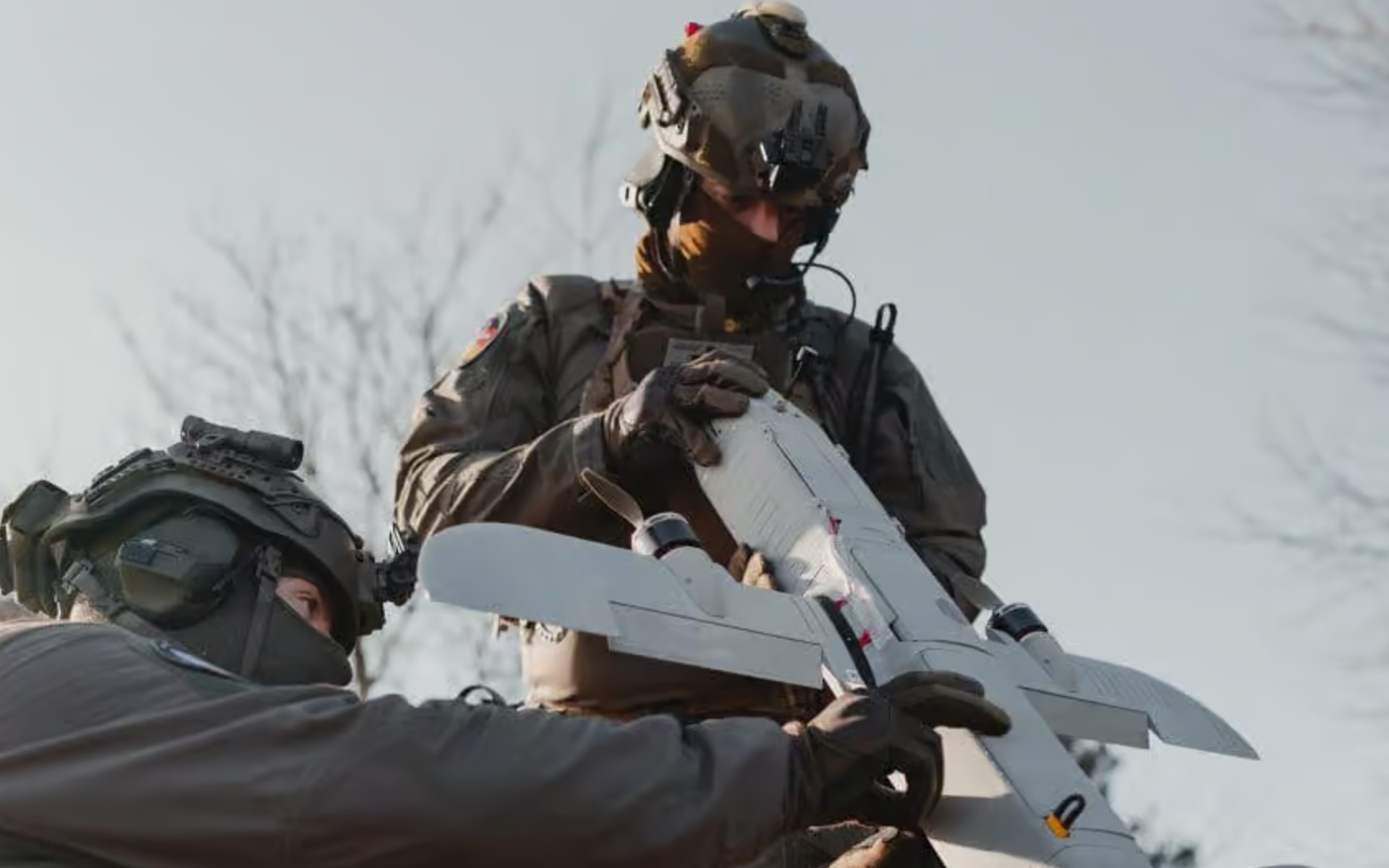
TYTAN is positioning its interceptor drones as a medium-range, kinetic answer to Class I and II unmanned threats, paired with a software-defined integration layer designed to plug into existing radars, sensors, and command-and-control systems. That combination means it is not enough to build air vehicles cheaply; the company also has to deliver repeatable integration packages that survive the reality of mixed fleets and multi-vendor architectures.
The supply base TYTAN cites — including European SMEs and defence primes such as Hensoldt, KNDS, Deutz, and Dedrone — suggests a production strategy built around available industrial depth rather than bespoke vertical integration. The trade-off is configuration control: scaling across sites and borders only works if design baselines, test procedures, and incoming inspection standards are locked down early.
Low-cost interceptors still carry guidance, compute, and power constraints that can dominate build rate. Autonomy-capable flight controllers, secure datalinks, inertial sensors, and warhead safety architectures all need qualification and continuity of supply, even when the airframe is designed for rapid manufacture. The integration layer adds its own industrial load in verification, cyber hardening, and interface management, especially if the product is expected to “connect directly into existing radar and command-and-control systems,” as the NATO Innovation Fund described.
The underlying shift is towards air-defence effects that can be produced and replenished like industrial consumables, which puts manufacturing and engineering, component sourcing, and test automation at the centre of capability.