IN Brief:
- Framework agreements cover production, assembly, and support of more than 10,000 military vehicles in Hungary.
- Work spans Tatra heavy trucks, Gidran 4×4 armoured vehicles, axle production, and life-cycle support.
- A HUF 100bn modernisation plan signals a shift from assembly to sustained industrial capacity.
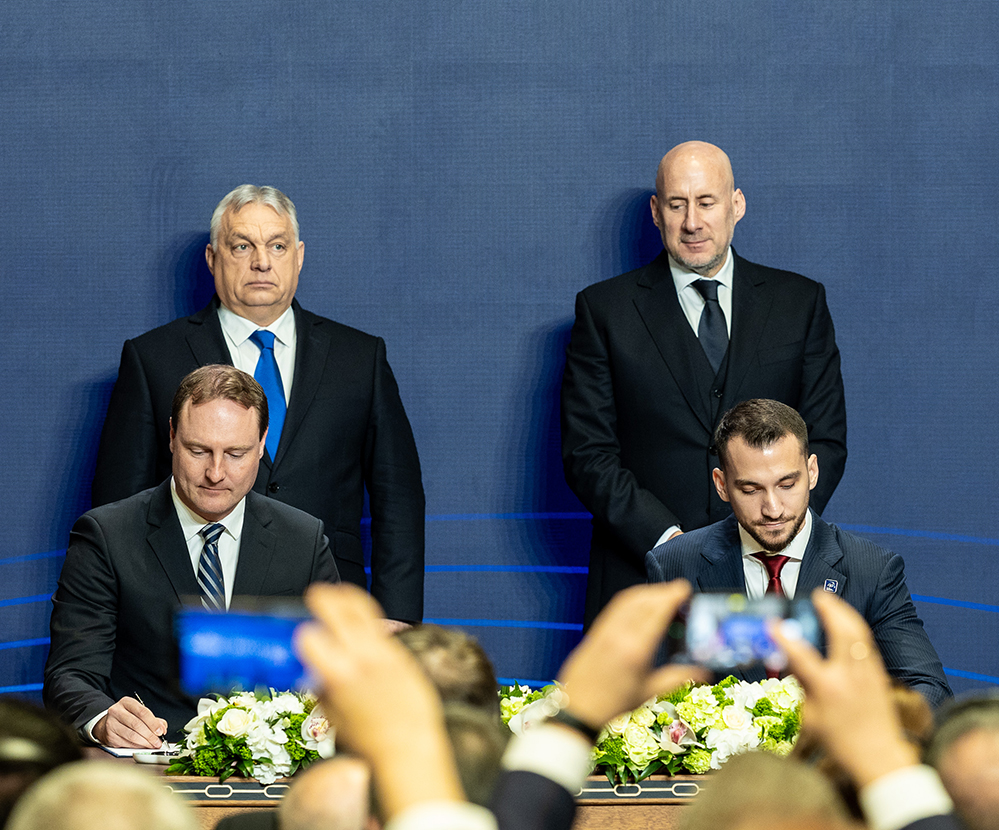
Hungary’s RÁBA Automotive Holding is being positioned as a Central European defence vehicle manufacturing hub through a set of industrial and ownership agreements involving 4iG Space & Defence Technologies and Czechoslovak Group (CSG). The programme scope is unusually broad for a single site: production, assembly, and maintenance of more than ten thousand military vehicles under national framework agreements and an export programme, supported by a planned HUF 100bn factory development and modernisation effort.
At the ownership level, CSG Defence is set to acquire a 49% stake in a 4iG-controlled project company, translating into an indirect stake of nearly 37% in RÁBA Automotive Holding, while control remains with 4iG. The industrial work packages include an export programme with Tatra Trucks covering several thousand medium tactical vehicles, valued at more than €1bn in stated expectations, alongside a Hungarian Defence Forces framework for up to 2,000 Tatra 8×8 heavy tactical trucks in multiple configurations over a five-year period.
In parallel, the framework includes up to 800 Gidran 4×4 armoured vehicles over five years, in cooperation with Nurol Makina, and a life-cycle support and MRO award covering the Hungarian Defence Forces’ existing fleet of 105 Gidran vehicles. A separate integration pathway is also on the table through a “HUMARS” programme with Lockheed Martin, under which HIMARS launcher modules could be integrated onto Tatra 6×6 vehicle platforms manufactured at RÁBA’s Győr plants.
The near-term production schedule is already being pulled forward. Reporting linked to the agreements indicates first Tatra vehicles are expected to be produced by the end of this year, with export work aimed at Southeast Asia adding an additional demand stream beyond domestic fleet renewal.
Re-tooling Győr for tactical vehicle volume
Moving from legacy commercial capability to sustained military output is a factory engineering problem before it is anything else. Tactical trucks and armoured vehicles require disciplined configuration control, controlled welding and paint processes, and acceptance testing that proves repeatability across variants. If the programme proceeds at the upper framework limits, Győr will need new or refurbished lines, higher test throughput, and a supplier network that can deliver at automotive cadence while meeting military documentation and traceability requirements.
The planned HUF 100bn modernisation programme explicitly points to new production lines and broader technological upgrades. In practical terms, that typically means more automated machining and measurement, upgraded coating and corrosion protection capability, and a production planning system that can cope with mixed-model build.
RÁBA’s established position in axle and axle-component manufacturing is being pulled directly into the defence plan, including the production of “tens of thousands” of axles for military vehicles. That matters because it anchors a meaningful share of value-add inside Hungary, and it reduces dependence on cross-border shipment of heavy driveline components, which can become a quiet delivery risk at scale.
Integration work — whether for protected mobility vehicles or rocket artillery systems — adds another layer. Mounting, power distribution, data wiring, and structural adaptation are not glamorous, but they are where schedule risk lives. If Hungary wants genuine sovereignty in land systems, the credibility test will be whether those integration and support functions mature into repeatable industrial routines, rather than one-off projects built around imported kits.