IN Brief:
- AeroVironment has secured a three-year, $97.4 million Army contract to build the GENESIS test environment.
- The work covers Hardware-in-the-Loop infrastructure, including cryogenic space chambers and flight motion tables at Redstone Arsenal.
- Better sensor validation capacity can shorten development cycles, reduce programme risk, and ease one of the least visible bottlenecks in missile production.
AeroVironment has been awarded a three-year, $97.4 million contract by the US Army to develop GENESIS, the Generative Environment for the Next Era of Spectral Imaging Stimulators, at Redstone Arsenal in Huntsville, Alabama.
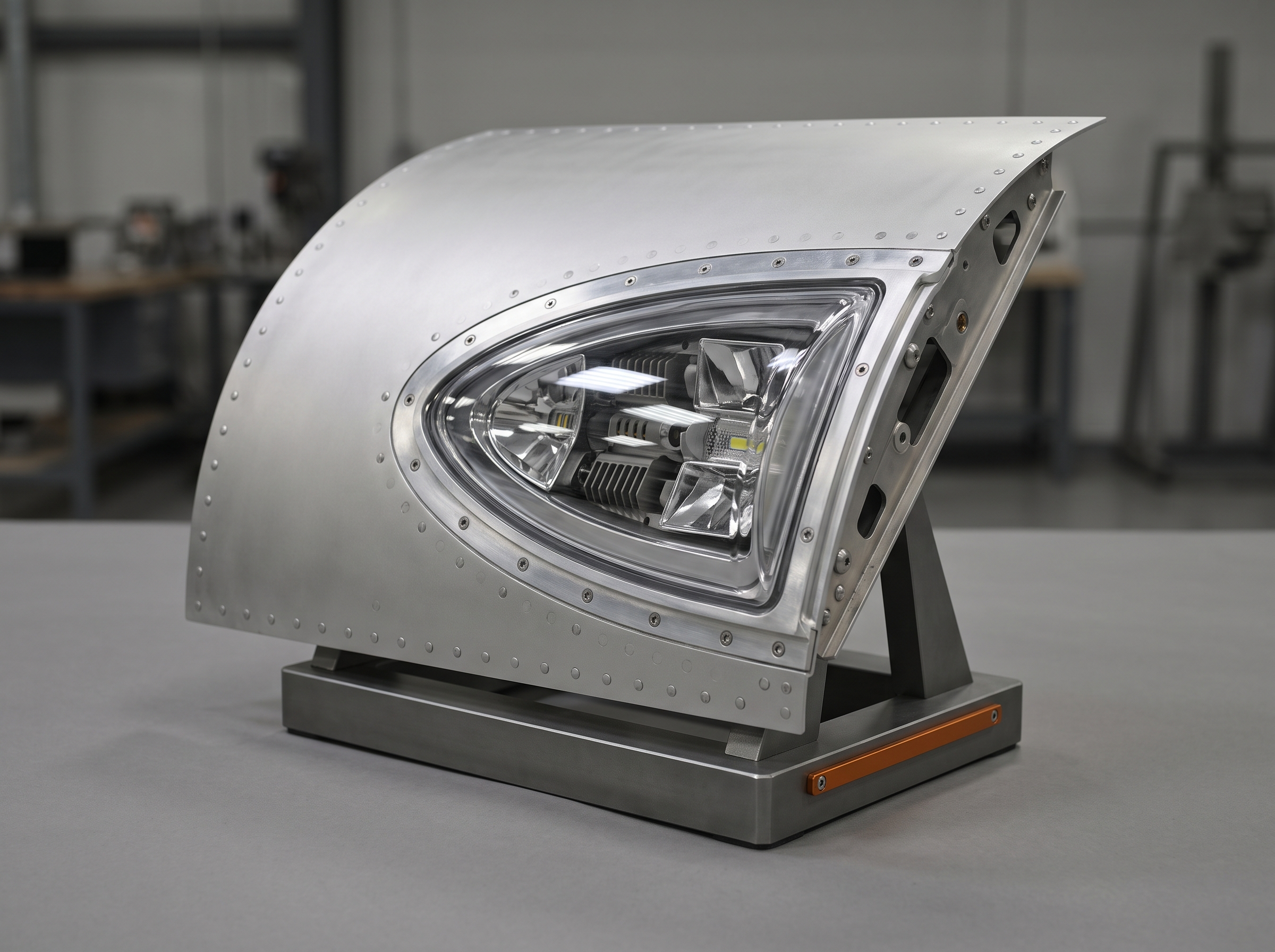
The programme centres on Hardware-in-the-Loop testing infrastructure for advanced missile defence and electro-optical/infrared sensor systems. Under the contract, AeroVironment will deliver facilities and equipment including cryogenic space chambers and flight motion tables to support work carried out by the US Army Combat Capabilities Development Command Aviation & Missile Center, better known as DEVCOM AvMC, and its partners.
On paper, it is a testing contract, but it goes much further into the production chain than that description suggests. Modern seekers, guidance systems, and sensor packages are expensive, component-dense, and increasingly difficult to validate using traditional development cycles alone. As programmes push for shorter timelines and greater accuracy, the infrastructure used to test those systems is becoming a constraint in its own right.
It’s here that GENESIS sits. AeroVironment said the environment will combine multi-spectral projection, ultra-high-frame-rate imaging, precision optics, and facility control systems to create more representative conditions for validating sensor and guidance hardware. The aim is to give engineers a more rigorous way to assess performance before committing hardware to live trials, where time is limited, instrumentation windows are narrow, and failure is costly.
For missile and air-defence programmes, that is not peripheral work. Validation capacity shapes how quickly designs can mature, how early faults can be found, and how confidently programmes can move toward integration and production.
Test infrastructure moves closer to the factory floor
Hardware-in-the-Loop testing has long been a standard part of missile development, but its industrial importance is often understated. By placing real hardware into a simulated operating environment, engineers can expose components to demanding conditions without consuming scarce flight-test assets at every stage of development.
That becomes more relevant as sensor architectures grow more complex. Electro-optical and infrared systems are not simply checked for basic function. They must be assessed for sensitivity, alignment, thermal behaviour, response speed, image fidelity, and performance under tightly controlled environmental conditions. A guidance package that behaves well in isolation may still show up problems once optics, processors, control systems, and target simulation are working together in real time.
Redstone Arsenal has long been one of the Army’s key centres for this sort of work. Its existing facilities already support advanced sensor and simulation activity, including cryogenic environments used to replicate the low-temperature, low-pressure conditions required for infrared testing. GENESIS extends that base with more specialised infrastructure, giving the Army greater capacity to run realistic evaluations on next-generation systems.
For the industrial base, that is a material development. Production pressure in the missile sector is usually discussed in terms of assembly lines, energetics, castings, and long-lead electronics. Those constraints are real enough. Less attention is given to the validation stage, even though it can hold up programmes just as effectively when facilities are oversubscribed or test cycles become protracted.
Cryogenics, motion systems, and integration pressure
Building this kind of test environment is also a serious engineering task. Cryogenic space chambers must reproduce the conditions under which faint infrared signatures can be detected and tracked. Motion tables must move hardware with sufficient precision to make the simulation credible. Projection systems, control software, optics, timing systems, and instrumentation all have to operate as one tightly integrated whole.
None of that is especially glamorous, but it is exactly the sort of enabling infrastructure that determines whether advanced hardware can move through development at pace. A poor-quality test environment produces weak data, unclear fault diagnosis, and repeated iterations. A robust one allows engineers to identify thermal-management issues, alignment problems, software faults, and system-level inconsistencies earlier, when they are still cheaper to correct.
That has direct consequences for manufacturing. Sensor and seeker assemblies are not cheap prototype items that can be built, discarded, and rebuilt without consequence. They rely on specialist materials, precision optics, tightly controlled electronics, and a supply chain that is rarely free of pressure. Better validation reduces wasted hardware, improves confidence before integration, and narrows the risk of discovering expensive problems too late in the cycle.
GENESIS therefore fits into a broader shift across the defence sector, where industrial strength is increasingly measured not only by how many units can be produced, but by how efficiently complex systems can be proven. As missiles and counter-missile systems become more sophisticated, that distinction matters more.
AeroVironment’s contract reflects that reality. The immediate output is a test environment at Redstone. The longer-term effect is likely to be felt in the tempo of sensor development, the quality of programme data, and the Army’s ability to move advanced hardware through validation without the usual drag at the most technical end of the pipeline.