IN Brief:
- Rocket Lab has secured a $190 million contract for 20 HASTE hypersonic test launches over four years.
- The work supports the MACH-TB 2.0 programme and builds on multiple Mach 5-plus launches already completed since 2023.
- The industrial significance lies in repeatable test cadence, launch-vehicle production, and the emergence of hypersonic testing as a manufacturing bottleneck in its own right.
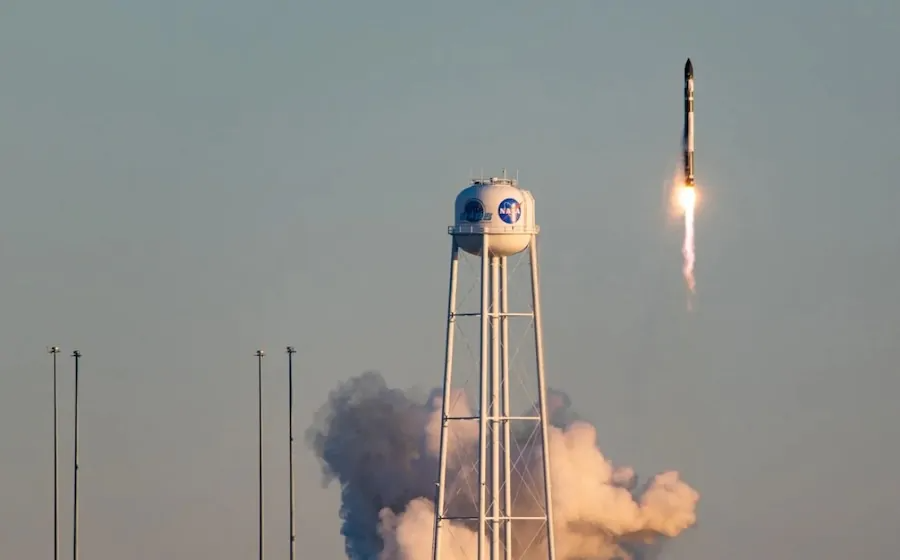
Rocket Lab has won a $190 million contract to carry out 20 hypersonic test launches with its HASTE vehicle under the MACH-TB 2.0 programme, in what the company describes as its largest launch contract to date. The agreement runs over four years and strengthens HASTE’s place inside the U.S. effort to accelerate hypersonic flight testing and adjacent advanced aerospace development.
HASTE is a suborbital variant of Rocket Lab’s Electron launch vehicle, adapted for high-speed test work rather than orbital insertion. That distinction matters. In the hypersonic sector, testing capacity has become almost as strategically important as the weapon designs themselves. Programmes cannot move at pace if there are too few launches, too little instrumentation, or too much time between test windows.
Rocket Lab has already conducted several HASTE missions since 2023, including work for U.S. government customers, and the new award effectively turns demonstrated launch performance into a larger production commitment. The contract also arrives at a moment when the U.S. and its allies are trying to reduce the cycle time between design, flight test, failure analysis, redesign, and another launch.
Cadence is now the product
That is the real industrial story. The market is no longer buying occasional one-off launches. It is buying cadence. A four-year block of 20 flights means Rocket Lab must hold together manufacturing throughput, launch-site readiness, supply-chain reliability, and enough engineering continuity to keep the missions moving.
For a company that also serves commercial and civil customers, that creates a balancing act between defence urgency and broader launch economics. The reward is significant: once test cadence becomes a programme dependency, the launch provider moves deeper into the customer’s development architecture.
Building a hypersonic test ecosystem
The broader supply-chain effect reaches beyond rockets. Hypersonic testing drives demand for telemetry, instrumentation, materials analysis, payload integration, range services, and post-flight data exploitation. In other words, the industrial base for hypersonics is not just missile production. It is the infrastructure that allows rapid iteration.
That is why the HASTE award matters. It adds capacity where many programmes still face friction, and it suggests that the U.S. is willing to treat test access as a production-scale requirement rather than a supporting service.