IN Brief:
- The Pentagon’s FY2027 request includes 85 F-35s in total, with 38 F-35As for the U.S. Air Force.
- The number supports industrial continuity for the programme, but it does not resolve the Air Force’s fighter-capacity problem.
- For aerospace manufacturing, the budget signal matters because F-35 output now spans record deliveries, a large backlog, and the follow-through from the Lots 18-19 production agreement.
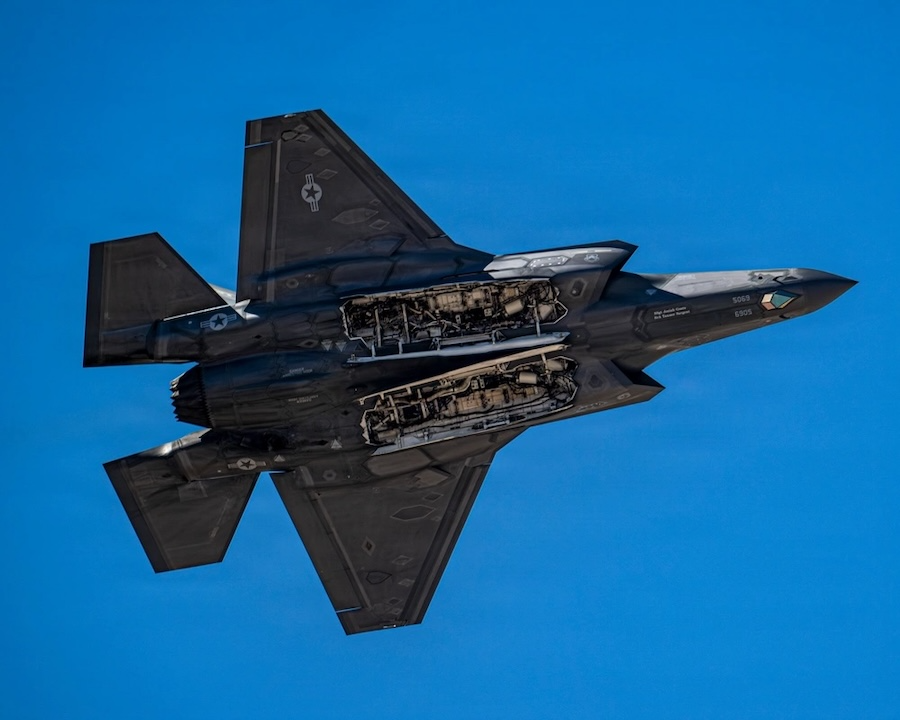
The Pentagon’s fiscal 2027 budget request includes funding for 85 F-35 fighters, with 38 F-35As allocated to the U.S. Air Force. That is enough to keep the programme at meaningful scale, but not enough to present the Air Force as being on a genuine fast-track rebuild of its fighter inventory.
For the production base, however, the request still matters. The F-35 is no longer a fragile line that depends on single-year political drama to remain credible. Lockheed Martin delivered a record 191 aircraft in 2025, and the programme entered 2026 with almost 1,300 production jets already delivered and a substantial backlog still to be worked through. Against that backdrop, 85 aircraft remains a strong signal of continuity.
The tension is therefore not whether the line survives. It is what the line is being asked to do. The Air Force wants modern combat mass. The wider programme must also support the Navy, Marine Corps, international partners, sustainment activity, and the flow of upgrades tied to newer software and propulsion improvements.
The line stays warm — but the burden grows
The manufacturing picture is shaped by more than annual quantity. Lockheed Martin and the Joint Program Office already finalised the Lots 18 and 19 production contract for up to 296 aircraft, giving the industrial base a larger planning horizon. That helps suppliers, final assembly, and long-lead ordering, but it also raises expectations around delivery discipline and sustainment performance.
In other words, the F-35 challenge is no longer simply building jets. It is building jets while upgrading software, supporting engines, holding down sustainment costs, and keeping international customers on schedule.
Industrial stability versus force-structure urgency
That is the split inside the 2027 request. Thirty-eight F-35As helps preserve industrial-base stability and keeps procurement moving, yet it also underlines how much of the Air Force budget is being pulled toward other priorities, from readiness recovery to next-generation programmes.
For manufacturers, the programme remains one of the few large combat-air outputs in the Western market with real scale. For operators, the debate is harsher: a stable line is useful, but a stable line does not automatically translate into a fast enough rebuild of combat mass.