IN Brief:
- Naval Group has offered its Blacksword Barracuda conventional submarine to Greece in response to a requirement for four new attack boats.
- The 3,000-tonne design combines Barracuda-family technologies with lithium-ion battery architecture, long-endurance deployment, and a wide weapon set.
- For industry, the offer will be judged not only on platform performance, but on local workshare, support depth, and the credibility of a long submarine build-and-maintain pipeline.
Naval Group has entered Greece’s next-generation submarine competition with its Blacksword Barracuda design, answering a requirement expected to replace four ageing Type 209 boats in Hellenic Navy service. The offer brings one of Europe’s newer conventional submarine products into a market where operational demands are high, procurement decisions are politically charged, and domestic industrial participation is becoming increasingly difficult to treat as an afterthought.
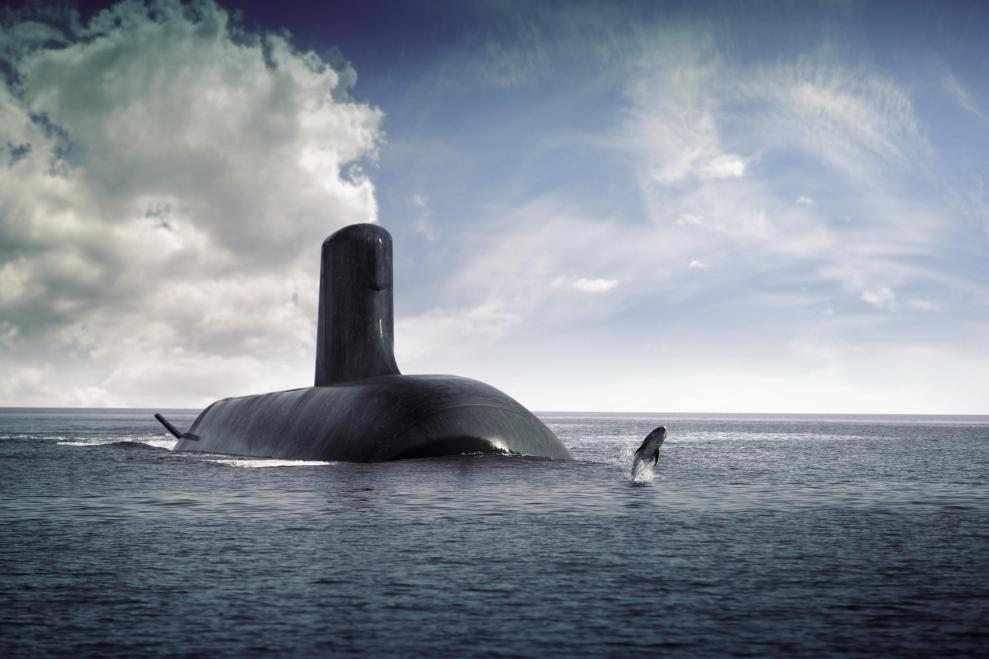
The Blacksword Barracuda sits at the heavier end of the conventional-submarine market. Naval Group presents it as a 3,000-tonne ocean-going boat derived from the Barracuda family, built around high endurance, acoustic discretion, a substantial weapon load, and the ability to conduct surveillance, strike, special operations, and coalition missions over extended ranges. Lithium-ion battery technology forms part of that pitch, reflecting a wider industry shift toward higher underwater endurance and faster energy management than older battery architectures could provide.
For Greece, platform capability is only part of the equation. The Hellenic Navy is looking at a replacement need shaped by long service lives, regional maritime pressure, and a requirement for credible deterrent value in the Eastern Mediterranean. A submarine purchase of this scale is also an industrial choice, locking in decades of maintenance, training, refit, combat-system support, and infrastructure dependency.
The industrial contest behind the platform contest
That is where Naval Group’s broader record becomes relevant. The company has already turned the Blacksword Barracuda into a contracted export line through the Dutch replacement programme, and it has spent recent years building a larger Greek industrial network through its Hellenic participation framework. For Athens, the question is whether that can be converted into a submarine offer with enough local content and sustainment value to satisfy domestic industry expectations as well as naval requirements.
Submarine programmes create a long supply chain footprint. Hull sections, combat systems, mast structures, propulsion elements, battery integration, cable harnesses, software support, dockyard infrastructure, crew training, and deep maintenance all need to be planned early if local industry is to benefit in more than a symbolic way. The prime’s ability to map those tasks credibly often matters as much as brochure performance.
Building submarines is a decades-long commitment
Conventional attack submarines also carry some of the harshest production pressures in defence manufacturing. Build schedules are long, tolerances are unforgiving, and any weakness in integration can ripple across trials, handover, and through-life support. Lithium-ion architectures add operational benefit, but they also require confidence in battery safety, thermal management, and support procedures over decades of service.
That makes Greece’s forthcoming submarine decision important well beyond fleet modernisation. It will shape the next phase of naval industrial co-operation in the region, determine how much high-value work can be anchored locally, and test whether European shipbuilders can turn export ambition into durable industrial presence.