IN Brief:
- France’s FDI frigate programme is moving toward a heavier missile fit, with the class expected to carry a deeper vertical-launch load.
- The change would materially increase magazine depth on a ship already central to French and Greek surface-combatant plans.
- Any uplift in launcher count feeds directly into production sequencing, combat-system validation, and retrofit planning across the class.
France is moving to give its FDI frigates a more substantial missile magazine, a shift that would sharpen the class’s air-defence credibility just as the programme pushes deeper into series production. For a surface combatant already marketed as a compact but high-end multi-role frigate, the move would be more than a paper upgrade: it would change how the ship is valued in escort, independent deployment, and saturation-threat scenarios.
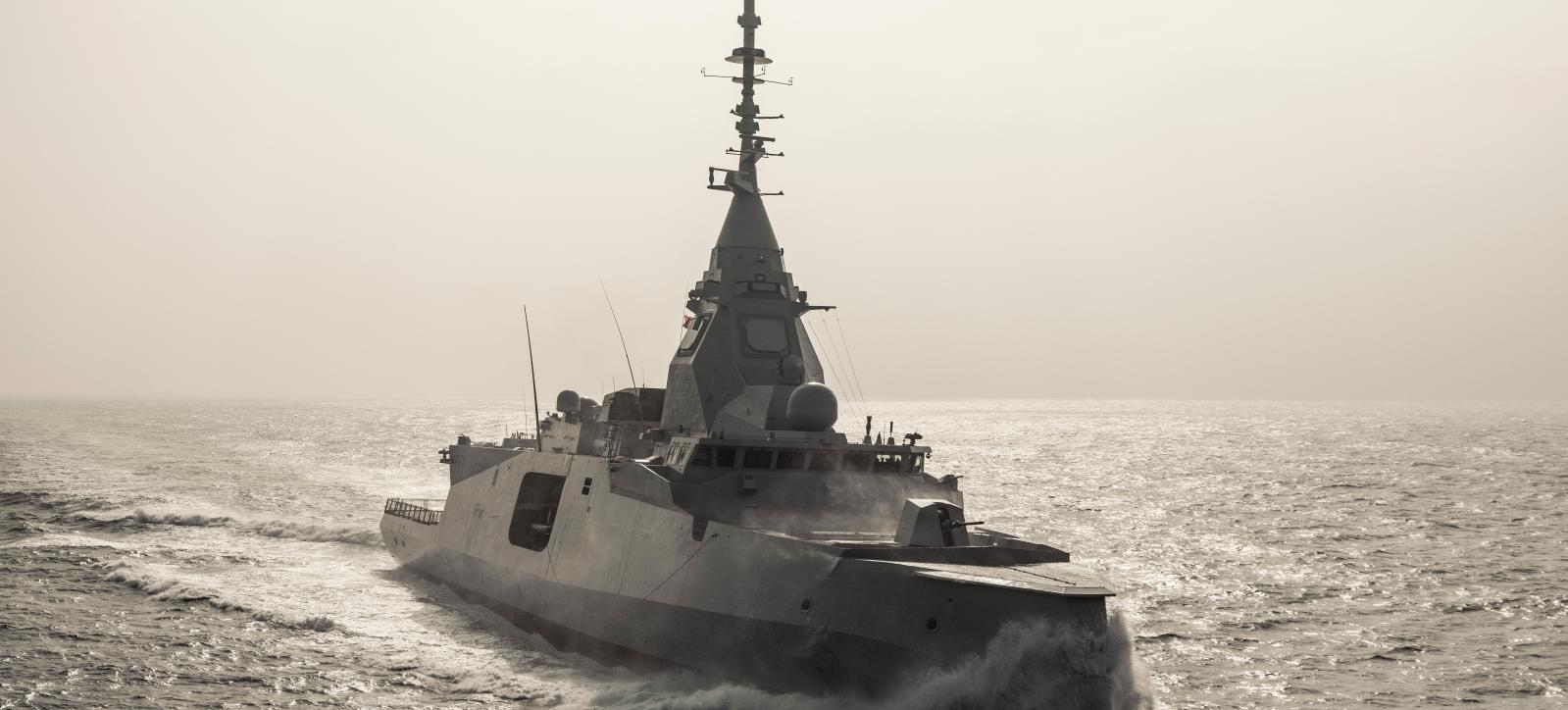
The FDI programme is already central to French naval renewal. Naval Group is building the ships in Lorient, with the fifth French unit now ordered and the wider series spanning French and Hellenic Navy requirements. The lead ship, Amiral Ronarc’h, has already entered sea trials, and the class combines a compact hull with digital architecture, Sea Fire radar, Aster-family air-defence missiles, anti-submarine systems, and a design intended to stay relevant against evolving high-end threats.
A deeper launcher fit would address one of the most obvious tensions in modern escort design: sensors and combat systems have advanced rapidly, but magazine depth still determines how long a ship can stay in the fight during a dense missile raid. In that sense, increasing the cell count is less about brochure prestige than about making the class more resilient under realistic naval load.
What the change means on the production line
A missile-capacity increase is rarely a simple last-minute insert. Even when the broader hull and combat-system architecture are already in place, more launcher cells can affect structural allocation, cable routes, cooling, software configuration, test programmes, and the sequence in which shipsets are integrated. That matters more when the same class is already being produced in multiple units for more than one navy.
Naval Group’s FDI line is no longer a single-ship exercise. It is a rolling production programme, and any weapons-fit change has to be absorbed without derailing yard rhythm, combat-system qualification, or delivery planning across the remaining ships.
Why the industrial angle matters now
The FDI is often described in capability terms — digital, cyber-secure, multi-role, compact, and heavily networked. All of that remains true. But once missile capacity becomes a live issue, the industrial story catches up quickly.
Magazine depth is a design choice, but it is also a production choice. France’s push to harden the FDI’s air-defence load points to a broader naval reality: ships that look balanced on paper increasingly need larger missile inventories in steel, wiring, and tested software before they look convincing at sea.