IN Brief:
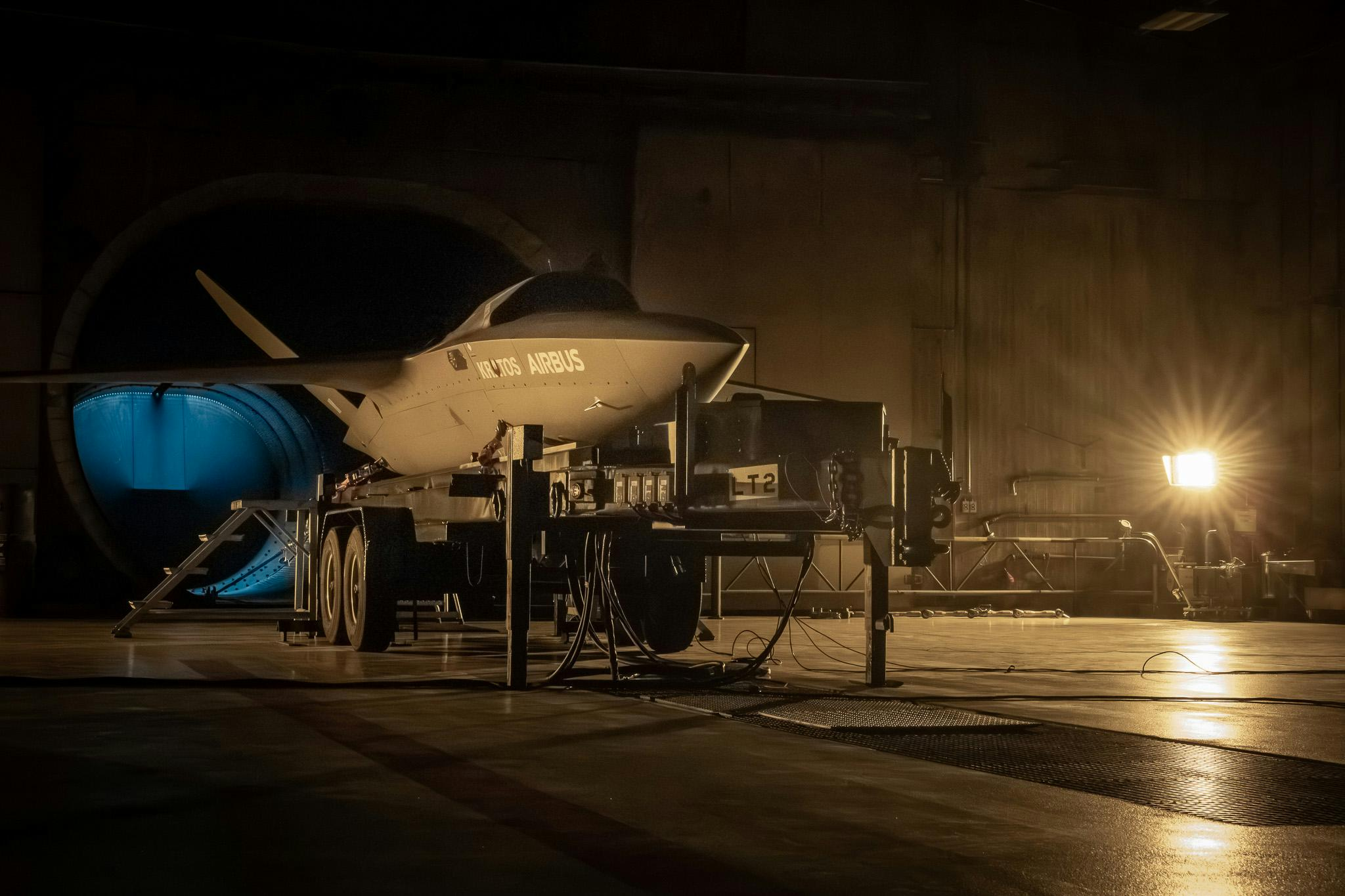
- Airbus is preparing two Kratos-built Valkyries in Manching for first flight later this year.
- The aircraft are being fitted with Airbus’ MARS mission system and autonomy layer for a German UCCA offer.
- The programme puts software sovereignty, mission integration, and affordable production mass at the centre of the industrial case.
Airbus is preparing two Kratos-built Valkyrie uncrewed combat aircraft in Manching for first flight later this year with a European mission system installed, advancing one of the clearest near-term routes into collaborative combat aircraft on the continent. The effort combines an existing air vehicle with Airbus’ MARS mission architecture and autonomy stack, allowing the programme to move faster than a clean-sheet design while still centring operational control in Europe.
That balance between speed and sovereignty is what gives the project its weight. European air forces want mass, persistence, and lower-cost combat capacity, but they also want control over mission logic, data flows, integration, and future upgrade paths. In that context, the aircraft itself is only part of the proposition. The mission system, autonomy layer, and teaming architecture increasingly decide where programme value sits.
Germany has been identified as the first intended operator, with the aircraft positioned as an uncrewed collaborative combat aircraft designed to work alongside crewed platforms. Airbus has already indicated that Eurofighter is expected to play a command role in that model, creating a more immediate industrial path for manned-unmanned teaming inside Europe’s current combat-air structure.
Software sovereignty is becoming a production issue
The industrial centre of gravity in programmes like this is shifting away from the airframe alone. Mission software, secure connectivity, autonomy management, validation, and sensor-to-shooter integration now account for a larger share of both complexity and strategic control. An aircraft can be assembled quickly, but a sovereign mission stack takes sustained engineering effort, test capacity, certification discipline, and a supply chain that can support rapid updates without destabilising the platform.
That changes the production model. Instead of treating collaborative combat aircraft as simple adjunct drones, manufacturers increasingly have to support them as software-defined systems with continuous integration demands. Ground testing, simulation, mission-data management, and electromagnetic resilience each become as relevant as final assembly.
Affordable mass still has to be manufactured
The programme has also been framed around scalability, and that point deserves scrutiny. Affordable mass has become a standard ambition in combat-air planning, but it only becomes meaningful when manufacturers can produce aircraft, integrate mission systems, support flight testing, and maintain sustainment costs at a level that allows volume procurement rather than boutique fleets.
That is why Manching matters. It is not simply where two demonstrators are being readied for flight. It is an early indicator of how Europe might assemble, missionise, and support a collaborative combat aircraft using a blended model of imported platform heritage and domestically controlled systems integration. If that approach holds, it offers a practical industrial route toward combat mass without waiting for a full new-aircraft programme to run its course.