IN Brief:
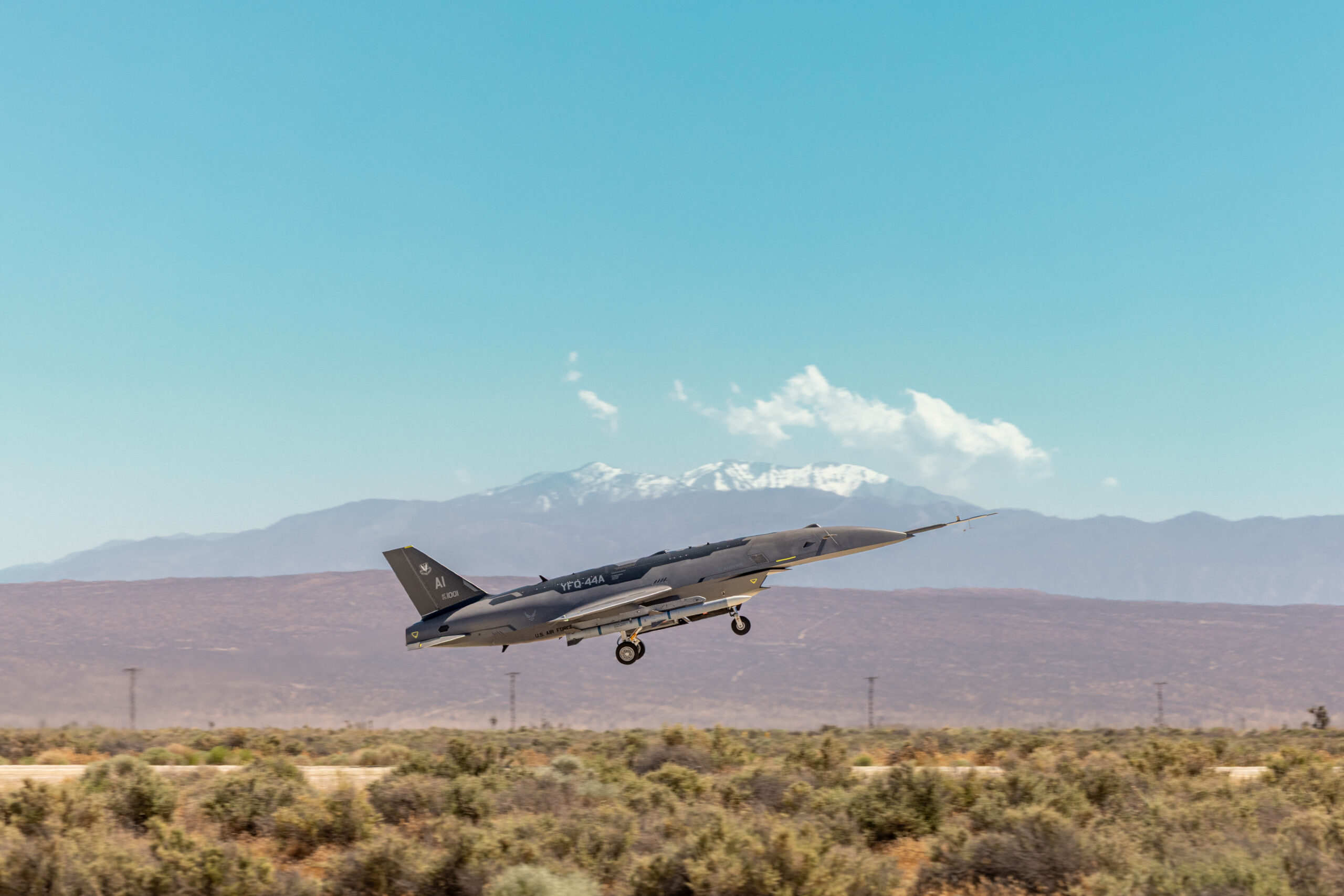
- Air Force operators have flown YFQ-44A sorties during a Collaborative Combat Aircraft exercise at Edwards.
- The exercise focused on deployment, sustainment, and operator-led tactics development alongside formal test activity.
- That changes the manufacturing conversation from prototype milestones to repeatability, turnaround time, and software-driven supportability.
The US Air Force’s latest Collaborative Combat Aircraft exercise has given the YFQ-44A a more operational test profile, with warfighters rather than specialist test crews taking the lead in daily activity.
At Edwards Air Force Base, the service’s Experimental Operations Unit worked with the 412th Test Wing to run sorties using the YFQ-44A as part of a wider effort to develop tactics, procedures, and support routines for future CCA operations. Air Force personnel handled end-to-end operations during the exercise, while the event itself focused on refining the operational and logistical procedures needed to deploy and sustain the aircraft in a contested environment.
That shifts the programme into a more revealing phase. Design reveal, autonomy software, and first-flight milestones remain important, but force structure only changes when operators can launch, recover, maintain, arm, and regenerate aircraft at tempo. The Edwards activity puts that layer of work at the centre.
The programme is moving from concept proof to repeatability
Operator-led experimentation shortens the feedback loop between design teams and users. Every turnaround cycle, maintenance task, procedural bottleneck, and software adjustment becomes part of the development record. For industry, the question is no longer whether the aircraft can fly, but whether it can be built and supported as a system rather than displayed as a prototype.
That shifts pressure onto ground support equipment, line-replaceable components, maintenance accessibility, software update cadence, and parts availability. If CCA is expected to deliver scale, build quality and supportability have to move in step with autonomy.
Sustainment will shape the economics of mass
That is especially true in the lower-cost uncrewed segment, where the case for mass depends as much on upkeep as on unit price. Aircraft that are nominally affordable but slow to turn, awkward to maintain, or heavily dependent on scarce specialists can quickly erode their own production logic.
The YFQ-44A exercise does not settle those questions, but it shows the programme working through them early. For the US defence industrial base, that is a stronger indicator of maturity than another design milestone alone.