IN Brief:
- The UK MoD has signed £36m of contracts with Thales for hundreds more Lightweight Multirole Missiles.
- Deliveries will begin in the coming months and continue through 2026.
- The Belfast-built missile order reinforces the industrial pressure behind counter-drone operations and short-range air defence replenishment.
The UK Ministry of Defence has signed £36m of contracts with Thales for hundreds more Lightweight Multirole Missiles, adding fresh production demand to one of Britain’s most visible short-range air defence weapons.
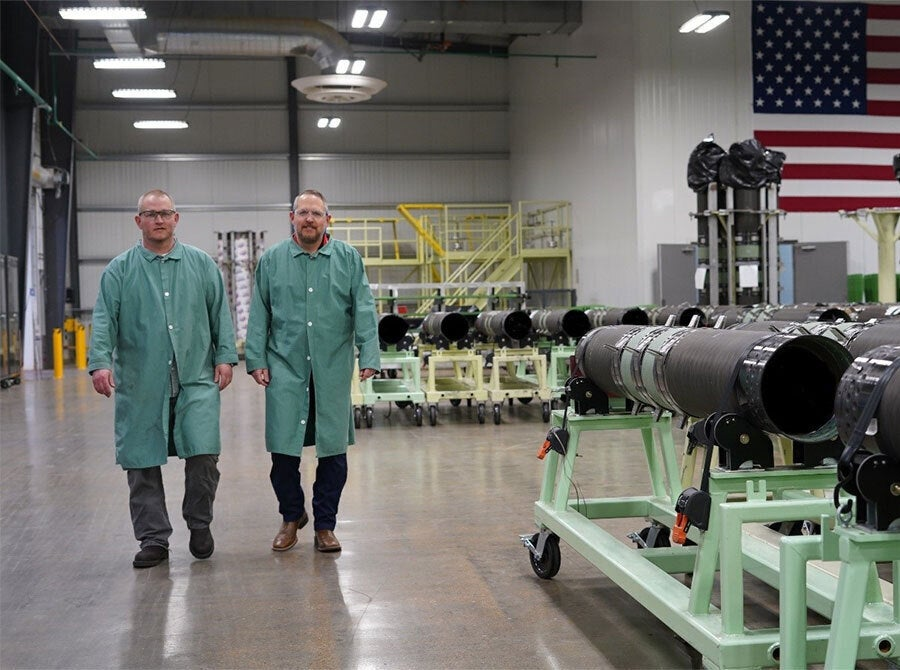
Deliveries will begin in the coming months and continue through 2026. The missiles are intended to strengthen UK stockpiles while supporting protection of British personnel, bases, and partners in the Middle East and beyond. Around 700 skilled jobs are supported at Thales in Belfast, where the missiles are designed and manufactured.
The LMM, known in Royal Navy use as Martlet, is a compact precision missile used across several roles. It has been integrated with Wildcat helicopters and short-range air-defence systems, and it has become increasingly important for counter-UAS work. Its attraction lies in size, versatility, and the ability to engage low-cost aerial threats without relying only on larger and more expensive interceptors.
Counter-drone warfare is becoming an ammunition-output problem. A launcher or sensor package is useful only if enough effectors are available for repeated engagements. Drone attacks can arrive in volume, at short warning, and at relatively low cost to the attacker. That shifts the burden onto missile production lines, energetic materials, seekers, guidance sections, launch canisters, test equipment, and trained assembly labour.
Belfast gives the order a clear UK manufacturing base. LMM production depends on propulsion, warhead components, guidance electronics, optics, control surfaces, casings, safety systems, test equipment, and packaging. Any acceleration in deliveries places pressure across that network. Stockpile resilience depends on whether sub-tier suppliers can keep pace with prime-level contract announcements.
The order also builds on the production pressure explored in Rapid Sentry deployment puts UK counter-drone production in focus. Short-range air defence is no longer an occasional contingency for deployed forces. It is becoming a recurring demand signal for weapons that can defeat drones, helicopters, light aircraft, and fast maritime targets while remaining deployable on mobile or expeditionary platforms.
The wider market is moving in the same direction. NATO countries are building layered counter-UAS architectures, Middle Eastern deployments continue to demand base and force protection, and Ukraine has shown how quickly drone threats can consume interceptors, munitions, and electronic-warfare equipment. Militaries need sophisticated systems, but they also need production depth and replenishment routes that can survive sustained use.
The cost-exchange problem remains uncomfortable. Firing missiles at cheap drones is rarely ideal, but it can be necessary when the protected asset is a base, aircraft, ship, radar site, fuel store, or deployed force. Directed-energy systems, guns, jammers, and interceptor drones may reduce some demand, but they will not remove the need for compact missiles able to deliver reliable kinetic defeat. LMM therefore retains a role inside layered defence rather than being displaced by any single counter-UAS technology.
Repeated surge behaviour carries manufacturing risk. Defence production lines can respond to single orders, but sustained demand requires longer-term confidence. Suppliers need to know whether to invest in tooling, skilled labour, materials, and additional capacity. Governments need contracts that do more than replace what has already been fired. Stockpile plans must anticipate higher consumption and faster adaptation by drone operators.
The contract also sits inside the UK’s broader defence-industrial policy. Missile production has become a test of whether national procurement can support operational urgency and domestic economic resilience at the same time. The Belfast facility is not only a missile plant; it is part of the UK’s argument that defence spending can generate advanced manufacturing capacity at home.
Delivery tempo will now become the operational measure. A contract for hundreds of missiles is valuable only when rounds are delivered, accepted, stored, integrated, and available to units. Counter-drone defence is unforgiving of paper inventory. The industrial base must turn contract value into usable stock, quickly enough to keep deployed systems supplied and relevant.