IN Brief:
- MBDA has completed a second MICA NG development firing from Rafale.
- The test validated the infrared seeker and deployment chain in supersonic flight conditions.
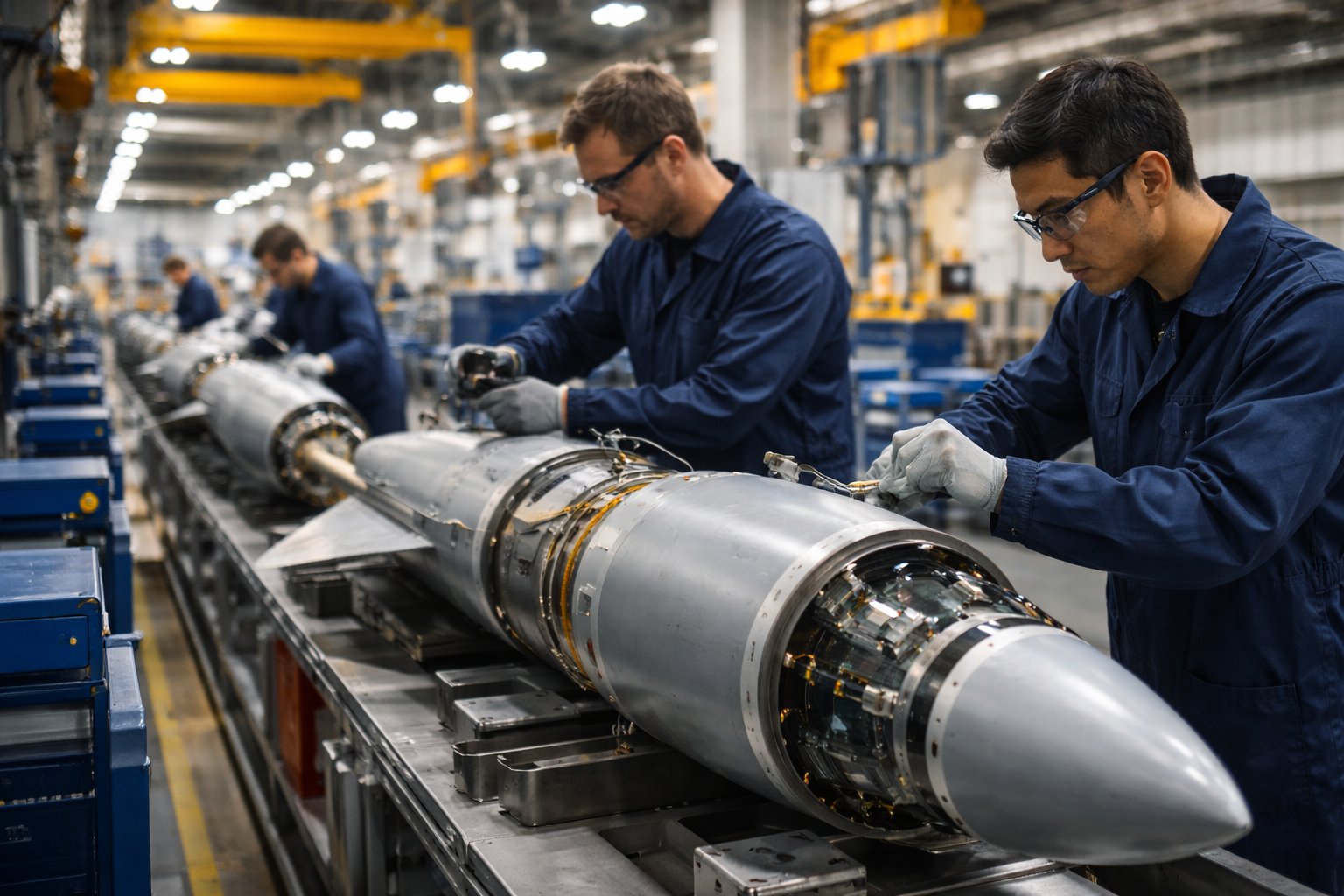
- The programme highlights the manufacturing complexity behind modern air-to-air missile refresh cycles.
MBDA has completed a second development firing of the MICA NG air-to-air missile from a Rafale, advancing qualification work on the next-generation weapon and its integration with the French fighter.
The firing took place at the DGA Mediterranean test site and was the first MICA NG shot from a supersonic flight configuration. It evaluated the missile’s infrared seeker under demanding aerodynamic and thermal conditions, while also validating the full infrared deployment chain from aircraft release to missile operation. A previous Rafale firing was completed in June 2025, and the latest event extends the flight-test evidence needed before qualification and operational entry.
The MICA NG refreshes a weapon family already central to French and export Rafale operations. It is designed for air-to-air combat against aircraft, helicopters, drones with low infrared and electromagnetic signatures, stealthier combat aircraft, and manoeuvrable cruise missiles. Through VL MICA NG, the missile family also supports ground and naval air-defence applications, giving the programme relevance beyond fighter aviation.
Air-to-air missile modernisation is a full manufacturing and systems-engineering exercise, rather than a simple seeker replacement. MICA NG brings updated guidance, new electronics, improved propulsion, software changes, and aircraft mission-system integration. Each change requires qualification across thermal performance, aerodynamic behaviour, launch safety, storage conditions, environmental stress, and compatibility with existing launcher and aircraft interfaces.
The supersonic flight configuration is especially important for production confidence. Releasing a missile from a fast-moving fighter exposes the weapon to strong airflow, vibration, heating, and separation loads. The missile must leave the aircraft cleanly, orient itself correctly, deploy its systems, acquire or continue tracking its target, and transition into powered flight without compromising the aircraft. Those conditions place heavy demands on structures, control surfaces, seeker windows, electronics, and flight software.
The infrared seeker work also reflects a broader shift in air combat. Targets are becoming harder to detect, track, and classify. Small drones may carry weak thermal signatures, cruise missiles can fly low and fast, and combat aircraft increasingly use shaping, electronic warfare, and heat-management techniques to reduce detectability. Missile seekers therefore need greater sensitivity, better discrimination, and more powerful onboard processing. That pushes manufacturers toward advanced sensors, cooling systems, electronics packaging, and embedded software.
Production repeatability will decide how effectively the weapon can move from development into fleet use. A missile seeker that performs well in trials must be manufacturable at scale with consistent calibration and quality control. Air-to-air missiles are stored for years, transported, loaded, flown, removed, maintained, and eventually fired under conditions far removed from a laboratory. The manufacturing system must deliver long-term reliability, not only peak performance in a controlled test event.
MICA NG also supports Europe’s drive to strengthen sovereign complex-weapons capacity. French airpower is built around a national combat aircraft and missile ecosystem, with Rafale, MICA NG, Meteor, and naval or ground-launched variants supporting an industrial base that spans aircraft integration, seekers, propulsion, electronics, and test infrastructure. That model offers strategic value at a time when allied demand for missiles is rising faster than many production lines were designed to absorb.
The aircraft integration burden is growing across the sector. The F-35B TR-3 retrofit entering the operational fleet shows how weapons capability is increasingly tied to aircraft computing, software baselines, and mission-system upgrade cycles. Rafale and MICA NG operate within the same broader pattern. The missile cannot be separated from the aircraft architecture that carries, cues, releases, and supports it.
MBDA’s latest firing also strengthens its position in a crowded air-defence and air-to-air missile market. Customers are looking for weapons able to engage a broader target set, from conventional aircraft to drones and cruise missiles. Missile families that can serve fighter aircraft, ground launchers, and naval systems offer production volume and logistical commonality, although each launch environment still requires specific qualification and support arrangements.
Commonality can reduce cost, but it does not remove complexity. Fighter-launched missiles, naval vertical-launch interceptors, and ground-based effectors may share design elements, yet each faces different mechanical, thermal, software, and command requirements. The industrial skill lies in reusing enough of the missile architecture to improve affordability while adapting enough to meet each operational environment.
The latest MICA NG firing moves the programme further through that demanding qualification pathway. It also reinforces a wider reality for European missile manufacturing: seeker production, high-speed flight testing, software integration, and repeatable quality control are now just as important as range and manoeuvrability.