IN Brief:
- Volklec, Ricardo, and Hyperbat will develop AMBERS, a modular battery platform for automotive and defence applications.
- The system is built around Volklec’s high-power 21700 cells and a configurable battery pack architecture.
- Prototype samples are scheduled for April 2028, supporting a sovereign UK route for demanding electrified platforms.
Volklec has secured a government-backed role in the Advanced Modular Battery System programme, known as AMBERS, giving the UK battery cell manufacturer a route into a modular battery platform aimed at specialist automotive and defence customers.
The programme brings together Volklec, Ricardo, and Hyperbat, a Unipart company, with support from the Battery Innovation Programme, delivered by Innovate UK and backed by the Department for Business and Trade. AMBERS will develop a scalable modular battery system for hybrid and electric applications where power density, packaging flexibility, and domestic supply are central requirements.
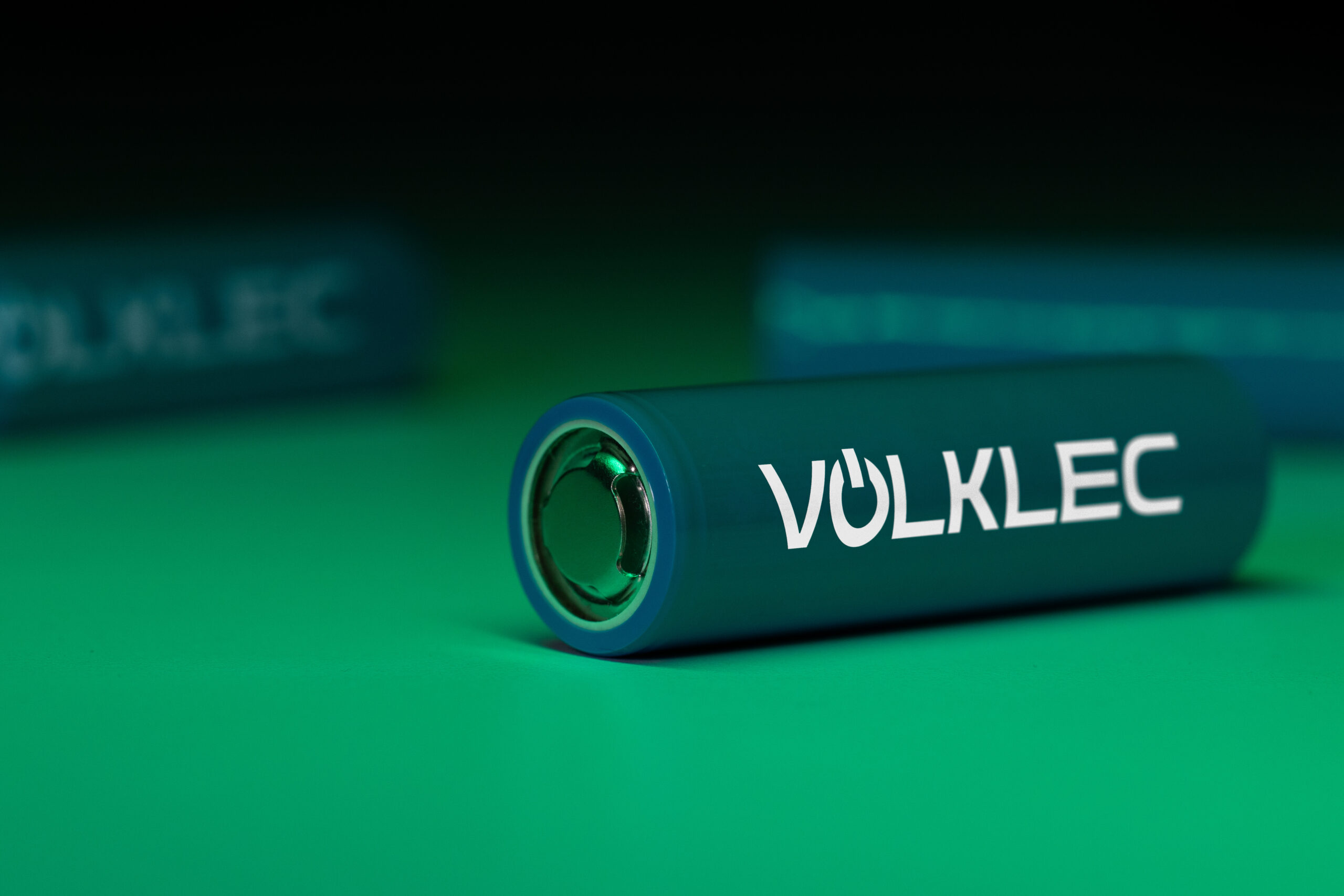
At the core of the programme is a modular battery pack engineered around Volklec’s high-power 21700 cells and a configurable block architecture. Each pack will contain between one and five modules, with 1.8kWh of energy capacity per module. The design incorporates cells and battery management systems and can be scaled to different voltage, power, packaging, integration, and qualification needs.
The defence applications include mobility platforms, auxiliary power, unmanned ground vehicles, unmanned aircraft support systems, high-power mobile equipment, and other compact systems where customers need robust, scalable batteries without building every layer of cell, pack, cooling, BMS, and integration capability themselves.
Defence electrification is no longer confined to future vehicle concepts. Platforms now need compact power for silent watch, sensors, electronic warfare, mobile command posts, autonomous systems, hybrid propulsion, and distributed charging. In those applications, the battery becomes a mission subsystem rather than a replaceable commodity.
That shift creates a supply-chain problem for specialist platform developers. Battery systems depend on cell chemistry, cell production, pack design, battery management electronics, thermal control, enclosure design, safety testing, and platform integration. Many defence and high-performance vehicle programmes do not have the resources or time to develop every layer internally.
Volklec’s role gives AMBERS a sovereign cell pathway. The company is developing UK production of 21700 lithium-ion cells, including high-power variants aimed at demanding applications. Cell provenance, process visibility, allocation security, and long-term supply continuity are becoming procurement factors alongside performance.
Ricardo brings systems engineering, battery design, and thermal-management expertise, while Hyperbat adds pack production capability. The consortium therefore covers the route from cell to pack to platform integration, which is often where battery projects encounter delays. Strong cell performance alone will not satisfy demanding platforms if the pack cannot manage heat, vibration, safety, diagnostics, and maintenance under harsh operating conditions.
The programme follows earlier warnings that battery rules and supply exposure could create UK defence risk. AMBERS offers a product-led response: a domestic route linking cells, pack architecture, engineering, and production into a usable platform for regulated customers.
The UK has struggled to convert battery ambition into resilient production capacity. Much of the national debate has centred on passenger EV volume, but defence and specialist automotive users occupy a different part of the market. They require lower-volume, higher-value systems with flexible packaging, rigorous qualification, high discharge performance, and trusted supply.
AMBERS is therefore not competing purely on gigafactory scale. Its value sits in the demanding middle ground where cells, battery management, cooling, safety cases, mechanical integration, and manufacturing have to meet platform-specific requirements. That plays to customers who need a credible domestic module without carrying the full cost and risk of battery-system development.
The engineering work will be substantial. Defence batteries face shock, vibration, water ingress, dust, thermal extremes, electromagnetic compatibility requirements, transport safety rules, long storage periods, and irregular load cycles. UGVs and UAS support systems may demand high discharge bursts, field charging, and operation in poorly controlled maintenance environments.
Prototype samples are scheduled for April 2028. Early engagement with customers will shape voltage ranges, packaging envelopes, communications interfaces, cooling methods, safety cases, qualification routes, and support expectations. The more modular the architecture becomes, the more attractive it will be to programmes working across different platform types.
AMBERS gives the UK a practical battery industrial pathway with defence relevance. It links domestic cells, pack manufacturing, and engineering integration in a way that addresses a real bottleneck for electrified and autonomous platforms. The route to defence electrification will depend less on slogans about sovereignty and more on whether programmes like this can turn chemistry, electronics, packaging, and production into qualified hardware.