IN Brief:
- The Novel Autonomy and Robotics competition offers more than £1 million across two planned stages.
- Initial awards of up to £60,000 will support work at technology-readiness levels one and two.
- Successful concepts must eventually cross into representative testing, manufacturable hardware, and funded programmes.
UK Defence Innovation has opened a competition for novel autonomy and robotics concepts, directing more than £1 million towards technologies that remain below conventional prototype maturity.
Run on behalf of the Defence Science and Technology Laboratory, the competition seeks disruptive ideas for autonomous systems operating across land, sea, and air. Phase one carries a budget of £600,000, with individual proposals eligible for awards of up to £60,000.
A second stage is expected to provide another £600,000 for selected concepts, subject to progress and programme decisions. Applications close on 11 August 2026 following a launch webinar on 20 July.
The modest size of each initial award reflects the maturity being targeted. Projects are expected to sit at technology-readiness levels one or two, where work may consist of scientific principles, algorithms, novel sensing, modelling, control methods, or early laboratory evidence.
Larger defence programmes generally favour systems with defined schedules, representative demonstrations, and credible integration routes, while private investment often looks for products with a visible commercial market. Enabling technologies can struggle between academic research and a complete platform.
Autonomous equipment is assembled from many of those elements. Navigation without reliable satellite signals, perception in poor weather, collaborative control, low-power computing, resilient communications, and safe human-machine interaction all require development before they can be placed on a vehicle.
Funding technologies separately widens participation beyond established platform manufacturers. A small software company or university spin-out may possess a strong method for terrain understanding or sensor fusion without the capital, facilities, or personnel needed to build an entire uncrewed ground vehicle.
The technical transition becomes harder once laboratory work meets real hardware. Algorithms trained on recorded data must run on available processors, within power and thermal limits, while handling dust, rain, vibration, saltwater, interference, incomplete information, and deliberate deception.
Components selected for early research may be unsuitable for military production. Commercial cameras can disappear from the market, processors may be subject to export controls, and prototype circuit boards may rely on manual assembly that cannot support larger quantities.
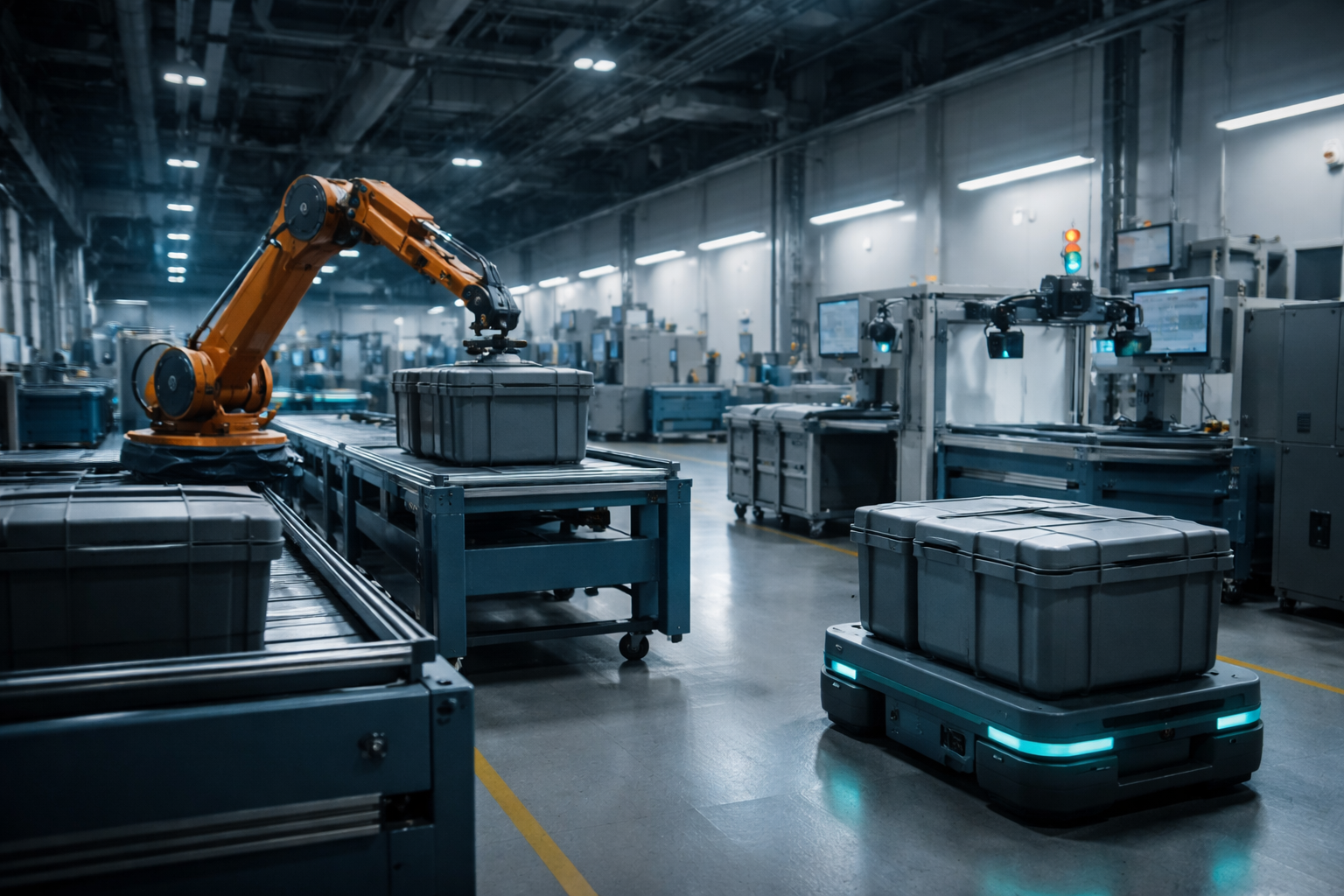
Manufacturing input is therefore useful long before the design appears complete. Engineers can identify scarce components, awkward assembly, excessive calibration, poor maintainability, and structures that require costly tooling while changes remain relatively inexpensive.
Multi-domain ambitions may encourage reusable technology, particularly in navigation, health monitoring, communications, and control software. Common interfaces could allow a processor, sensor, or autonomy module to move between several vehicles without complete redesign.
Air, land, surface, and underwater platforms still operate under very different constraints. Weight and power dominate small aircraft, terrain and shock affect ground robots, while underwater systems contend with pressure, corrosion, and extremely limited communications.
Programme teams will have to separate genuinely portable technology from concepts described broadly to match the competition. A useful common algorithm may still require different sensors, processors, safety evidence, and environmental qualification in each domain.
Britain’s defence-autonomy activity has produced numerous demonstrations, although the route from trial to supported equipment remains inconsistent. A promising prototype can stall without a customer, acquisition budget, safety case, training system, or organisation responsible for through-life support.
Connecting successful projects with programme teams early can reduce that gap. Access to representative data, test ranges, security advice, users, integrators, and environmental facilities may prove more valuable than the grant alone.
Intellectual-property arrangements will also shape later adoption. Small developers need enough control to attract investment, while government customers and prime contractors require confidence that technology can be supported if the original team changes direction.
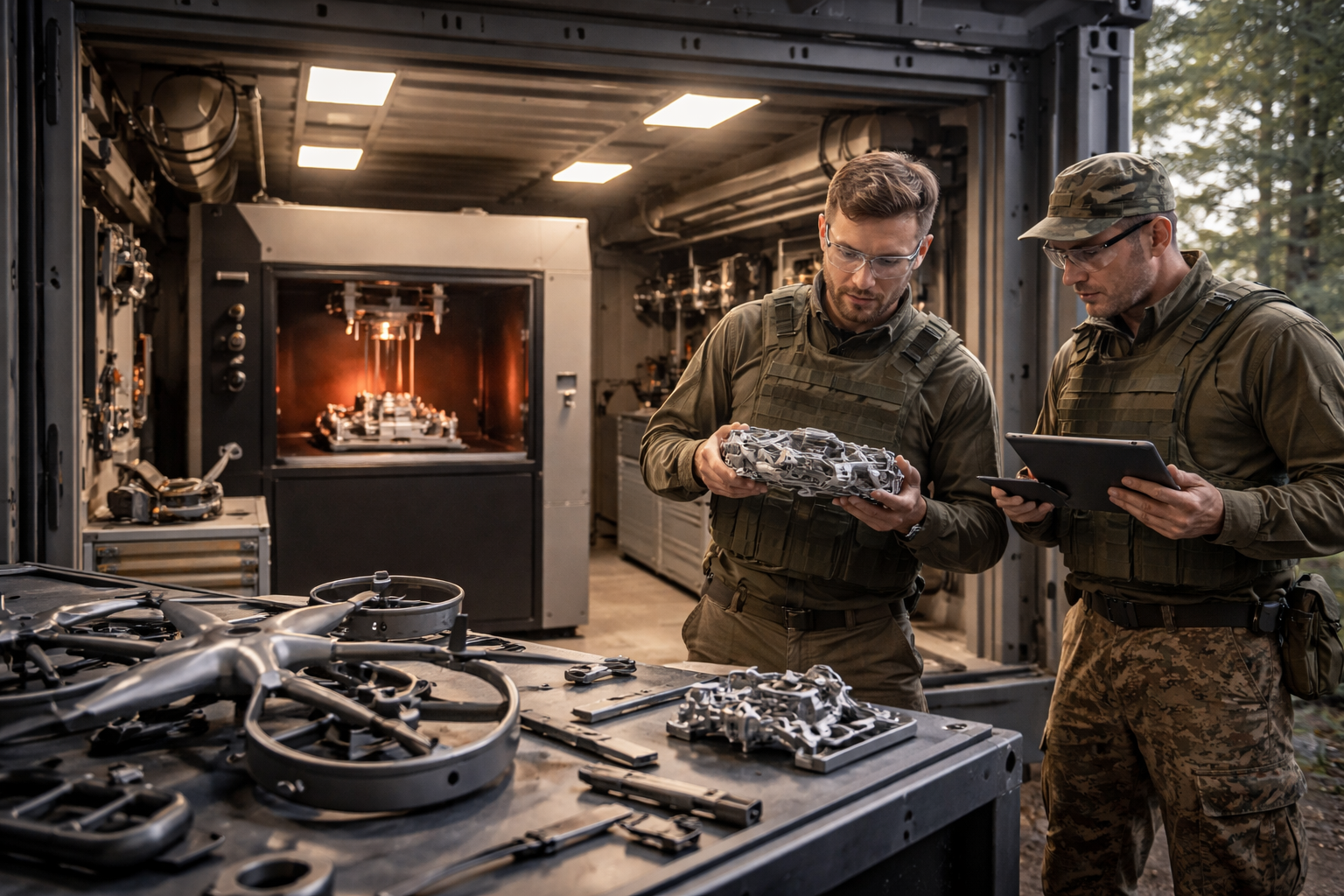
Low-cost, scalable systems are receiving greater attention as uncrewed vehicles are consumed, damaged, and modified rapidly during operations. Customers increasingly expect equipment that can be built in batches, repaired locally, and updated without returning every unit to its manufacturer.
Those expectations favour modular electronics, open interfaces, replaceable payloads, and manufacturing processes able to absorb design change. They conflict with conventional acquisition systems that freeze configurations early and require long qualification cycles for each alteration.
Advanced uncrewed aircraft programmes show the eventual industrial destination. Indonesia’s planned participation in KIZILELMA production and support combines a mature autonomous platform with export configuration, local workshare, and long-term manufacturing arrangements.
The British competition operates at the opposite end of that path, before platform selection and before much of the enabling technology has left the laboratory. Its strongest projects will need a credible sequence of experiments rather than inflated claims of rapid deployment.
Failure can provide useful evidence at this stage. Discovering that a sensing method cannot operate in rain or that an algorithm requires excessive computing power prevents larger sums being committed later.
Success should be measured through movement into representative testing, integration, and funded development rather than the number of attractive demonstrations produced. Technologies left without a transition route will add to an already crowded collection of isolated autonomy projects.
Britain has substantial research expertise in robotics, artificial intelligence, sensing, and control. Turning that work into fielded systems requires a continuous industrial pipeline joining research, prototyping, manufacture, qualification, procurement, and support.
The competition strengthens the beginning of that pipeline. Its value will emerge when viable concepts are carried forward into equipment that can be manufactured repeatedly and maintained under military operating conditions.