IN Brief:
- Leonardo and Baykar have completed live trials involving the M-346 and Bayraktar KIZILELMA.
- The K-SWARM work tested autonomous formation activity, data exchange, and pilot command of unmanned assets.
- The trials point to new industrial requirements for training aircraft, autonomy software, datalinks, and collaborative combat systems.
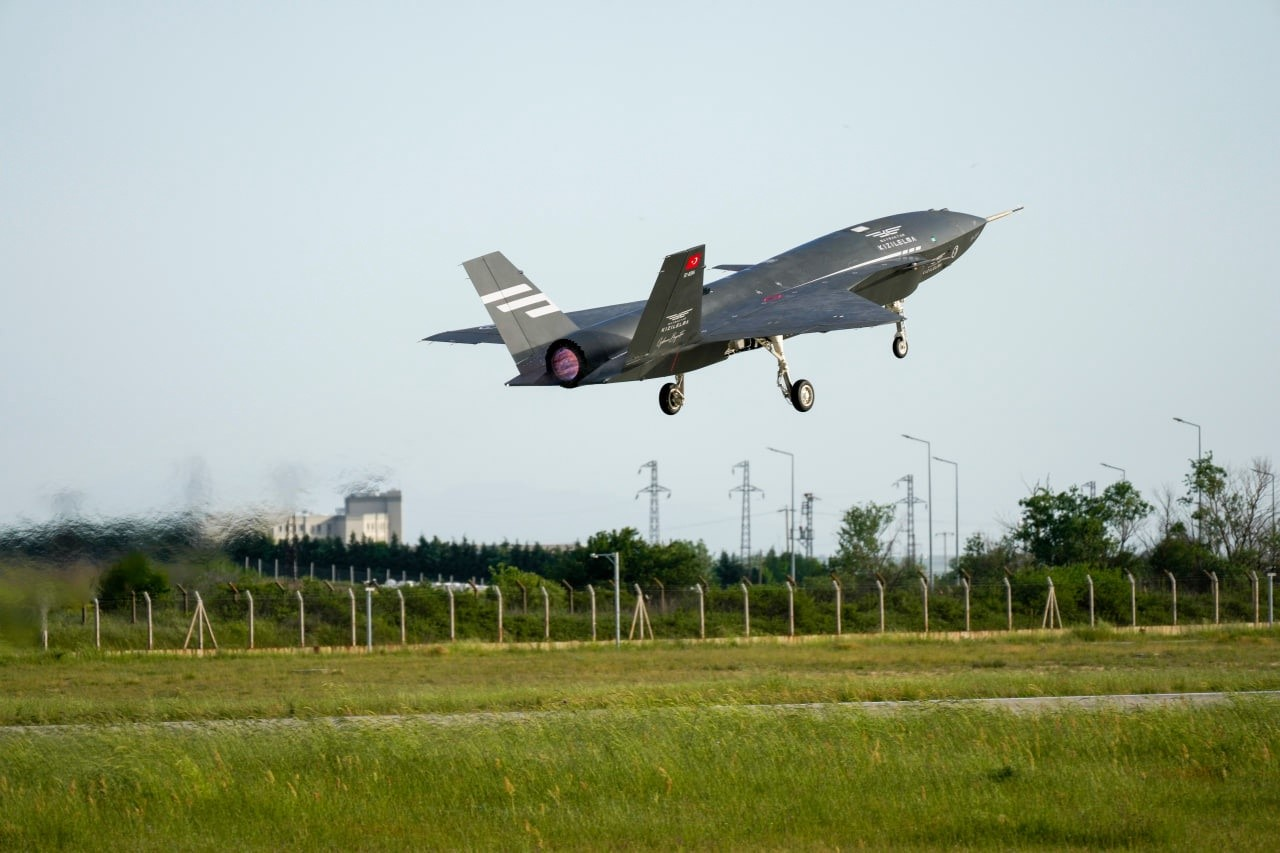
Leonardo and Baykar have completed live K-SWARM trials involving the M-346 aircraft and Bayraktar KIZILELMA unmanned fighter, marking a practical step in crewed-uncrewed teaming between European and Turkish aerospace manufacturers.
The trials took place at Baykar’s test facilities in Çorlu and involved autonomous formation activity, data exchange, and pilot command of unmanned aircraft from a crewed platform. Leonardo’s M-346 FA, an Italian Air Force T-346A chase aircraft, and Baykar’s KIZILELMA unmanned fighter were used during the activity.
Crewed-uncrewed teaming has spent years moving through concept studies, simulation environments, and future-combat-air presentations. Live trials expose the engineering burden behind the language. Aircraft must exchange data securely, maintain predictable behaviours, interpret commands, avoid creating excessive pilot workload, and operate within a command structure that military users can trust.
The M-346 occupies a useful position in that transition. Developed as an advanced jet trainer and light-combat aircraft, it can also serve as a testbed and airborne command node for collaborative combat-air concepts. That gives Leonardo a route into teaming architectures without waiting for next-generation fighter programmes to mature.
KIZILELMA brings Baykar’s unmanned combat-air ambitions into the partnership. The Turkish company has built a strong export position in uncrewed systems, and KIZILELMA moves its portfolio further into jet-powered, higher-performance unmanned aircraft. The pairing links an established European aircraft manufacturer with a Turkish company that has moved rapidly from tactical drones into more advanced combat-air development.
For manufacturers, the trial highlights where the next production pressures will fall. Collaborative combat aircraft require reliable autonomy hardware and software, secure datalinks, flight-control integration, sensor fusion, mission planning tools, electronic protection, and certification processes able to handle systems with greater autonomy. The airframe is only one part of the industrial workload; software assurance and upgrade discipline may become more demanding than structures or propulsion.
Aerospace production has traditionally been built around long cycles, strict certification, and stable configurations. Autonomy development tends to move faster, with iterative software updates and more frequent operational feedback. Crewed-uncrewed teaming forces those cultures into the same programme. Airframes, avionics, mission software, and tactics can no longer evolve at entirely separate speeds.
The same shift is already visible in rotary-wing work, where helicopters are being linked with drone interceptors and autonomous air systems. Manned platforms are increasingly being recast as controllers, coordinators, or launch nodes for unmanned effects, rather than operating as stand-alone assets.
The training dimension may become equally important. If combat pilots are expected to supervise unmanned aircraft, manage swarms, and direct autonomous behaviours, advanced trainers will need to reproduce that complexity. Aircraft such as the M-346 could become live development platforms for tactics, autonomy, and human-machine teaming, as well as preparing pilots for frontline aircraft.
Export markets will watch this area closely. Many air forces cannot afford large fleets of high-end combat aircraft, yet may see value in combinations of crewed platforms and unmanned assets. If K-SWARM matures into an exportable architecture, future competitions could shift from aircraft sales toward collaborative air-combat systems combining platforms, autonomy, training, and sustainment.
The barriers remain significant. Secure communications in contested environments are difficult to guarantee. Autonomous behaviour must be predictable enough for pilots and commanders to trust. Certification, safety, export controls, and rules of engagement must evolve alongside the technology. Manufacturing systems must also support rapid software upgrades without grounding aircraft for long periods.
Leonardo and Baykar have moved the work from concept toward practical integration between aircraft, autonomy, and operators. The competitive battleground in combat air is widening beyond who builds the aircraft. Increasingly, it will include who controls the teaming architecture around it.