IN Brief:
- Thales Australia has unveiled the Bushmaster Mulga 5.6 utility variant.
- The vehicle is configured for sensors, communications, counter-UAS systems, and precision effectors.
- Protected mobility manufacturing is moving toward modular mission-systems integration.
Thales Australia’s Bushmaster Mulga utility variant points to a changing role for protected mobility vehicles, with survivability now tied as much to sensors, electronic systems, and payload flexibility as to armour and automotive performance.
The Bushmaster has long been associated with protected troop movement, but the Mulga 5.6 variant pushes the family toward a more configurable battlefield role. The displayed vehicle has been shown with equipment associated with sensing, communications, electronic warfare, counter-UAS work, and precision effectors, reflecting a shift in which protected mobility platforms are being asked to operate as distributed mission nodes rather than simple carriers.
For vehicle manufacturers, this changes the production problem. Blast protection, mobility, and crew protection remain essential, but customers increasingly expect vehicles to accept radars, cameras, jammers, remote weapon stations, digital displays, data links, electronic-warfare payloads, and command equipment. Those additions affect power generation, cooling, electromagnetic compatibility, weight distribution, crew ergonomics, structural mounting points, cabling, software integration, and sustainment.
Mulga’s export-friendly configuration adds another layer. Left-hand drive, improved access, digital displays, vehicle monitoring, and modular equipment options can make the variant easier to adapt for different customers, but they also require disciplined configuration management. A vehicle family intended for multiple markets needs enough flexibility to meet local requirements without fragmenting production into too many bespoke builds.
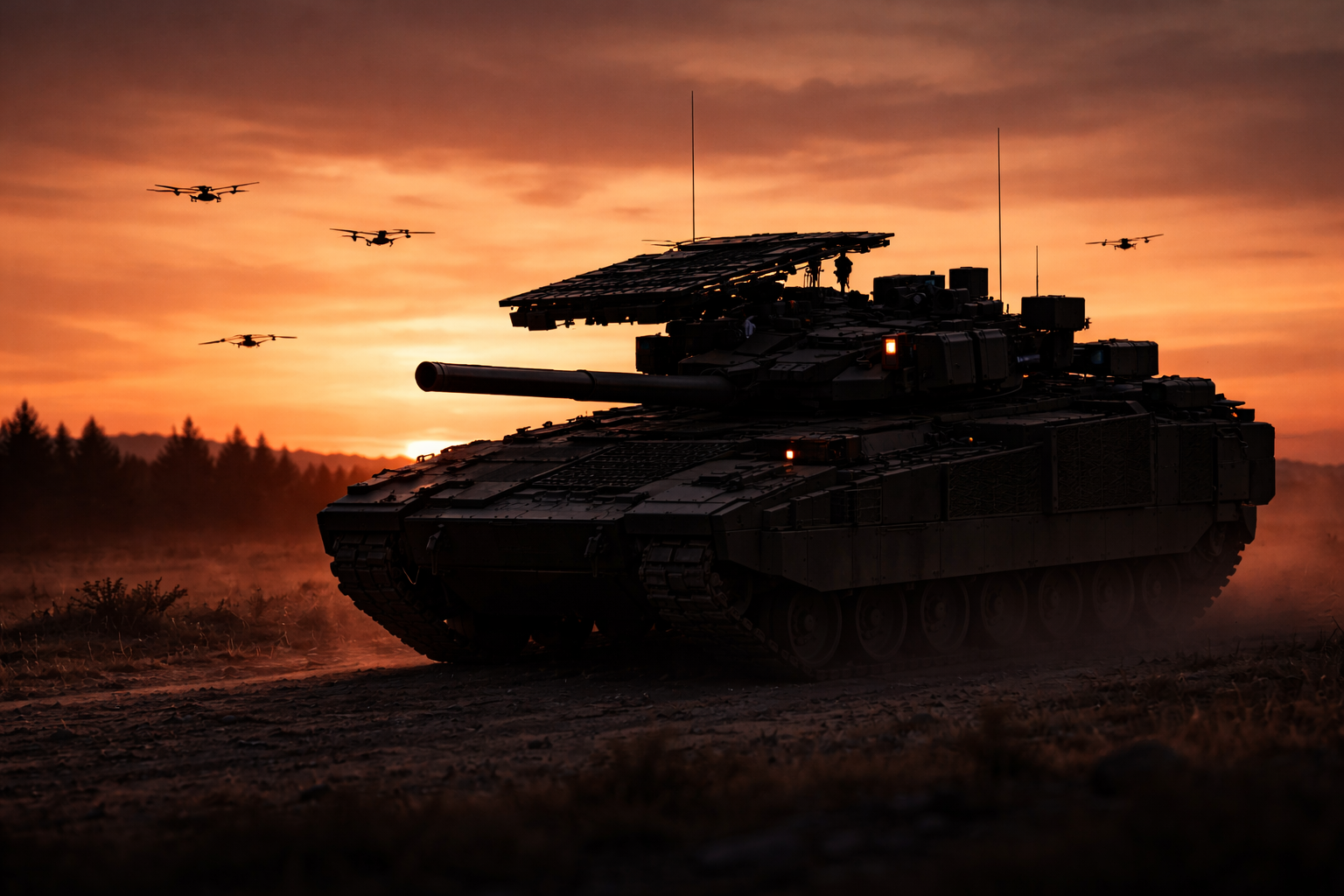
Counter-UAS demand is pulling land platforms in this direction at speed. Ukraine has shown how small drones can turn even rear-area mobility into a visibility problem. Vehicles that once relied on armour, speed, and distance now need detection, warning, electronic protection, and sometimes organic defeat capability. A platform able to carry radar, electro-optical sensors, jammers, and kinetic effectors becomes part of a local air-defence layer.
Australia’s broader defence-industrial direction is already visible in collaborative air systems, with the Ghost Bat programme placing local autonomy and systems integration into the Pacific capability mix. Bushmaster Mulga operates in a different domain, but the manufacturing theme is similar: Australian industry is trying to turn recognised platforms into adaptable systems that can absorb new payloads and retain export relevance.
Protected vehicle production becomes more difficult when mission systems are designed late or fitted after the main vehicle architecture has been fixed. Retrofit paths can create problems with overloaded alternators, poor fields of view, awkward antenna placement, insufficient cooling, limited operator space, and exposed cabling. A utility variant that anticipates payload changes can reduce those costs by building in structural, electrical, and digital capacity from the start.
The supply chain behind that approach looks different from a traditional vehicle line. Alongside armour, suspension, driveline, tyres, seats, and blast systems, manufacturers need suppliers for displays, power-management equipment, software-defined radios, sensors, electronic-warfare modules, radar equipment, and remote weapons. Some customers will demand national communications equipment or weapons integration, making modular open architecture a commercial advantage rather than an engineering preference.
Operational sustainment also changes. A protected vehicle fitted with mission payloads requires diagnostic tools, software updates, cybersecurity controls, spare electronics, test equipment, and trained maintainers. Mechanical reliability remains important, but fleet availability will increasingly depend on electronic subsystems. Vehicle makers that cannot support the digital layer of the platform will struggle to maintain credibility with modern customers.
Mulga’s relevance is therefore wider than one variant. It reflects the direction of land vehicle manufacturing across NATO partners and Indo-Pacific defence customers. Armoured vehicles are being pulled toward roles once handled by specialist command, surveillance, or air-defence assets. The boundary between protected mobility, counter-drone vehicle, sensor carrier, and light strike platform is becoming more fluid.
The companies best placed in this market will be those able to protect the ruggedness of the base vehicle while making the payload environment easy to change. Customers want vehicles that can survive harsh use, but they also want fast insertion of new radios, sensors, weapons, and software. Bushmaster Mulga shows how an established platform can be repositioned for that market, provided production discipline keeps pace with integration ambition.